
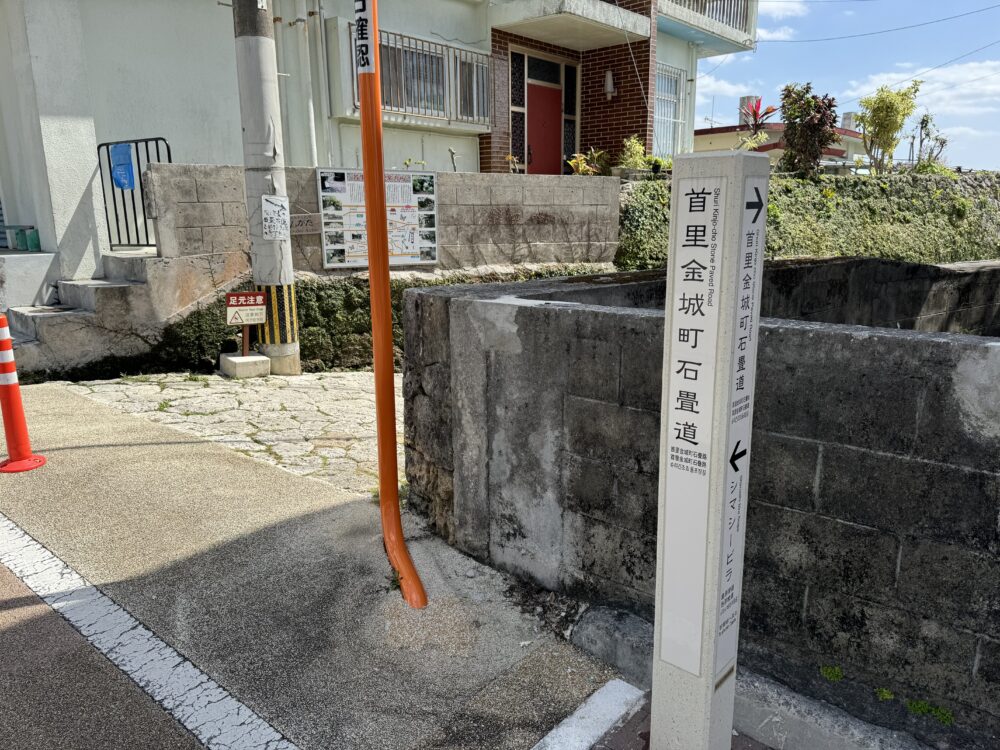
The Shuri Kinjocho stone-paved road is a place to visit in Naha, in the southern part of Okinawa’s main island.
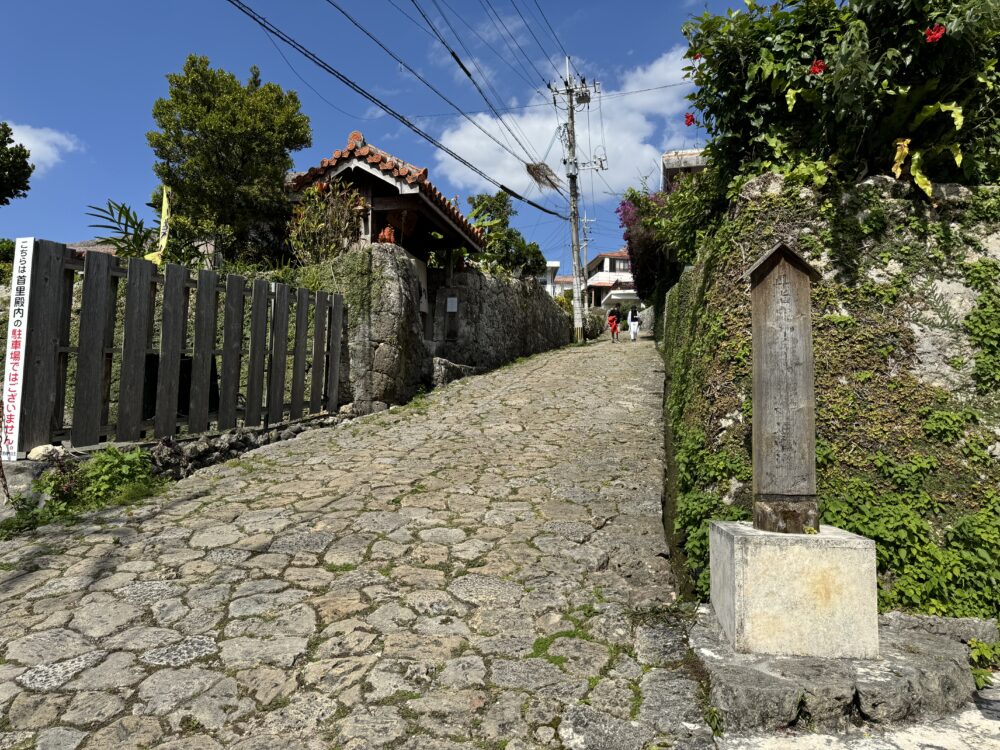
This handsome paved road was laid in the 16th century and still survives much as it was.
This article covers the highlights along the Shuri Kinjocho stone-paved road and what else is nearby.
For anyone planning a visit, here is what makes the walk worth taking.
Shuri Kinjocho stone-paved road ratings
*Ratings are the personal view of the Okinawa Bookmark editor, based on comparison with other castles and castle ruins in Okinawa
Shuri Kinjocho stone-paved road at a glance
| Hours | None in particular |
| Closed | None in particular |
| Admission | Free |
| Time needed | About 30 minutes |
| Parking | Yes, two lots (free) |
| Restroom | None |
| Address | 2-chome Shuri Kinjocho, Naha, Okinawa 903-0815 |
| Official website | None |
Highlights of the Shuri Kinjocho stone-paved road
The ishigantou along the road
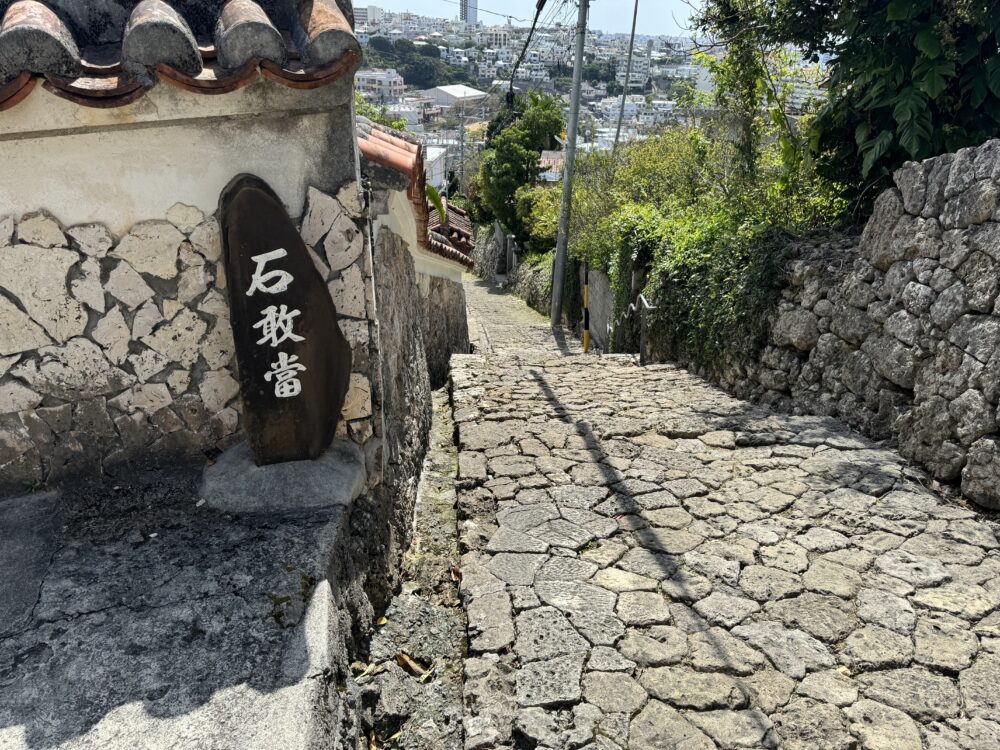
The large ishigantou stone that serves as the symbol of the Shuri Kinjocho stone-paved road is well known.
An ishigantou offers a glimpse into a distinctive strand of Ryukyuan belief, and it is a popular spot for photos.
As you walk the road, it is worth pausing over the history and the culture behind it.
The great akagi trees of Shuri Kinjo
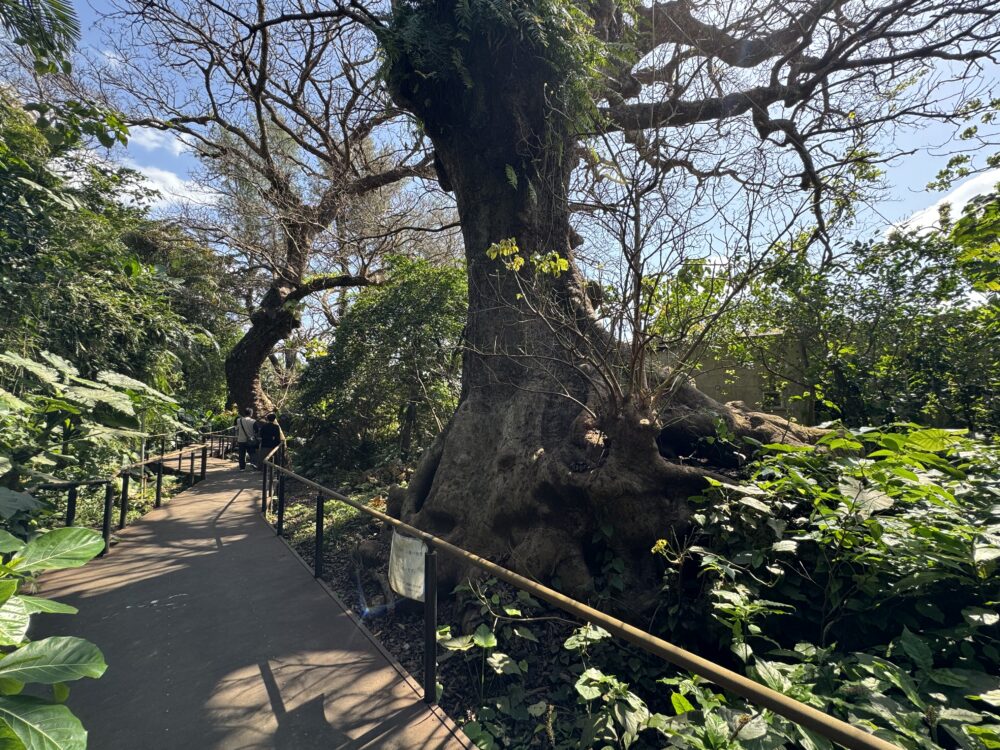
The one thing that stands out most along the road is the group of great akagi trees, said to be over 200 years old.
These trees are a nationally designated natural monument and are revered locally as sacred.
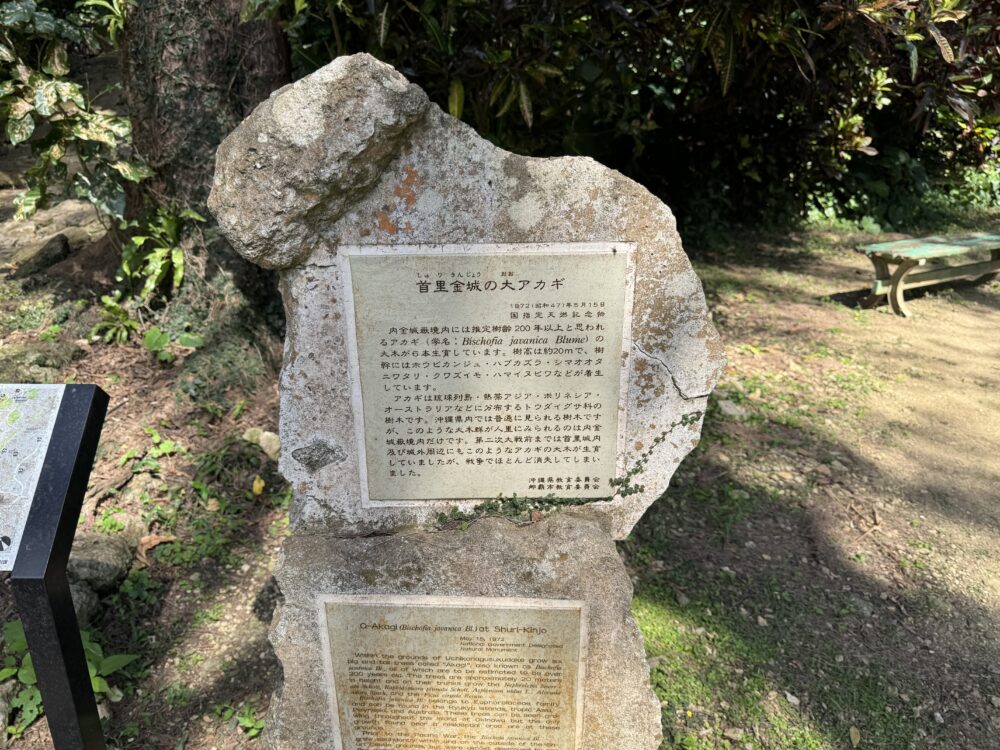
Their sheer scale, and the quiet around them, give a real sense of the weight of history.
Kinjo Ohijaa
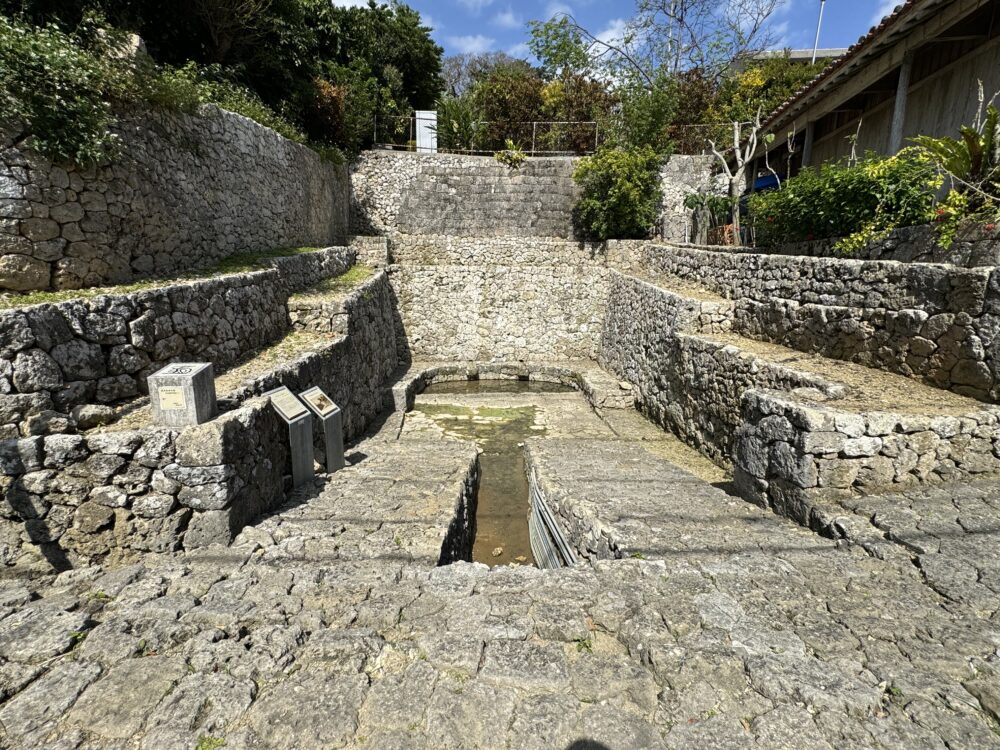
Further along the road you come to Kinjo Ohijaa.
This communal well was once a vital water source for the neighbourhood.
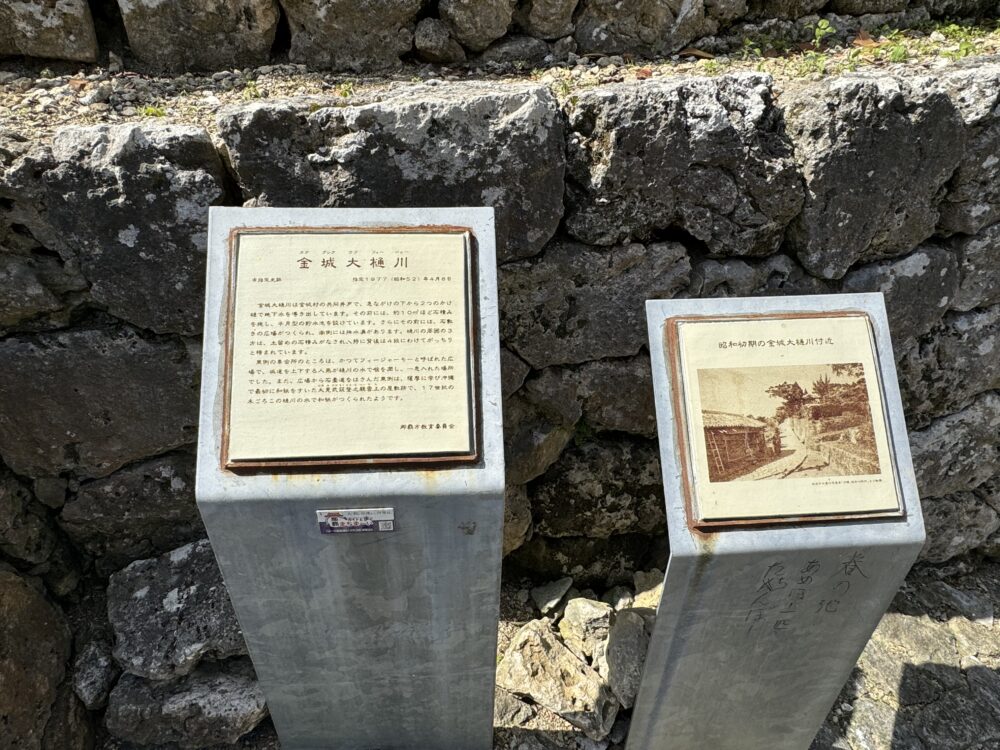
It survives today, offering a glimpse of everyday life as it once was.
Listen to the water and let the old Ryukyu come into focus.
Kinjo Muraya
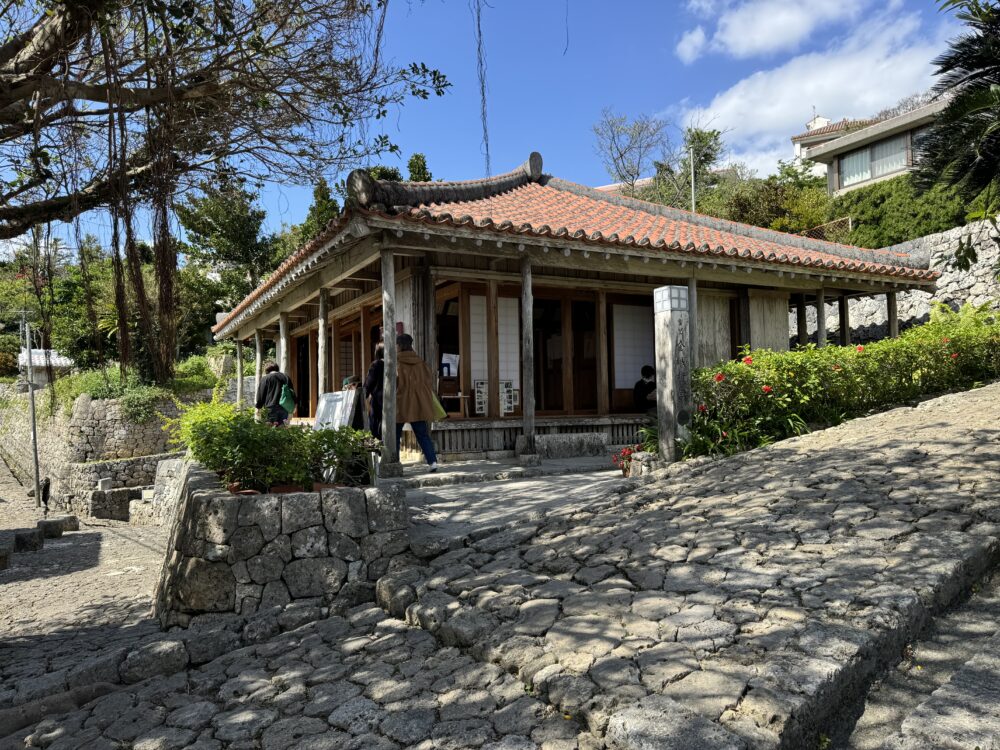
Kinjo Muraya is a traditional red-tiled house standing along the paved road.
It serves as a community hall much used by local residents, hosting events and offering a place to rest.
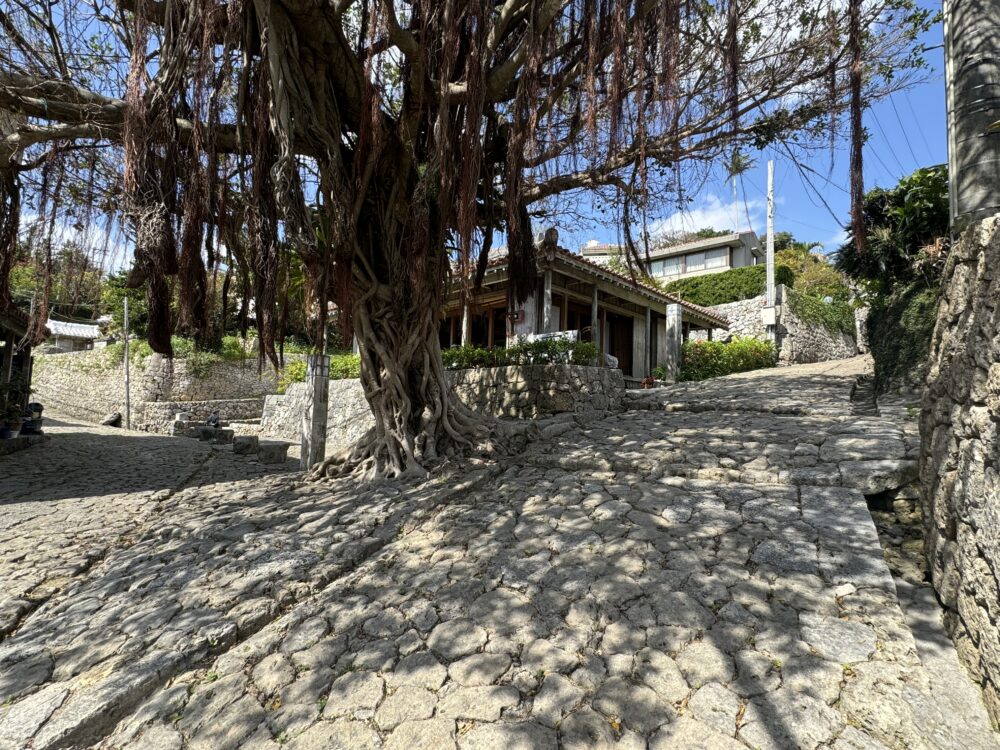
Its old-fashioned architecture gives visitors a sense of how people lived in Ryukyu.
Map of the Shuri Kinjocho stone-paved road
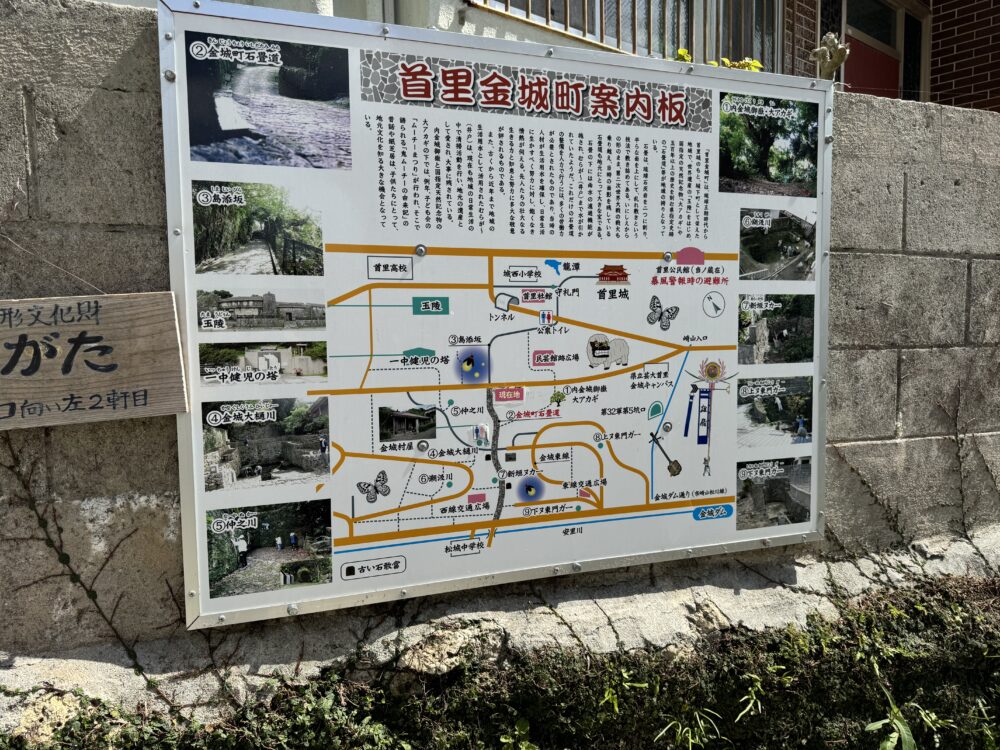
There is a map on site to help you make the most of the walk.
Please see the image above.
History of the Shuri Kinjocho stone-paved road
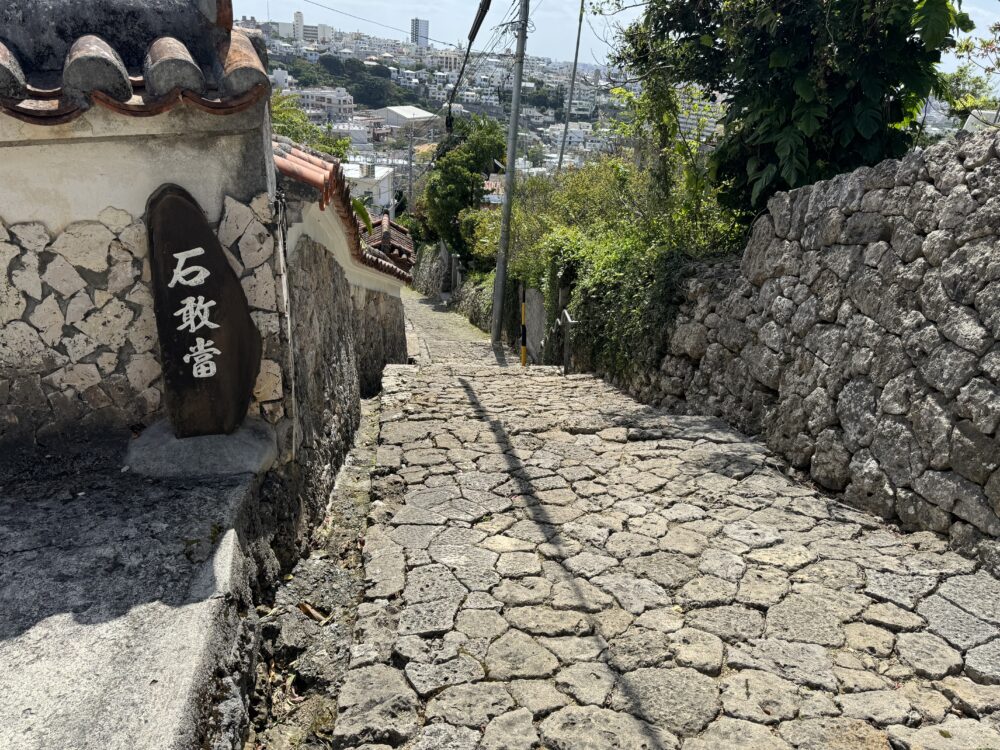
The Shuri Kinjocho stone-paved road is a historic route where the Ryukyu Kingdom is still very much in evidence.
It dates from the 16th century, during the reign of King Sho Shin.
The road was built as part of the Madama Road, which ran from Shuri Castle down to Naha Port and on to southern Okinawa.
About four metres wide and some 300 metres long, the road is neatly laid with Ryukyuan limestone.
The technique, known as midare-jiki, sets stones of different sizes and shapes against one another with considerable skill.
Steps were built into the steeper stretches and the stone surfaces were scored for grip — small touches made with walkers in mind.
During the Second World War much of the Madama Road was destroyed in the fighting on Okinawa.
The roughly 238-metre stretch at Shuri Kinjocho survived, almost miraculously, and carries the original road into the present.
It was designated a prefectural historic site and place of scenic beauty in 1964, and is carefully preserved to this day.
Walking it, you pass red-tiled houses, the communal well and old stone walls — a good deal of the Ryukyu Kingdom is still here.
The Shuri Kinjocho stone-paved road is one of Okinawa’s best places to encounter that history and culture first-hand.
Parking and access
| Access | About 20 minutes by car from Naha Airport |
| Address | 2-chome Shuri Kinjocho, Naha, Okinawa 903-0815 |
| Parking | Two free parking lots |
| Restroom | None |
There are two free parking lots for the Shuri Kinjocho stone-paved road.
They are not meant for long stays, however, so please bear that in mind.
[Parking Lot 1]
[Parking 2]
Nearby Information
Shuri Castle
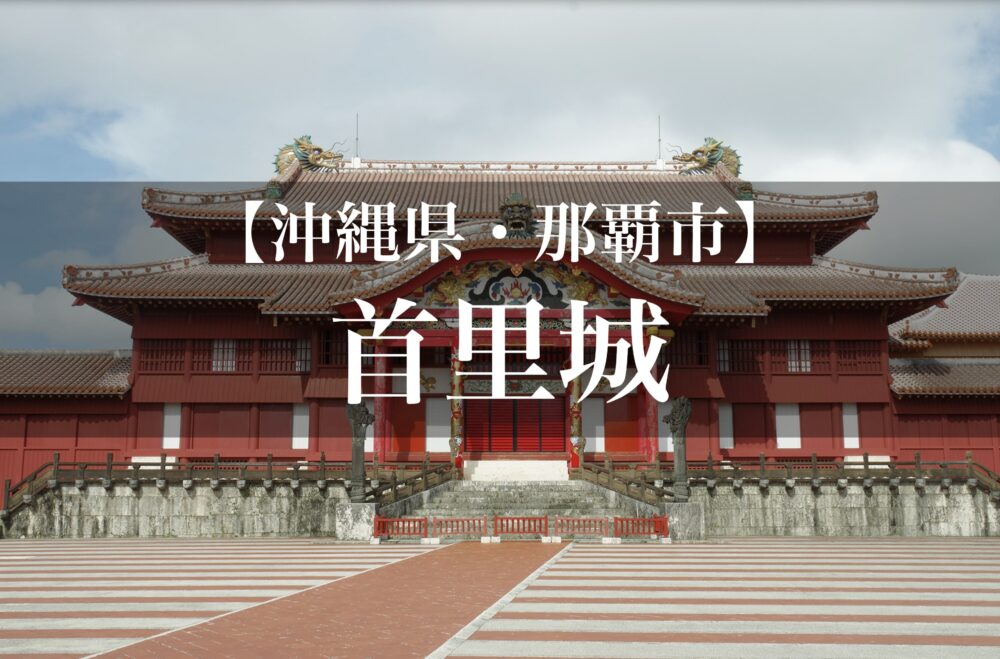
Shuri Castle is a castle in Naha, in the southern part of Okinawa’s main island.
From 1429 to 1875, through the Ryukyu Kingdom, Shuri Castle was the centre of the kingdom’s politics, diplomacy and culture.
In 2000 it was inscribed as a World Heritage Site as part of the Gusuku Sites and Related Properties of the Kingdom of Ryukyu.
As a visit, about 30-45 minutes is enough to get round it.
There is paid parking, and with Naha Airport close by it is an easy place to reach.
*Following the fire in 2019, the main hall and the north and south halls burned down and cannot be seen. (Restoration is due for completion in 2026.)
Activities in Naha

Naha, in the southern part of Okinawa’s main island, offers plenty of activities including diving and snorkeling.
You can book through GetYourGuide or Viator, so do take a look at what is on offer.
Rihga Royal Gran Okinawa
Rihga Royal Gran Okinawa connects directly to Asahibashi Station on the Yui Rail monorail, and is as little as five minutes by car or about ten by monorail from Naha Airport.
A Japanese-Western-Ryukyuan buffet breakfast at Dining 19 on the top floor, a welcome drink in every room and valet parking all add up to a genuinely comfortable stay.
You can check it on Booking.com, so do take a look.
A rental car is the way to go in Okinawa

A rental car is by far the best way to get around the main island of Okinawa.
The places worth seeing are scattered across the island, from Shuri Castle in Naha to the beautiful beaches of the north and American Village in Chatan, and with a car you can take them at your own pace. Buses are infrequent and do not always run on time, so having a car or not makes a real difference to the trip.
Cars fill up quickly in the peak season, so we recommend booking early once your travel dates are set. One important note for overseas visitors: to drive in Japan you must obtain an International Driving Permit (Geneva Convention) in your home country before you depart, and remember that traffic in Japan drives on the left.
Summary
The Shuri Kinjocho stone-paved road is a rare place to encounter the history and culture of the Ryukyu Kingdom.
Walk it and you experience that period much as it was.
There is plenty to see along the way — the ishigantou, the great akagi trees, Kinjo Ohijaa — so the walk comes with its history close at hand.
It is easy to reach, too: you can simply walk down from Shuri Castle.
Do walk the Shuri Kinjocho stone-paved road at least once, and let the history of the Ryukyu Kingdom sink in.
Comments