

Okinogu Shrine is a shrine in Naha, in the southern part of Okinawa’s main island, and one of the eight Ryukyuan shrines.
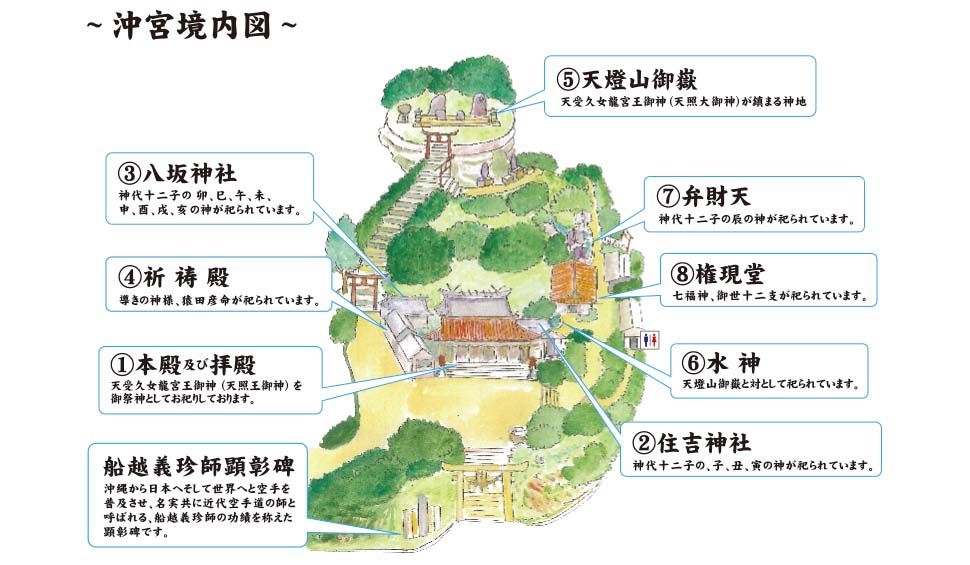
The main hall, Tentozan Utaki, the Sumiyoshi and Yasaka shrines with their enshrined deities, and a monument to Gichin Funakoshi, the great karate master — there is a good deal here to hold your attention.
Come and encounter the history and the mythology of Okinogu Shrine, and take the time it offers.
Okinogu Shrine ratings
*Ratings are the personal view of the Okinawa Bookmark editor, based on comparison with other castles and castle ruins in Okinawa
Okinogu Shrine at a glance
| Hours | Open year-round |
| Closed | Open year-round |
| Admission | Free |
| Time needed | About 30 minutes |
| Parking | Yes (free) |
| Restroom | Yes |
| Address | 44 Onoyama-cho, Naha, Okinawa |
| Official website | https://okinogu.or.jp/ |
Highlights of Okinogu Shrine
The main hall
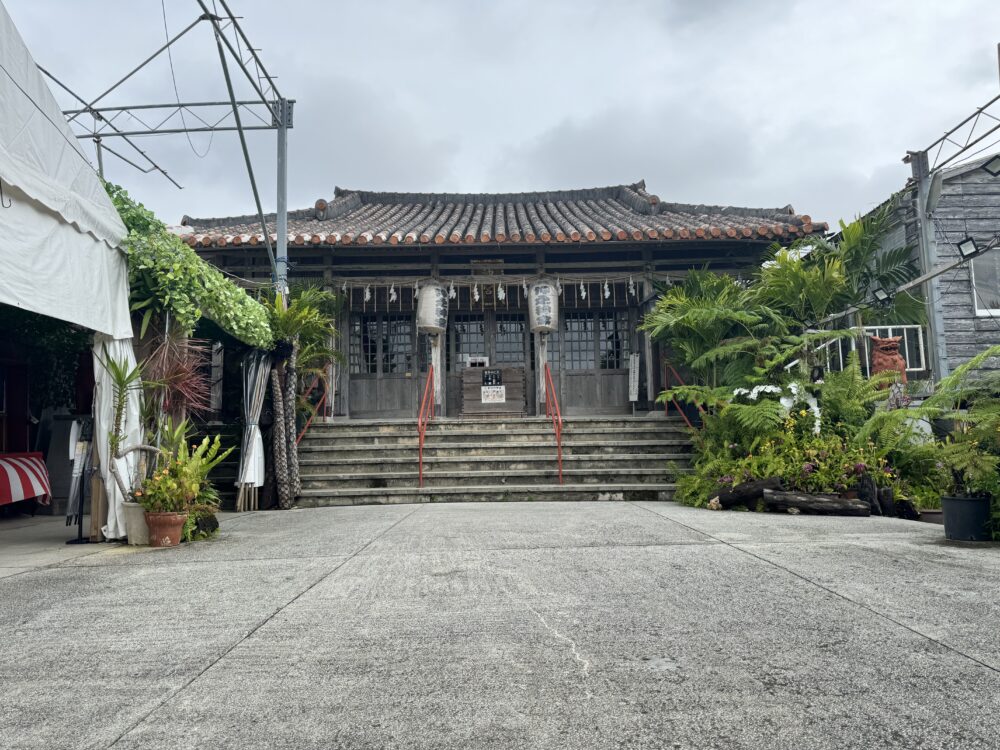
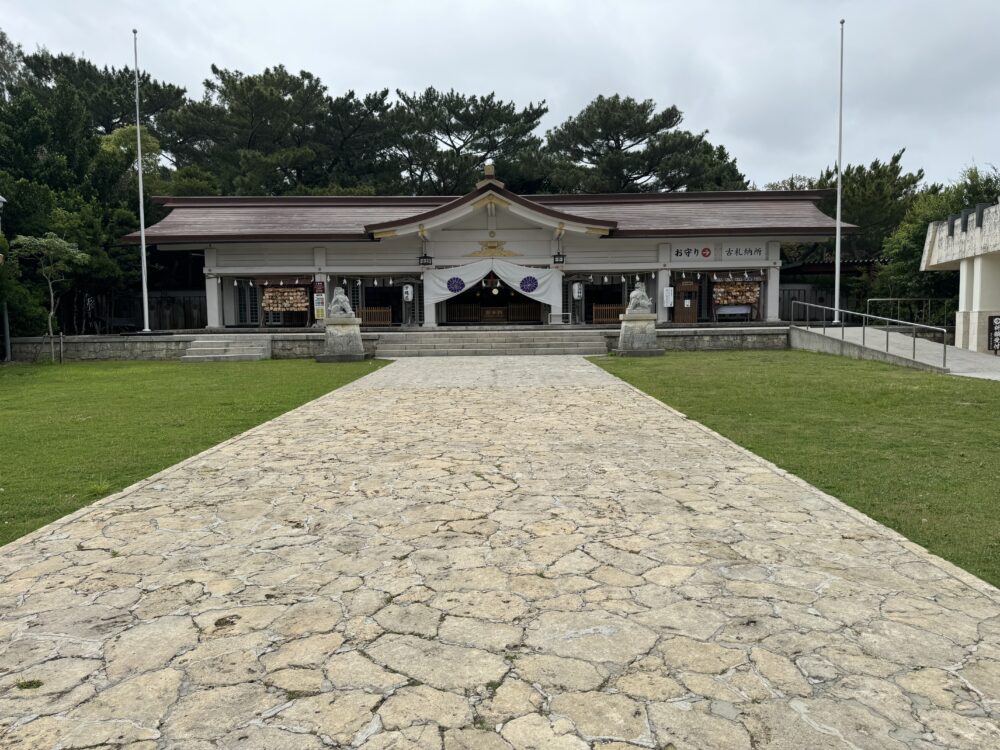
What defines the main hall at Okinogu Shrine is the sense of history in the building itself.
It enshrines a sacred piece of ancient wood found in Naha Port in the mid-15th century, revered by the king and by ordinary people alike.
The present hall was rebuilt in 1975, after the Second World War.
The style of the building carries a real sense of Okinawa’s history and culture, and it leaves an impression.
Walk the grounds and there is a stillness to the place, the kind that clears the head.
The main hall at Okinogu Shrine is where the history, the beauty and the sense of the sacred all come together.
Tentozan Utaki
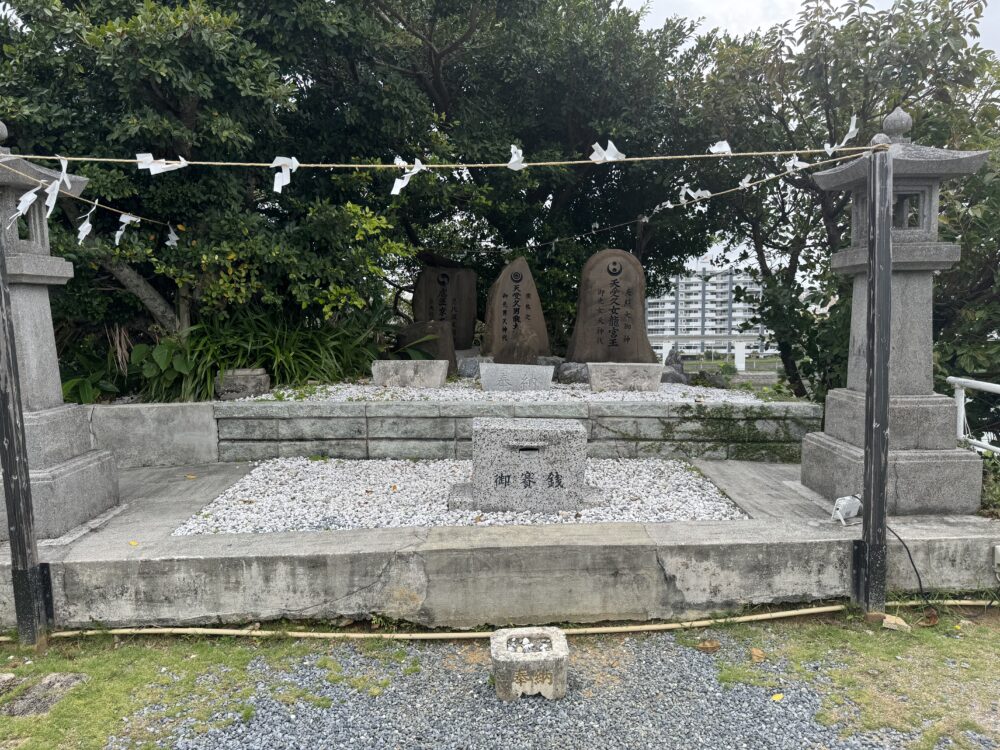
Tentozan Utaki is the sacred site where Amaukekume Ryugu-o-no-Okami, the principal deity of Okinogu Shrine, is enshrined.
A stone monument was erected in 1957, and the spring festival is held here every year on the 23rd day of the third lunar month.
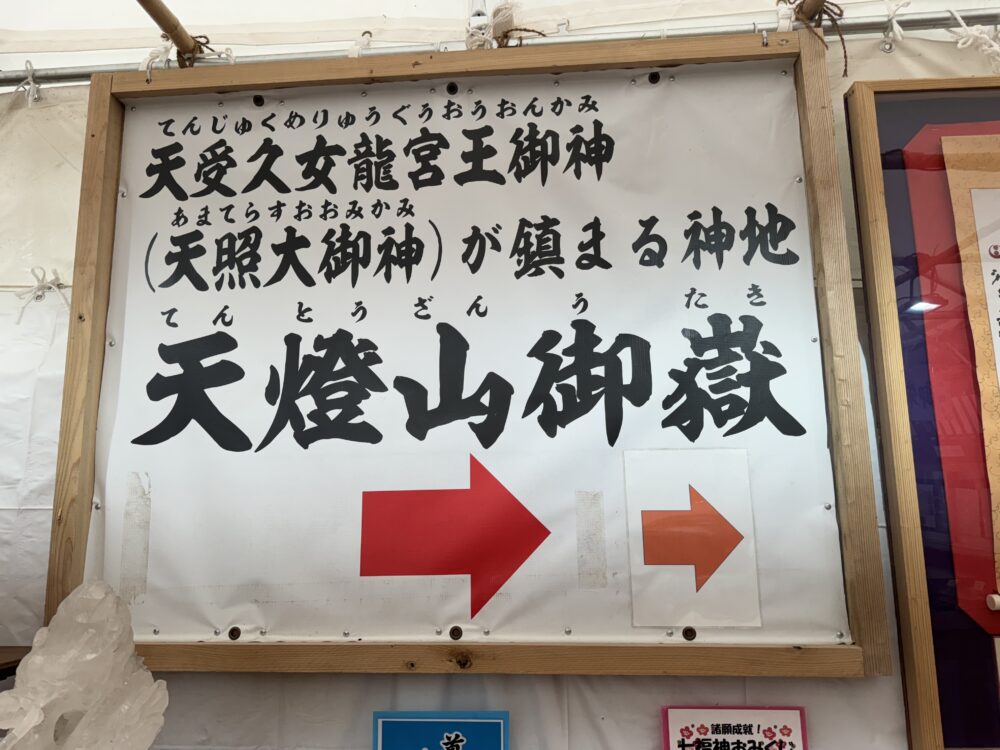
From this utaki the view opens out over the city of Naha, which visitors find both calming and quietly inspiring.
Tentozan Utaki is a place where nature and history come together, and where the mind settles.
A striking red torii
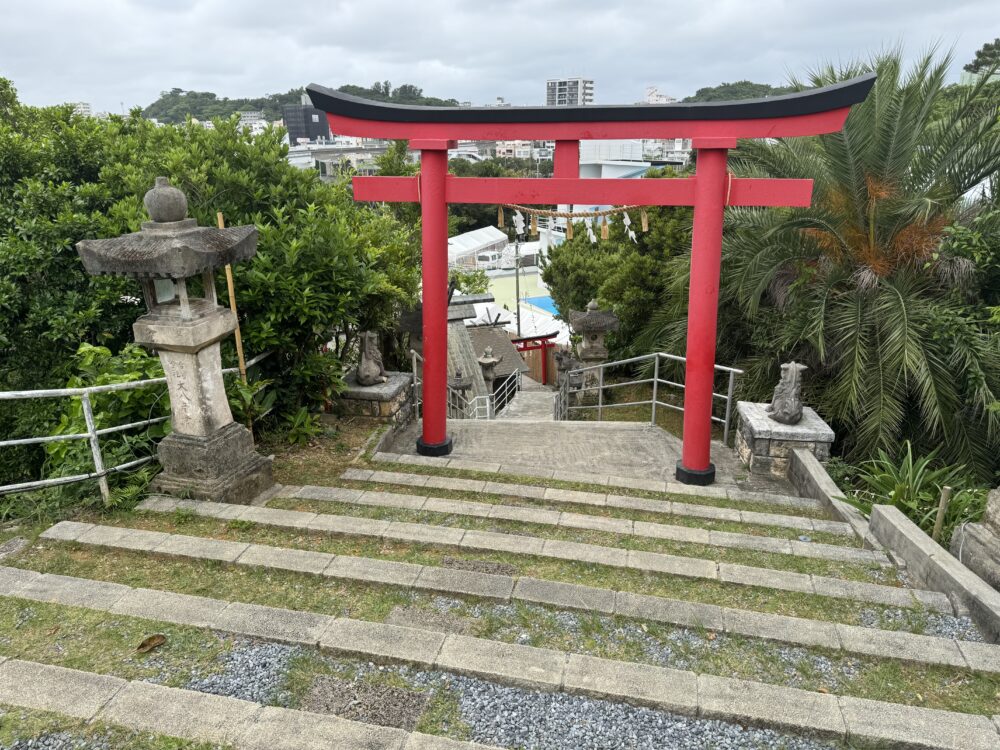
There is a fine red torii gate at the approach up to Tentozan Utaki.
Sumiyoshi Shrine
Sumiyoshi Shrine enshrines the deities of the rat, ox and tiger among the twelve zodiac deities.
Yasaka Shrine
Yasaka Shrine enshrines the deities of the rabbit, snake, horse, sheep, monkey, rooster, dog and boar among the twelve zodiac deities.
The Gichin Funakoshi monument
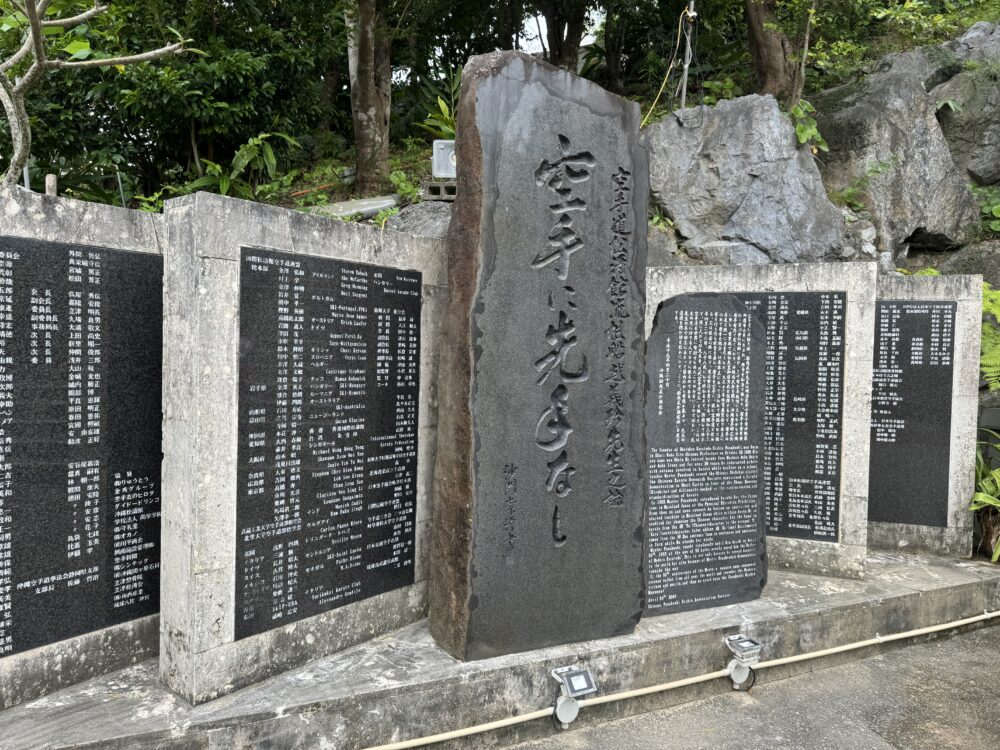
This monument honours Gichin Funakoshi, the great master of karate.
It is a good place to take in the spirit of karate and something of its history.
History of Okinogu Shrine
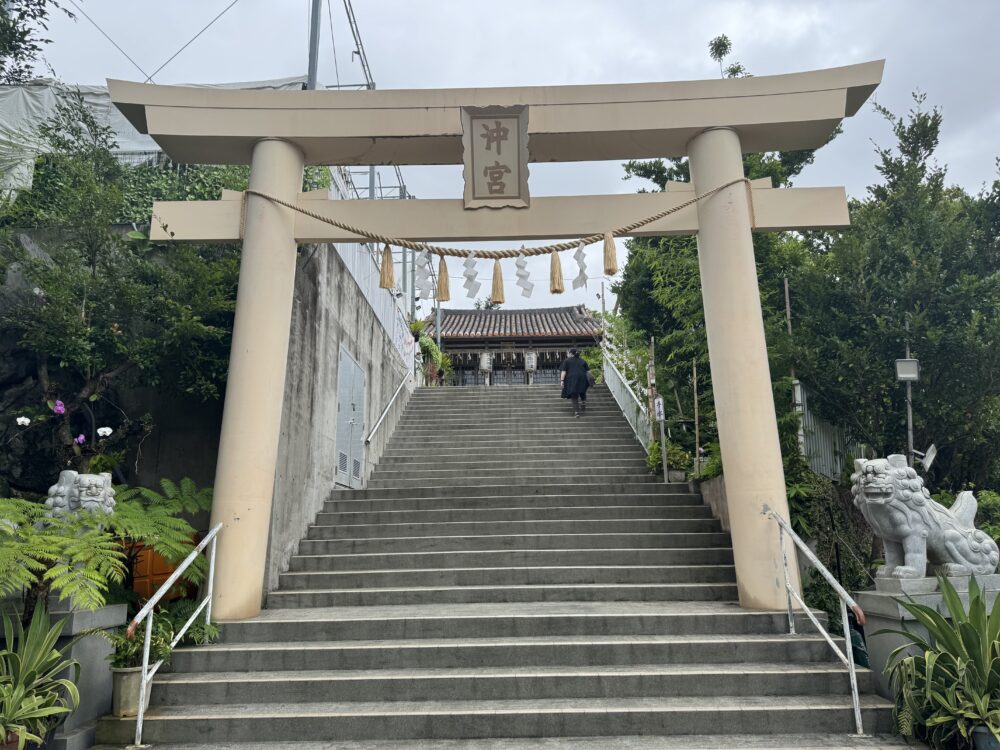
The history of Okinogu Shrine begins in 1451, during the reign of King Sho Kinpuku.
It is said to have been founded to enshrine a sacred piece of ancient wood found in Naha Port.
The wood gave off a strange light, and a fisherman located it on the king’s orders.
A shrine was built at Naha Port, and Okinogu Shrine came into being.
Okinogu Shrine was revered by successive Ryukyuan kings and by the people as a deity of national peace, good harvests and safe voyages.
In 1908 it was moved to Asato in connection with construction work at Naha Port.
It was designated a national treasure in 1935, but burned down in the Second World War.
After the war it was moved temporarily to Toridocho in 1961, then to its present site in Onoyama Park in 1975, where it stands today.
Across that history the shrine has been widely revered, and above all it has served as a place to pray for safety at sea.
In 1957 a stone monument was also erected on Tentozan, where Amaukekume Ryugu-o-no-Okami is enshrined.
The spring festival held every year on the 23rd day of the third lunar month is a long-standing tradition here and draws a large number of worshippers.
The history of Okinogu Shrine has run alongside the faith of Okinawans for centuries, and it still draws people in much as it always has.
Parking and access
| Access | About 10 minutes by car from Naha Airport |
| Address | 44 Onoyama-cho, Naha, Okinawa |
| Parking | Two free parking lots |
| Restroom | Yes |
Okinogu Shrine is inside Onoyama Park, so you can use the park’s parking.
Note, though, that Onoyama Park also contains Okinawa Cellular Stadium Naha and the Okinawa Prefectural Budokan, and events are held regularly. On event days the lots can fill up, so bear that in mind.
The first is Onoyama Park Parking Lot 1.
The second is Onoyama Park Parking Lot 2.
Nearby Information
Activities in Naha
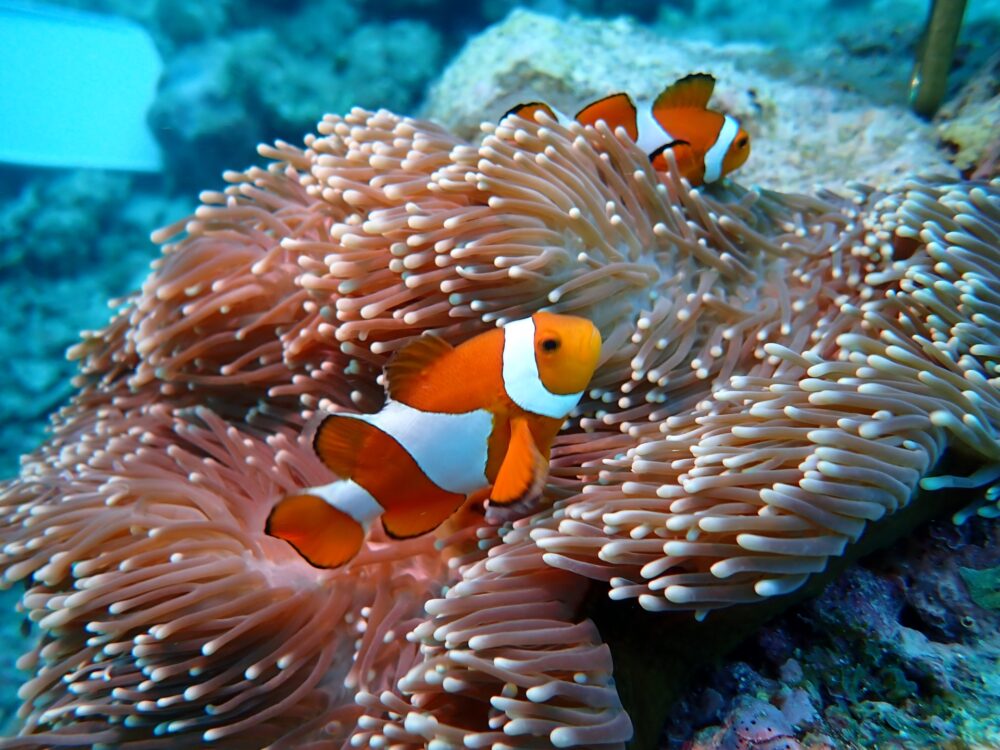
Naha, in the southern part of Okinawa’s main island, offers plenty of activities including diving and snorkeling.
You can book through GetYourGuide or Viator, so do take a look at what is on offer.
Rihga Royal Gran Okinawa
Rihga Royal Gran Okinawa connects directly to Asahibashi Station on the Yui Rail monorail, and is as little as five minutes by car or about ten by monorail from Naha Airport.
A Japanese-Western-Ryukyuan buffet breakfast at Dining 19 on the top floor, a welcome drink in every room and valet parking all add up to a genuinely comfortable stay.
You can check it on Booking.com, so do take a look.
A rental car is the way to go in Okinawa
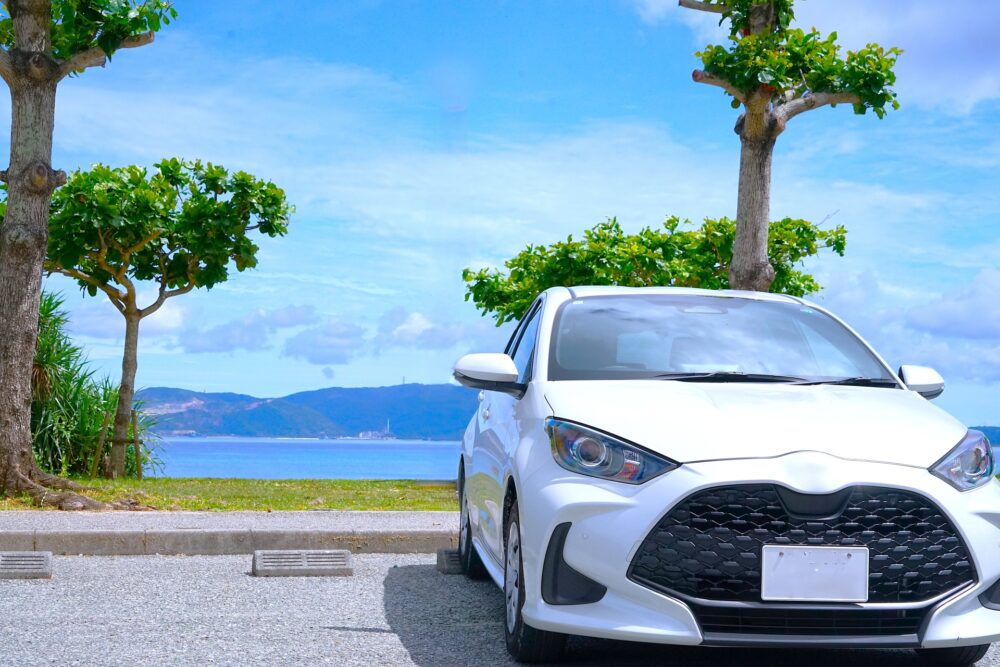
A rental car is by far the best way to get around the main island of Okinawa.
The places worth seeing are scattered across the island, from Shuri Castle in Naha to the beautiful beaches of the north and American Village in Chatan, and with a car you can take them at your own pace. Buses are infrequent and do not always run on time, so having a car or not makes a real difference to the trip.
Cars fill up quickly in the peak season, so we recommend booking early once your travel dates are set. One important note for overseas visitors: to drive in Japan you must obtain an International Driving Permit (Geneva Convention) in your home country before you depart, and remember that traffic in Japan drives on the left.
Summary

Okinogu Shrine is a rare place to encounter both the history and the mystery of Ryukyu.
The main hall, Tentozan Utaki, the Sumiyoshi and Yasaka shrines and the Gichin Funakoshi monument all give you something to see.
If you are planning a visit, take the time to sit with the history and the atmosphere of the place.
Comments