
The Katsuren Castle Ruins sit in Uruma City, in the central part of Okinawa’s main island.
The ruins were an important stage in the history of the Ryukyu Kingdom, and that grand past still comes through today.
This article covers what to see at the Katsuren Castle Ruins, how long to allow, and the admission and parking details.
Whoever you are, if you are visiting Okinawa, why not step into the old days for an hour?
- Ratings for the Katsuren Castle Ruins
- The Katsuren Castle Ruins at a glance
- Highlights of the Katsuren Castle Ruins
- The first enclosure: a viewpoint over Okinawan history
- Tamanomiuji Utaki: a place of worship where prayers were offered for the village
- The second enclosure: an open space with history in it
- The second enclosure platform: the heart of the Katsuren Castle Ruins
- Ushinuji-gama: a refuge in times of trouble
- Umichimun: where the fire deity is enshrined
- The hall site: the most important building at Katsuren Castle
- The third enclosure: a key part of the castle and the centre of political ceremony
- The Una courtyard: a place of ritual
- Kimutaka no Utaki (Tunumutu): a place of prayer led by female priestesses known as kaminchu
- The mortar-shaped feature: a puzzle in stone
- The fourth enclosure: the last line of defence
- Utamishi-gaa: water, nature and daily life
- Miitu-gaa: a secret meeting place for lovers
- Nakama-nu-ukaa: the breath of the smiths who forged the weapons
- Kadoguchi-no-kaa: a purification rite at the entrance, and a mark of respect for history
- Admission to the Katsuren Castle Ruins
- Time needed: about 45-60 minutes to see the whole site
- Access & Parking
- The history of the Katsuren Castle Ruins
- What’s nearby the Katsuren Castle Ruins
- Summary
Ratings for the Katsuren Castle Ruins
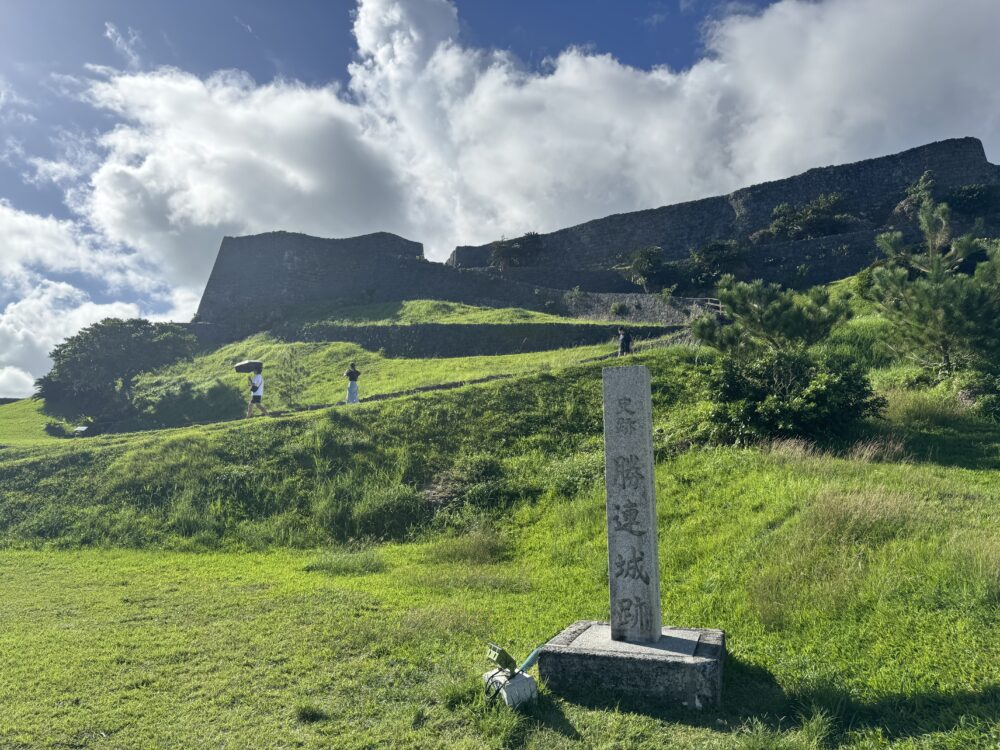
*Ratings are the subjective view of the Okinawa Bookmark editor, compared with other castles and castle ruins in Okinawa
The Katsuren Castle Ruins at a glance
| Hours | 9:00-18:00 *Last admission 17:30 |
| Closed | Open daily |
| Admission (individual) | Adults (high school age and up): 850 yen Children (junior high school age and under): 550 yen Preschool children: free |
| Admission (groups of 20 or more) | Adults (high school age and up): 680 yen Children (junior high school age and under): 440 yen Preschool children: free |
| Time needed | About 45-60 minutes |
| Parking | Yes (free) |
| Restroom | Yes |
| Address | 3807-2 Katsuren Haebaru, Uruma City, Okinawa |
Tickets for the Katsuren Castle Ruins can be bought on site or online, so it is worth checking in advance.
There are also guided tours of the site available.
Highlights of the Katsuren Castle Ruins
The first enclosure: a viewpoint over Okinawan history
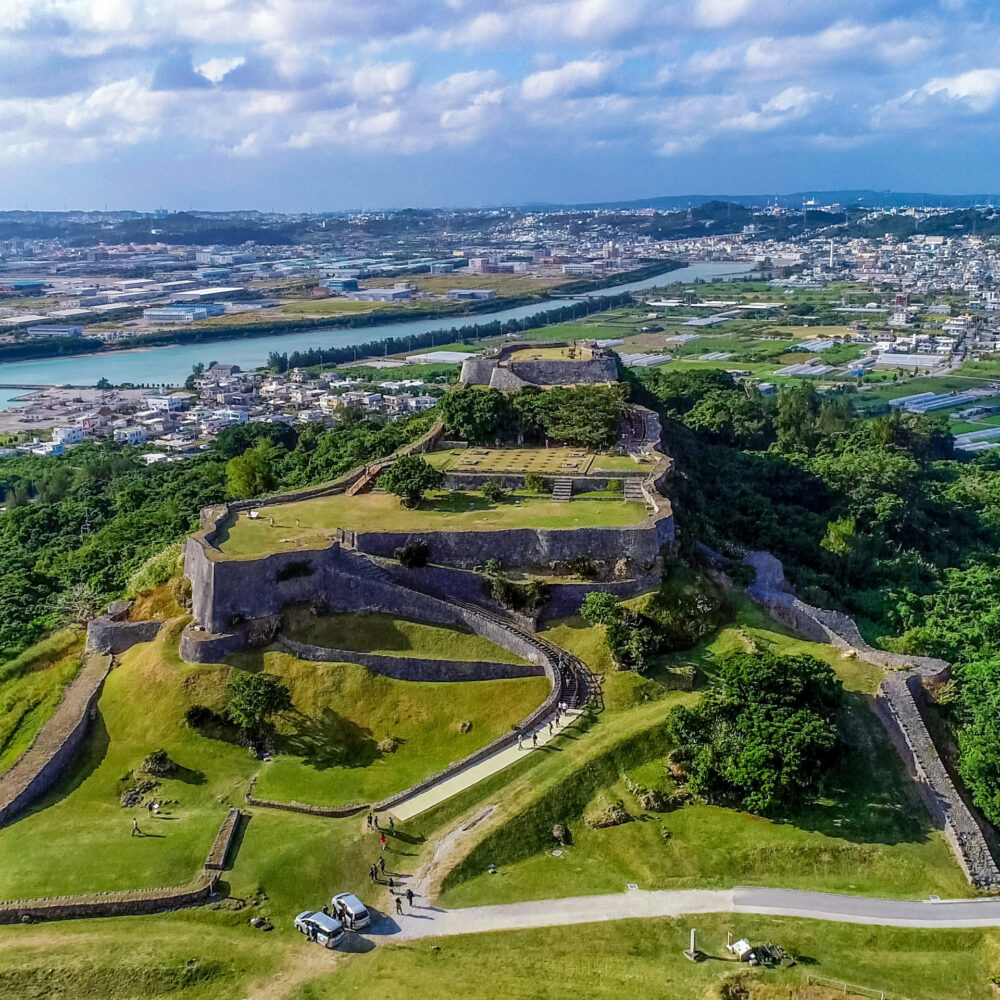
Set about 100 metres above sea level, the first enclosure looks out to the mountains of northern Okinawa and as far as the Chinen Peninsula.
You get a sense of its old importance as a fortress, and the view is likely to hold you there a while.
Tamanomiuji Utaki: a place of worship where prayers were offered for the village
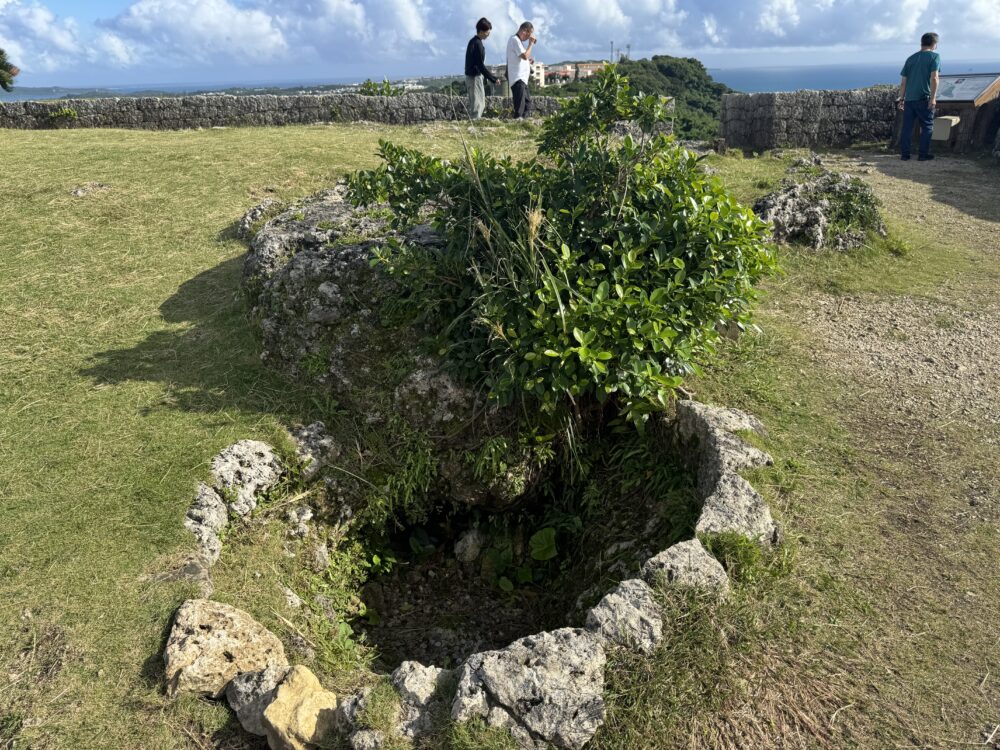
This utaki, with a sacred stone that guards Katsuren as its object of worship, was where people prayed for the village’s prosperity and safety.
It offers visitors a sense of quiet and calm.
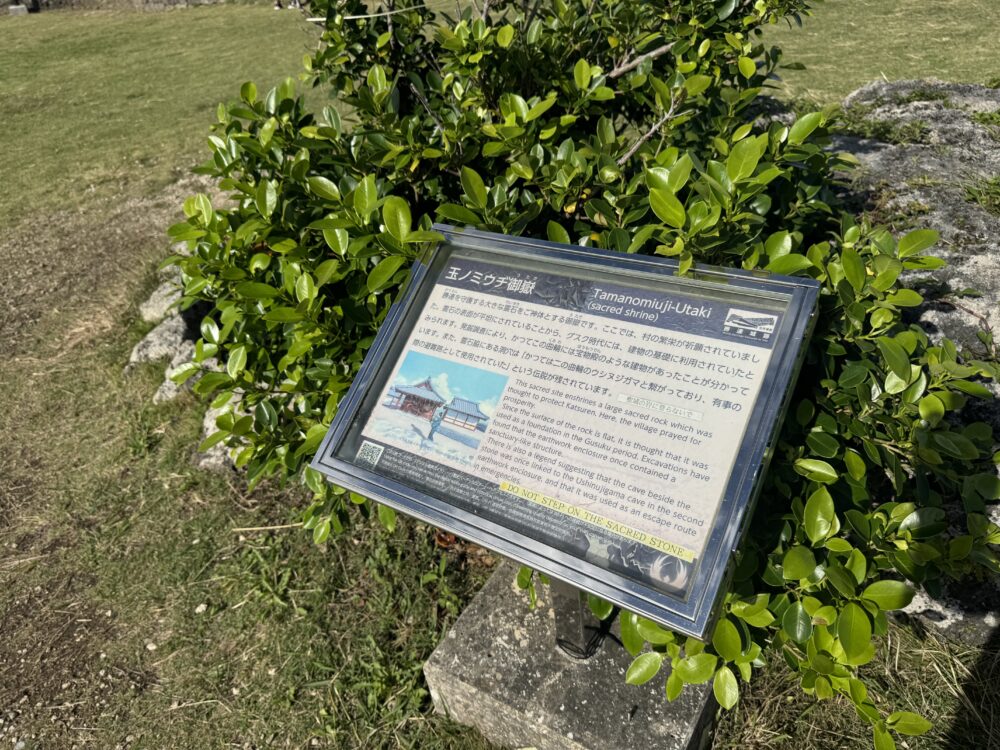
There is also an information board explaining Tamanomiuji Utaki.
The second enclosure: an open space with history in it
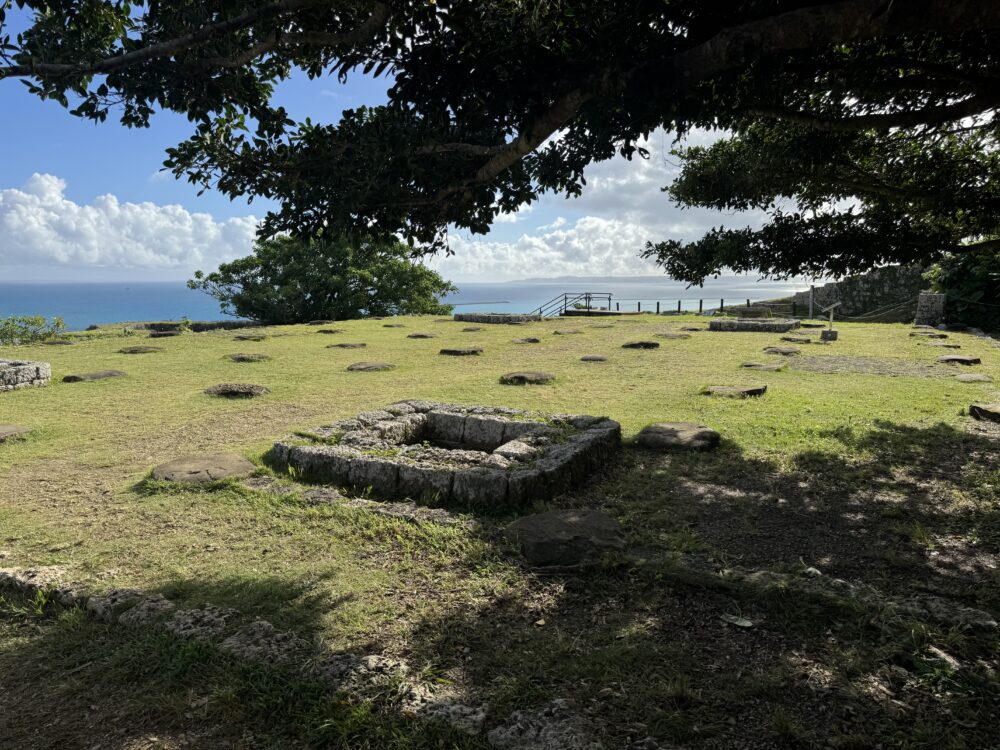
Tile-roofed buildings of the kind seen at Shuri Castle and Urasoe Castle are thought to have stood here, which says something about how important the site was.
The stone-paved path still carries the traces of that past.
The second enclosure platform: the heart of the Katsuren Castle Ruins
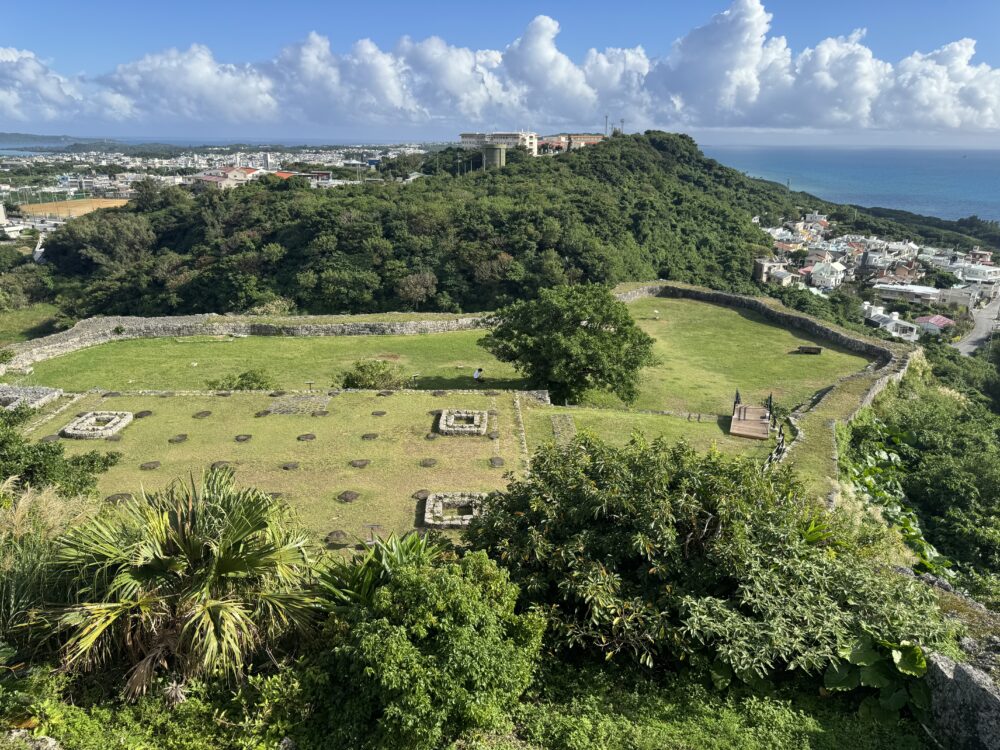
Built from cut limestone, the platform forms the centre of the site, and it is thought to have been rebuilt several times over the centuries.
Ushinuji-gama: a refuge in times of trouble
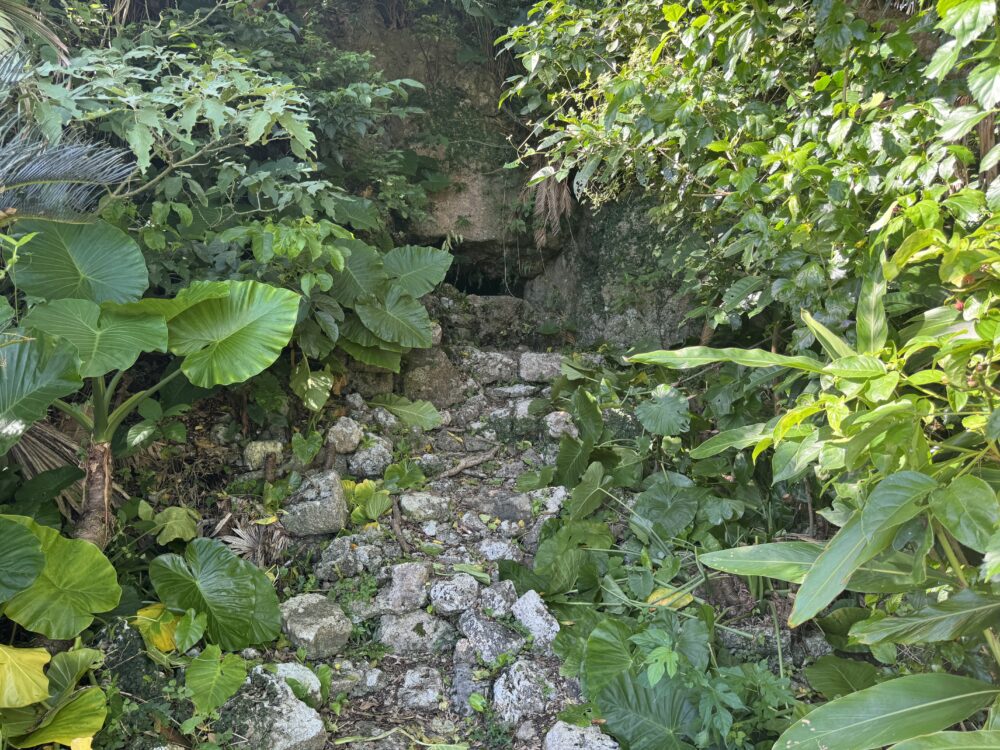
This natural cave, or gama, is said to have served as an escape route in times of trouble, and exploring it brings the drama of the past to mind.
Umichimun: where the fire deity is enshrined
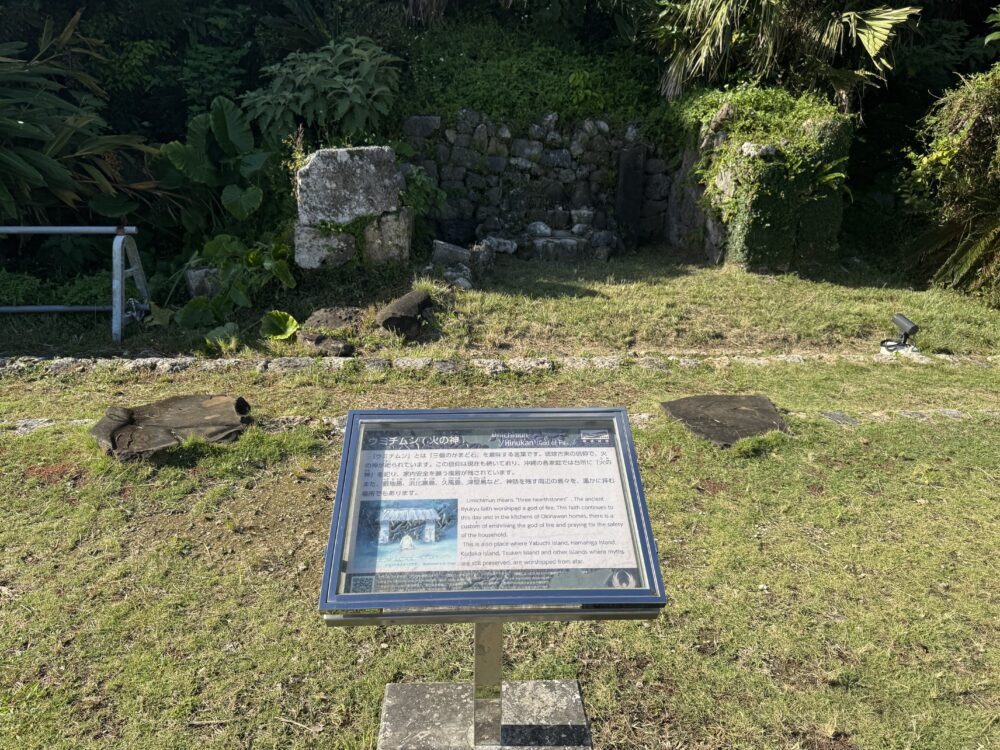
The name means “three hearth stones”, and this place, where the fire deity Hinukan is enshrined, reflects a faith long held in Okinawan homes.
The hall site: the most important building at Katsuren Castle
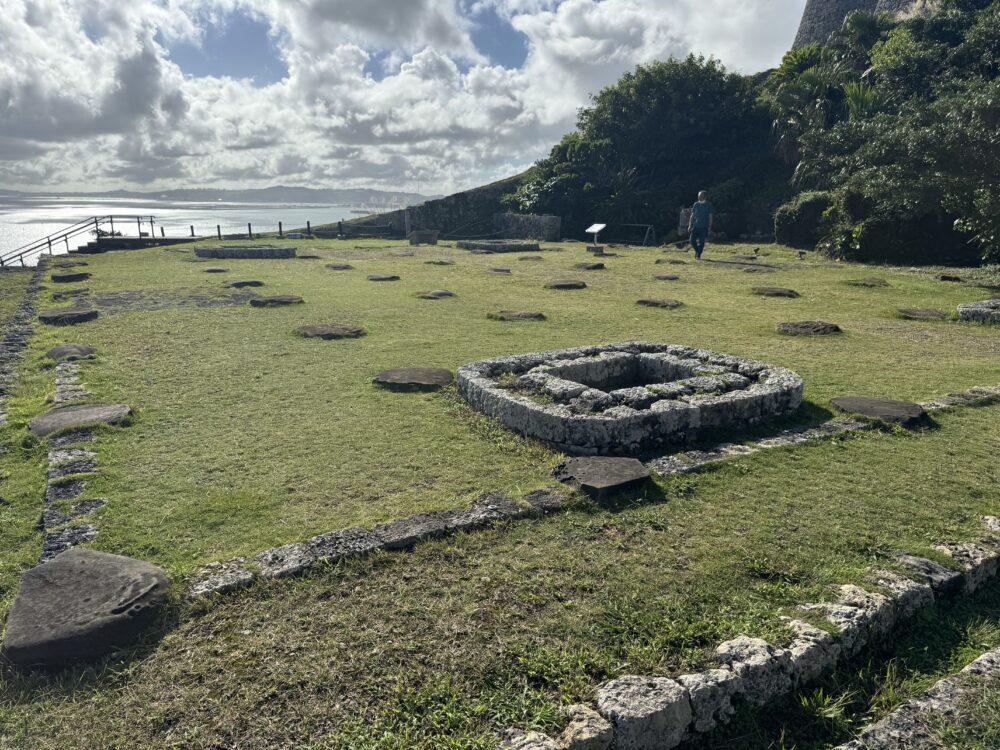
Measuring about 17 metres across and 14.5 metres deep, the hall site has a structure reminiscent of the main hall at Shuri Castle, which suggests it was of particular importance within Katsuren Castle.
The third enclosure: a key part of the castle and the centre of political ceremony
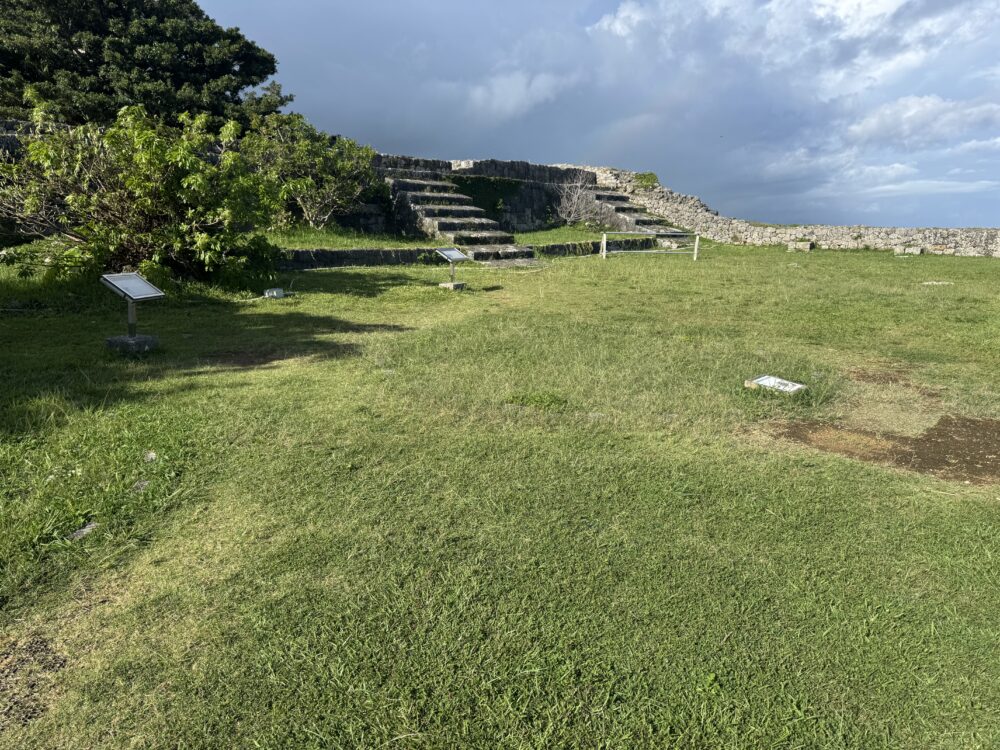
Ceremonies symbolising royal authority were held in the third enclosure, which served as the political heart of the site.
Here you can feel the weight of the history of how Okinawa’s kings governed.
The Una courtyard: a place of ritual
The Una courtyard is one of the most sacred places within the castle.
Rituals and festivals were held here, and the surviving stone paving speaks of the formality of those occasions.
Kimutaka no Utaki (Tunumutu): a place of prayer led by female priestesses known as kaminchu
This is where female priestesses communed with the gods and prayed for the peace of the village.
Wrapped in greenery, the quiet here puts you in a reverent frame of mind.
The mortar-shaped feature: a puzzle in stone
This distinctively shaped feature still poses many questions about its purpose and meaning.
Visitors are left to wonder about centuries of history yet to be fully explained.
The fourth enclosure: the last line of defence
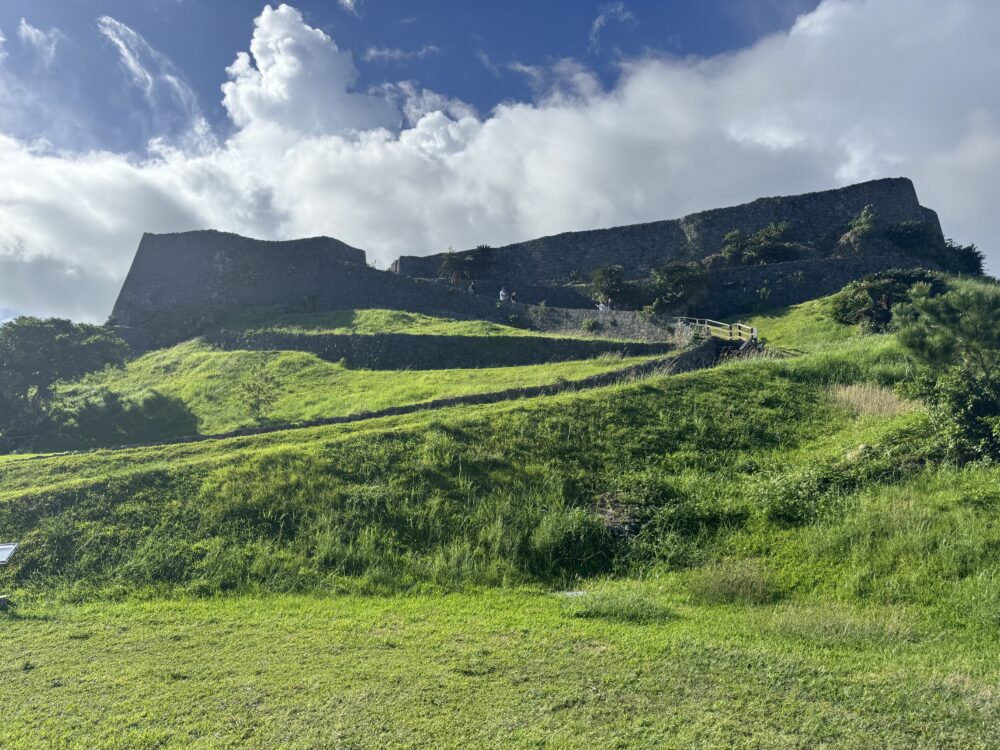
The outermost part of Katsuren Castle, the fourth enclosure served as the last line of defence.
The remains of its sturdy walls carry a piece of Okinawan history into the present.
Utamishi-gaa: water, nature and daily life
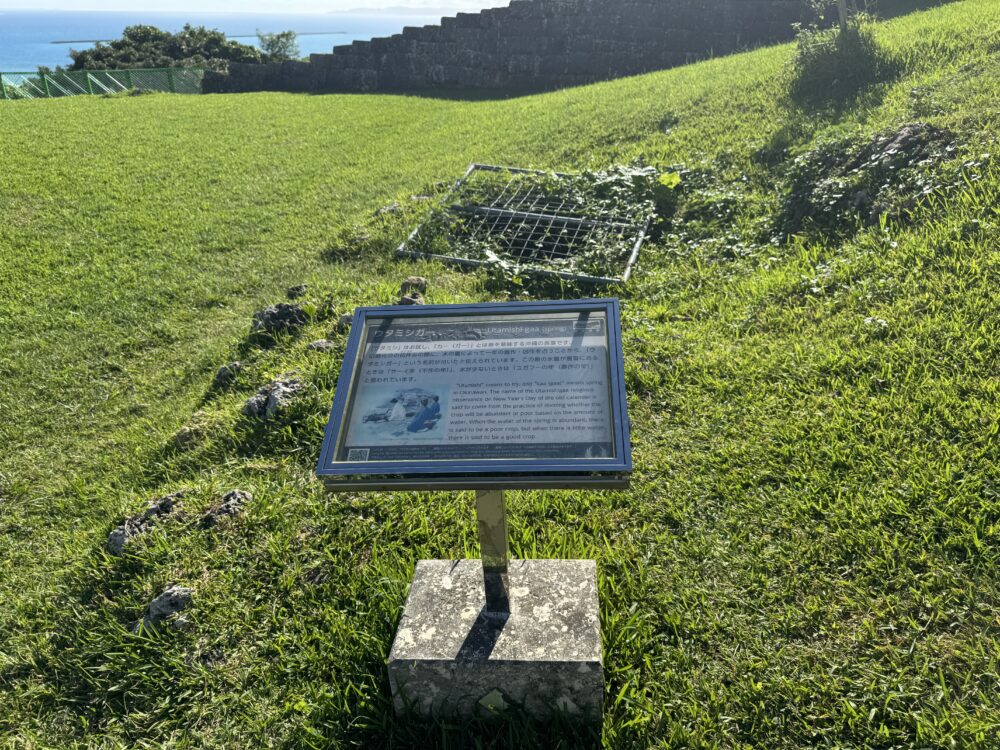
Utamishi-gaa is a quiet spot where the sound of running water carries.
It served as a water source that supported daily life, and gives a sense of how closely people lived with nature.
Miitu-gaa: a secret meeting place for lovers
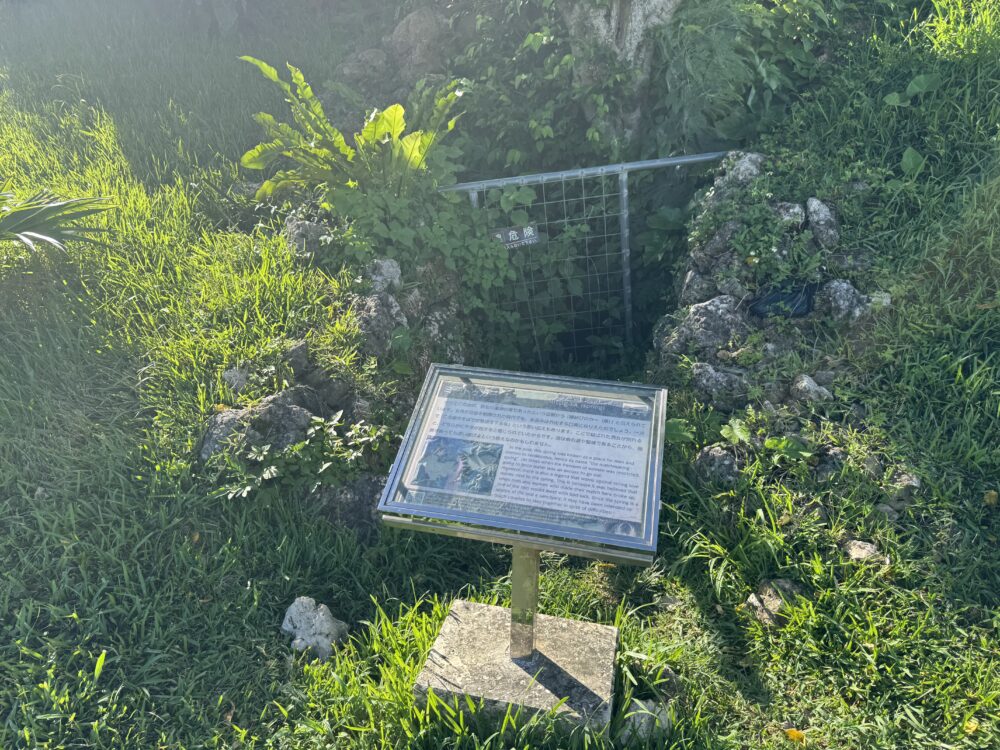
Miitu-gaa is said to be where lovers met again and again.
The words exchanged here may still be carried on the wind.
Nakama-nu-ukaa: the breath of the smiths who forged the weapons
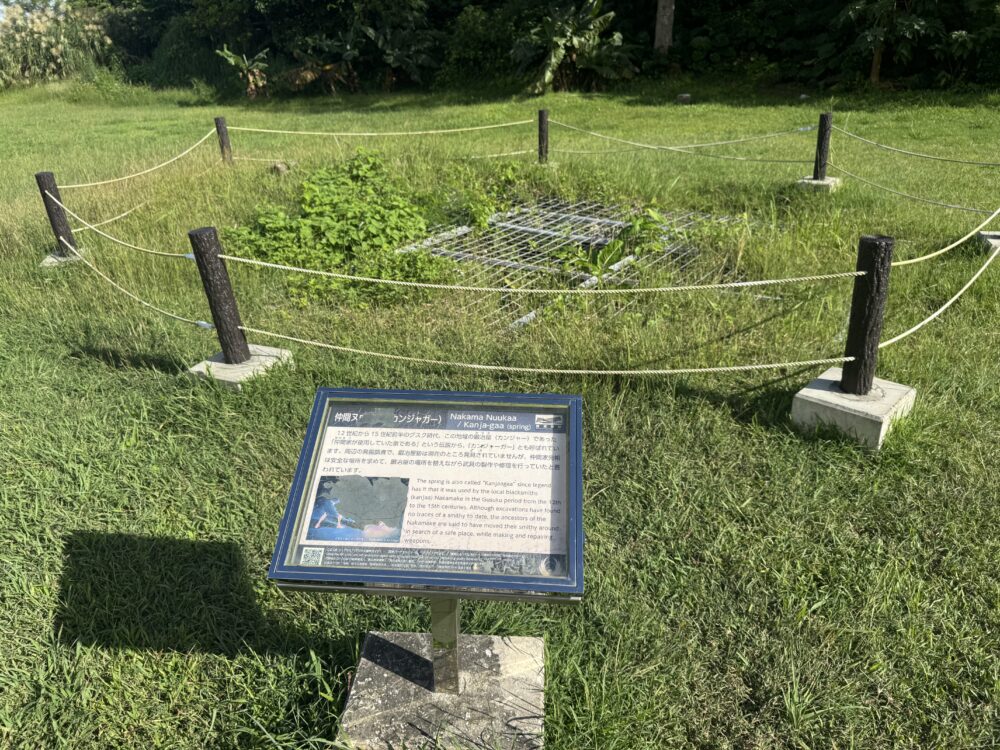
Nakama-nu-ukaa, where sparks once flew as weapons were forged, offers a glimpse of everyday life in the past.
The stories of those smiths and their craft live on here.
Kadoguchi-no-kaa: a purification rite at the entrance, and a mark of respect for history
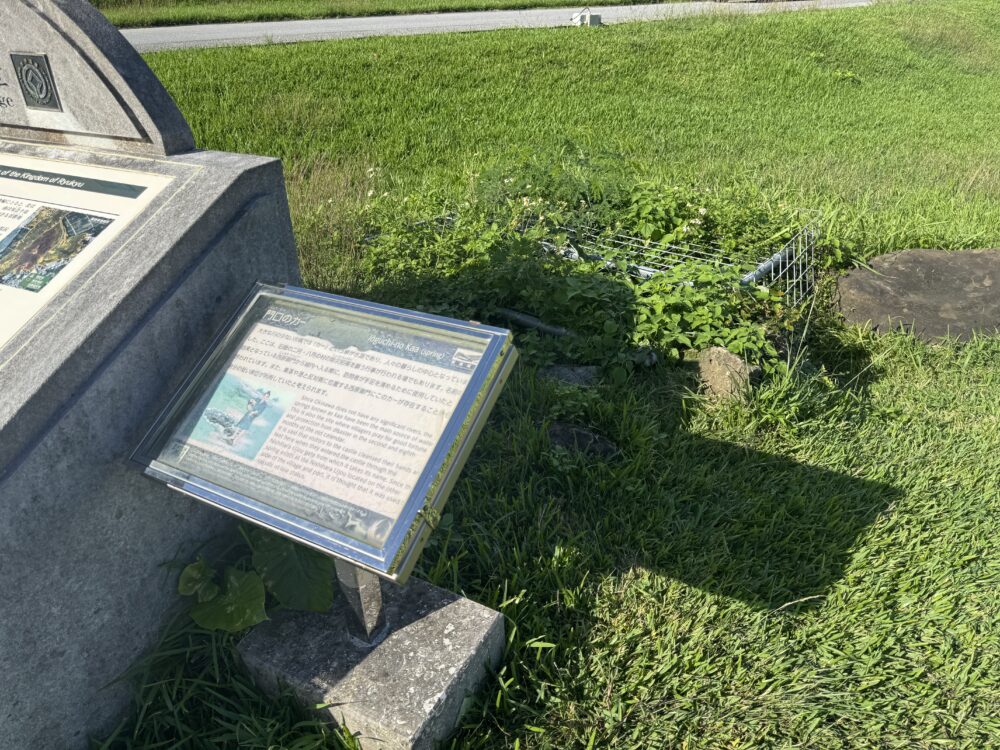
At Kadoguchi-no-kaa, the entrance to the Katsuren Castle Ruins, purification rites were once performed.
It is a gate that honours everyone who comes here and keeps watch over the site’s history.
Admission to the Katsuren Castle Ruins
| Admission (individual) | Adults (high school age and up): 850 yen Children (junior high school age and under): 550 yen Preschool children: free |
| Admission (groups of 20 or more) | Adults (high school age and up): 680 yen Children (junior high school age and under): 440 yen Preschool children: free |
Tickets for the Katsuren Castle Ruins can be bought on site or online, so it is worth checking in advance.
There are also guided tours of the site available.
If you would like the detail explained as you go, a guided tour is worth considering.
Time needed: about 45-60 minutes to see the whole site
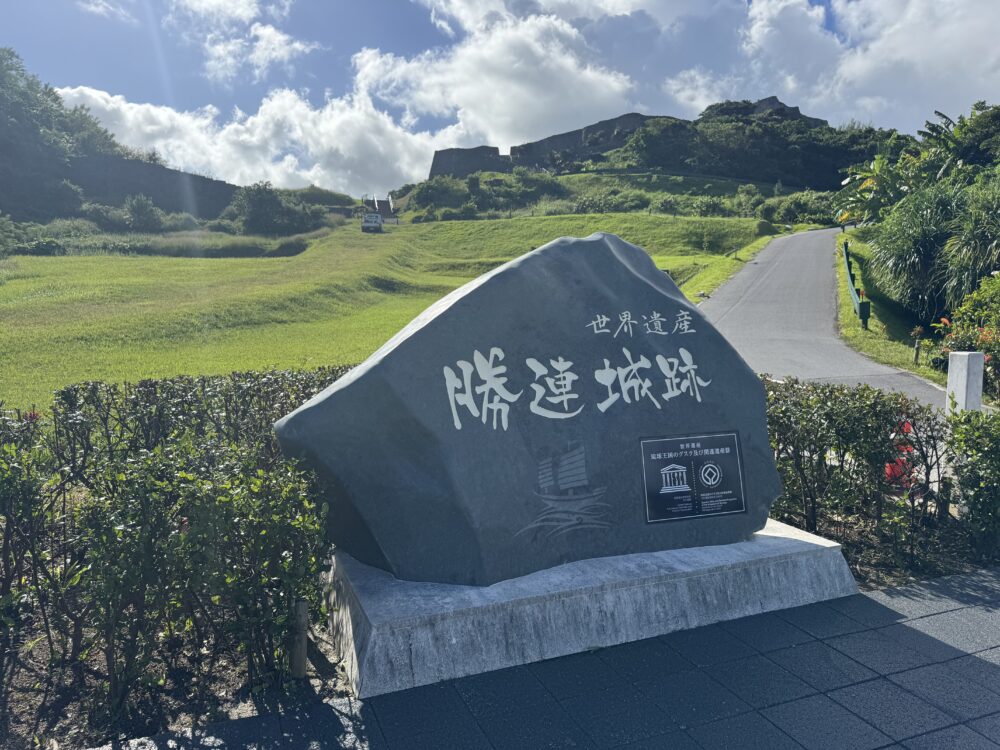
The Katsuren Castle Ruins bring together Okinawa’s history and its natural beauty.
Roughly 45 to 60 minutes is enough to get a sense of what the place has to offer.
If you want to go deeper, Amawari Park, the site’s history and culture centre, has exhibits and a live theatre where you can learn about the past.
Access & Parking
| Access | About 80 minutes by car from Naha Airport |
| Address | 3807-2 Katsuren Haebaru, Uruma City, Okinawa |
| Parking | Yes (free) 9:00-18:00 |
| Restroom | Yes |
The Katsuren Castle Ruins have a free car park, open from 9:00 to 18:00.
See the Google map below for parking details.
The history of the Katsuren Castle Ruins
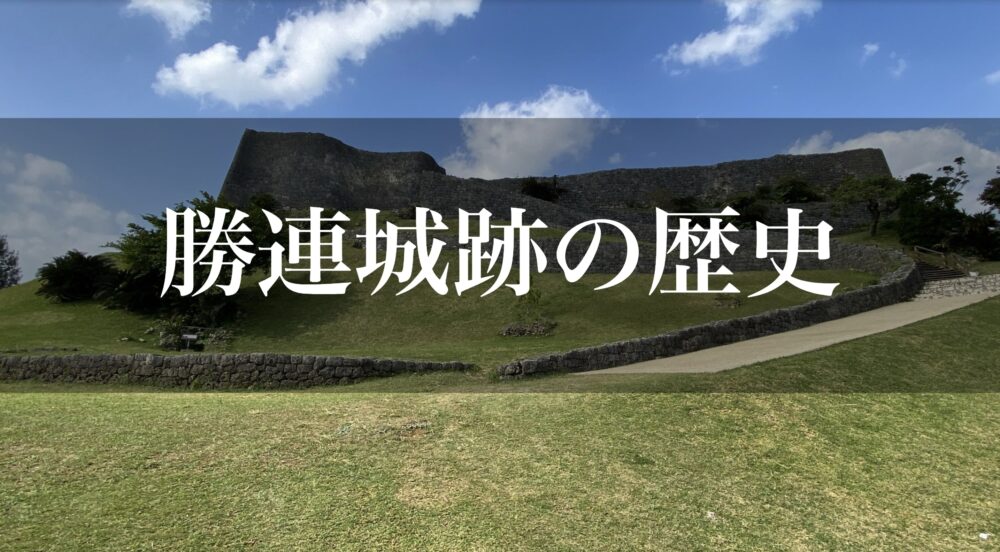
The Katsuren Castle Ruins stand as a record of history, surrounded by Okinawa’s abundant natural world.
In the days of the Ryukyu Kingdom the castle became known through Amawari, who attacked Shuri Castle in 1458 and was destroyed for it.
Built on high ground on the Katsuren Peninsula, the castle is known for a sturdy design that made the most of the terrain.
From the ruins you can see Kin Bay and the islands of Uruma City, and as far as the Nakagusuku Castle Ruins in the distance.
The limestone walls are notable for having been laid out in harmony with the natural contours of the site.
Archaeological work has turned up a great many artefacts showing that Katsuren Castle once prospered through trade with China and played an important part in international commerce.
As the Omoro Soshi anthology records, Katsuren Castle flourished to a degree comparable with Kamakura and Kyoto. In 1458, however, Amawari’s attack on Shuri Castle led to a battle with the royal forces of King Sho Taikyu, and the castle fell.
Tragedy is not the only thing these walls carry, though.
Today the ruins remain a place where the lives of former residents and the history of the Ryukyu Kingdom still feel present, and visitors take them to heart.
The Katsuren Castle Ruins are unmissable for anyone who loves history, and for anyone who loves the natural world too.
Take in the past on this historic stage, and spend a comfortable hour on a hill ringed by Okinawa’s wide blue sky and greenery.
What’s nearby the Katsuren Castle Ruins
Activities in Uruma City
Uruma City offers all kinds of marine activities.
You can book diving, snorkeling, SUP and more.
If you would like to enjoy diving or snorkeling, why not see what is available on Viator or GetYourGuide?
Ikei Island Onsen AJ Resort Island Ikei
Ikei Island Onsen AJ Resort Island Ikei is a resort hotel on Ikei Island, one of Okinawa’s smaller islands.
Every room has an ocean view, and there is an outdoor pool and hot spring on site.
A rental car is the way to go in Okinawa

A rental car is by far the best way to get around the main island of Okinawa.
Shuri Castle in Naha, the beautiful beaches up north, American Village in Chatan and the rest are scattered all over the island, so having a car lets you explore at your own pace. Buses are infrequent and rarely run to time, so whether or not you have a car makes a real difference to the trip.
Popular seasons book up quickly, so reserve early once your dates are set.
Summary
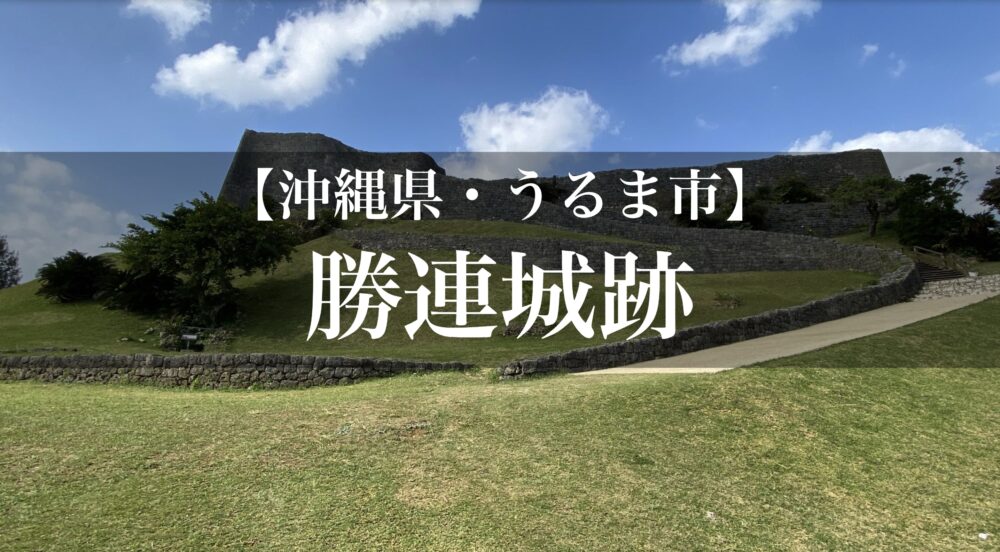
The Katsuren Castle Ruins are a rare place to take in both Okinawa’s natural world and its history.
There is a great deal to see, from the first enclosure with its sweeping view to Tamanomiuji Utaki as a place of prayer and the third enclosure as the political centre.
The stone walls and surviving features carry the splendour of the Ryukyu Kingdom into the present.
A walk of roughly 45 to 60 minutes covers the whole site, which makes it a must-see for anyone visiting Okinawa.
Whether history or nature is your thing, do come and experience everything the Katsuren Castle Ruins have to offer.
Comments