
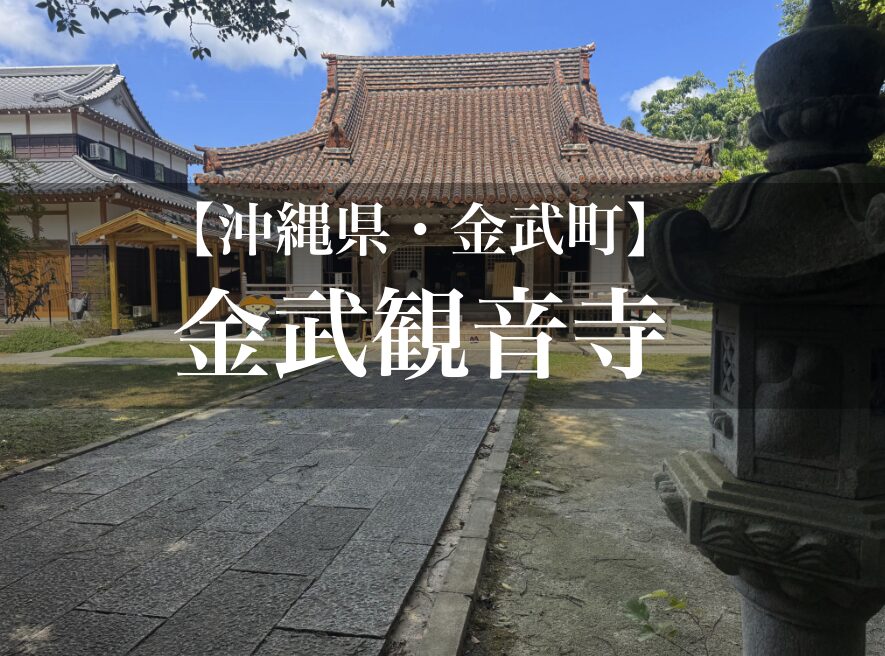
Have you heard of Kin Kannonji, the temple that stands quietly in Kin Town in central Okinawa Main Island? It is an old Koyasan Shingon temple said to have been founded in the 16th century by the monk Nisshu, and it survives today as a rare wooden building that escaped the fires of the Battle of Okinawa. This is a historical site for those in the know.
A great fukugi tree estimated at around 350 years old rises in the temple grounds, and the limestone cave on the site, Nisshu Cave, draws visitors as a mystical power spot. The temple is also closely tied to Kin-gu, one of the Eight Ryukyu Shrines, and the distinctive atmosphere left by the old fusion of Shinto and Buddhism is part of the appeal.
This article covers everything worth knowing before a visit: the blessings, the highlights, the history, and practical details such as access and parking. Precisely because it has not been turned into a tourist attraction, it lets you feel the deeper history of Okinawa. Let us take a look.
- Ratings for Kin Kannonji Temple
- Key facts about Kin Kannonji Temple
- What makes Kin Kannonji worth a visit
- The blessings of Kin Kannonji
- A temple founded in the 16th century by the monk Nisshu
- A rare wooden building that escaped the fires of war
- A fukugi tree estimated at around 350 years old
- Nisshu Cave, a mystical power spot
- Kin-gu, one of the Eight Ryukyu Shrines
- A historical site with a great serpent legend
- A short video of Kin Kannonji
- The history of Kin Kannonji
- Access and parking
- Around Kin Kannonji
- Summary
Ratings for Kin Kannonji Temple
*Ratings are the subjective assessment of the Okinawa Bookmark editor, compared with other castles and castle ruins in Okinawa.
Key facts about Kin Kannonji Temple
| Opening hours | 9:00-17:00 |
| Closed | None in particular |
| Admission | Free |
| Time needed | About 20 to 30 minutes |
| Parking | Yes (free) |
| Restroom | Yes |
| Address | 222 Kin, Kin Town, Kunigami District, Okinawa Prefecture |
Kin Kannonji is not a place where crowds gather, but it is well worth a visit if you are drawn to the deeper history of Okinawa or to temples.
What makes Kin Kannonji worth a visit
The blessings of Kin Kannonji
The principal image is Sho Kannon, long venerated as a bodhisattva who answers a wide range of prayers, from warding off misfortune to good luck and the fulfilment of wishes.
Inside Nisshu Cave are enshrined Kin Gongen and Suiten, prayed to for protection from water and fire. As one of the Eight Ryukyu Shrines, it also draws worshippers making the pilgrimage around all eight in hope of good fortune.
A temple founded in the 16th century by the monk Nisshu
Kin Kannonji is a Koyasan Shingon temple founded in 1522 by the monk Nisshu, who arrived by small boat at Fukka in Kin.
The story goes that Nisshu set sail from Wakayama Prefecture bound for the Western Pure Land and made landfall in Kin Bay, and that was the beginning. For 500 years this old temple has held the faith of the community.
A rare wooden building that escaped the fires of war
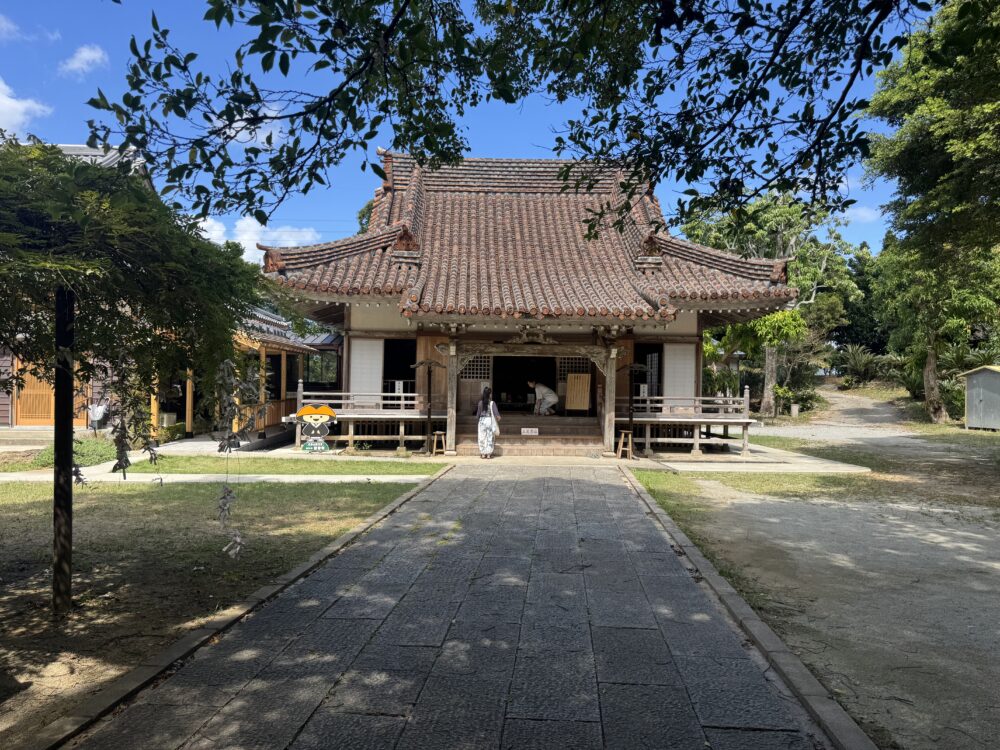
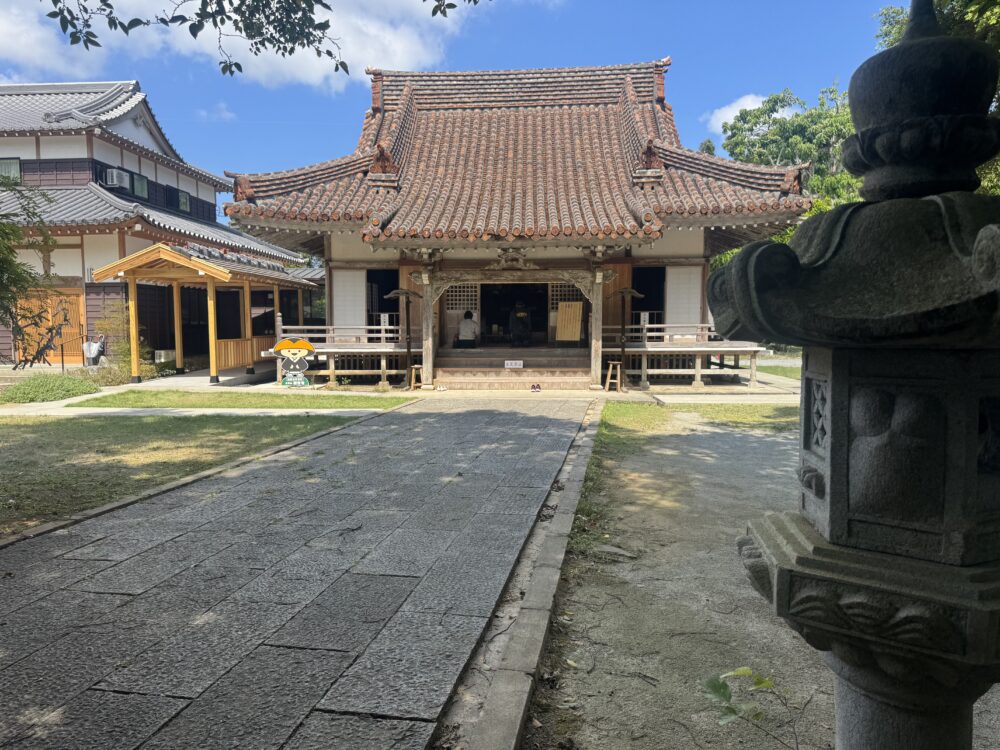
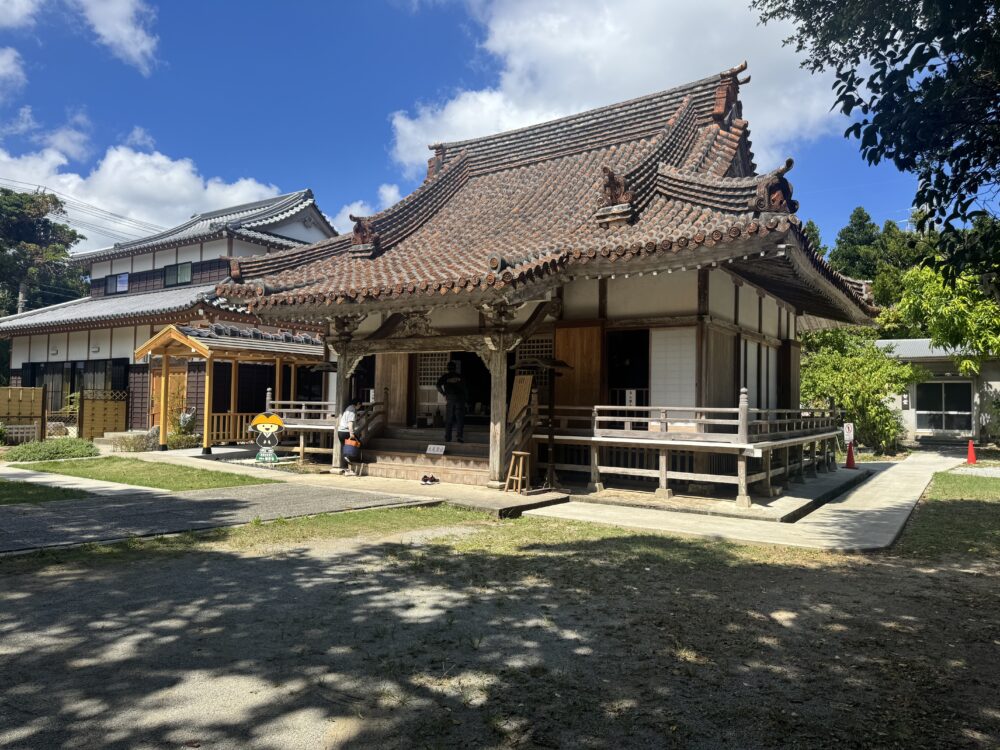
Most shrine and temple buildings in Okinawa Prefecture burned down in the war, but Kannonji escaped the flames and survives as a rare wooden structure that retains the older architectural style.
The main hall standing today was rebuilt in 1942, using construction methods drawn from early modern shrine and temple architecture. The red-tiled roof gives it a distinctly Okinawan feel, and it is one of very few prewar-style buildings left in the prefecture.
A fukugi tree estimated at around 350 years old
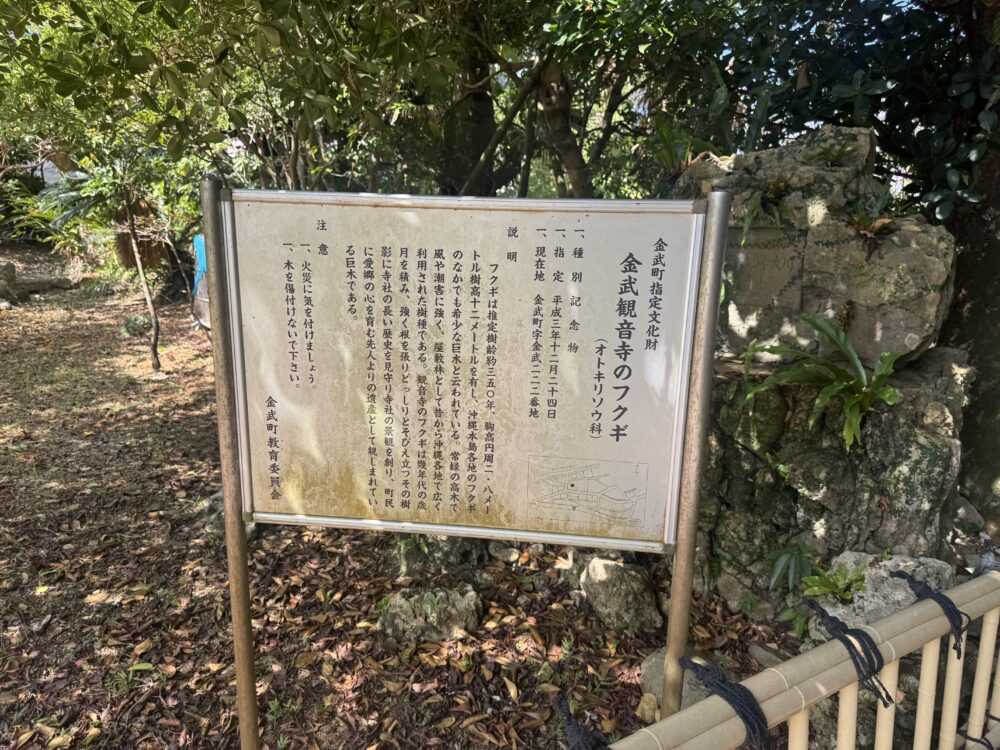
In the grounds stands the fukugi tree of Kin Kannonji, designated a cultural property by Kin Town. Fukugi is a tall evergreen, and because it stands up to wind and salt damage it has been planted as a windbreak around houses across Okinawa.
It is estimated to be around 350 years old, a symbolic presence that has quietly watched over the temple’s history across the centuries.
Nisshu Cave, a mystical power spot
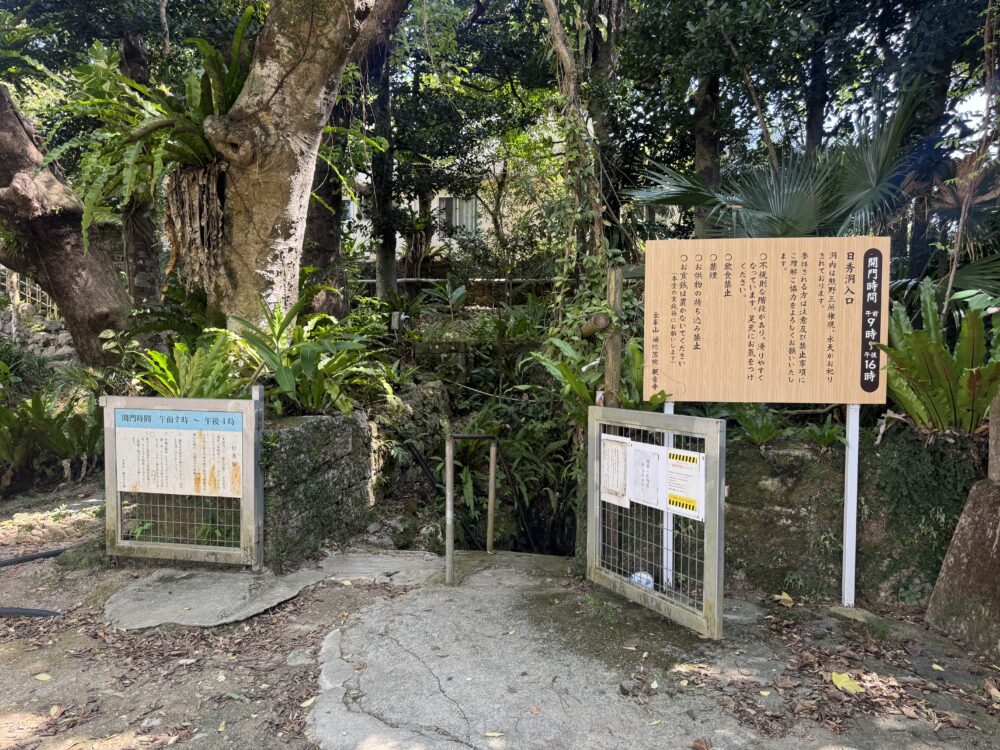
The limestone cave on the site is a dim and mysterious space, popular as a power spot. It is called Nisshu Cave, the steps down are quite steep, and the interior is dark.
Nisshu is said to have used it as a base for his teaching, and a distinctive air hangs inside that seems to draw visitors into another world.
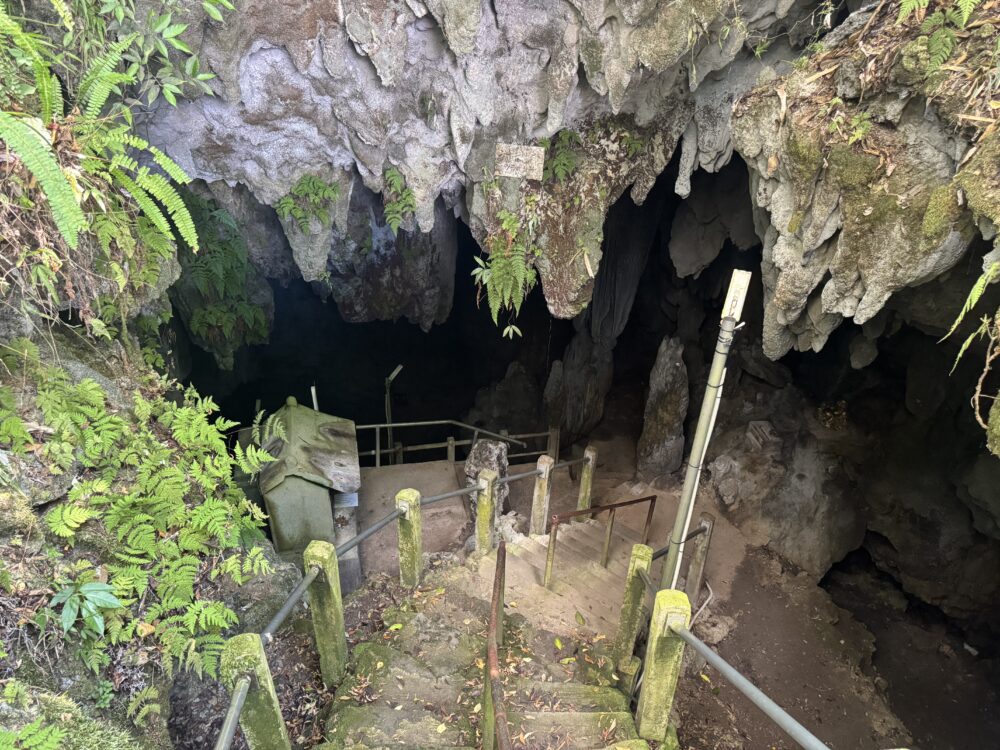
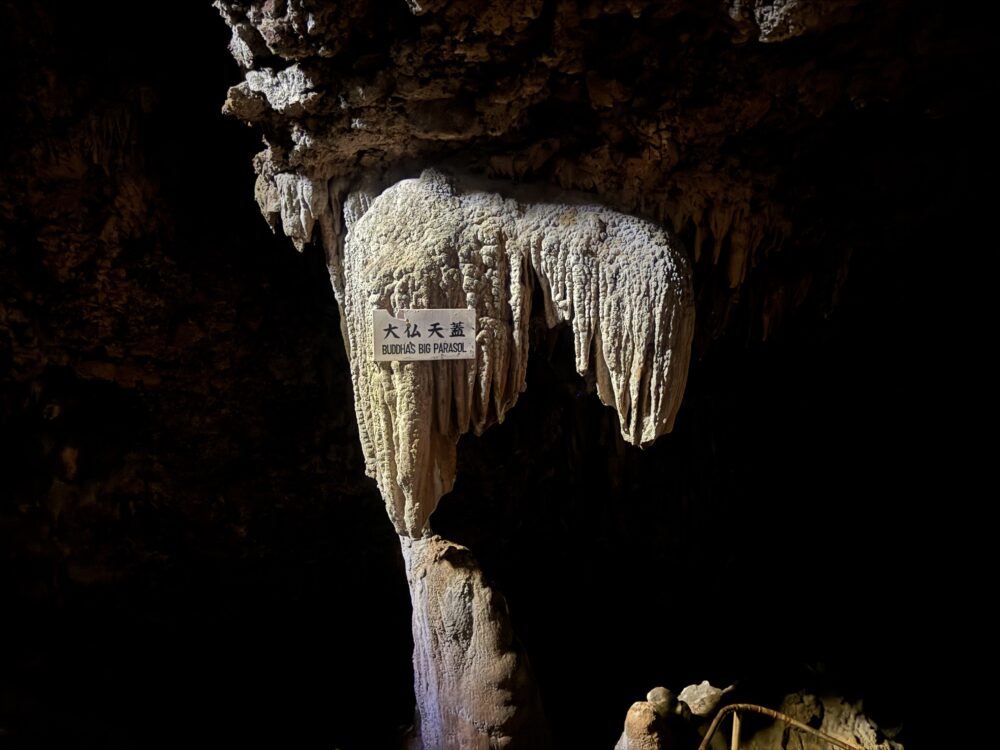
The cave looks as in the photo above. It is cooler than the surface and felt genuinely otherworldly.
Kin-gu, one of the Eight Ryukyu Shrines
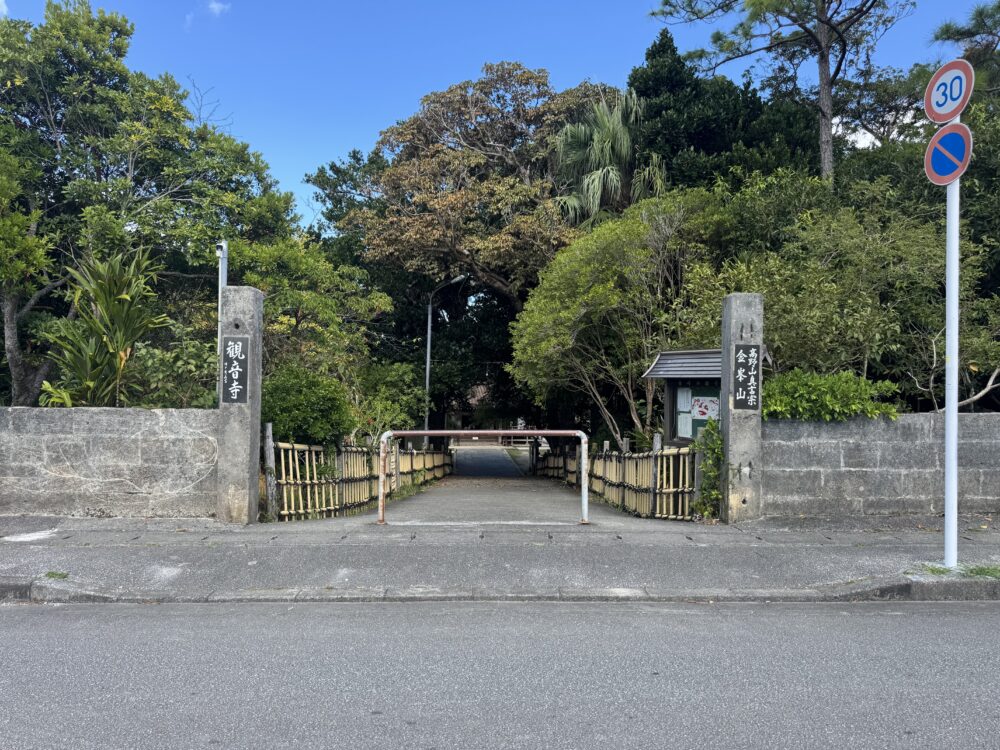
Inside Nisshu Cave is Kin-gu, one of the Eight Ryukyu Shrines, where Kumano Gongen is enshrined. What sets it apart is that there is no building called Kin-gu and no resident priest.
Kin-gu is held to be where Kumano worship in Okinawa began, a precious sacred site that carries the traces of the old fusion of Shinto and Buddhism into the present.
A historical site with a great serpent legend
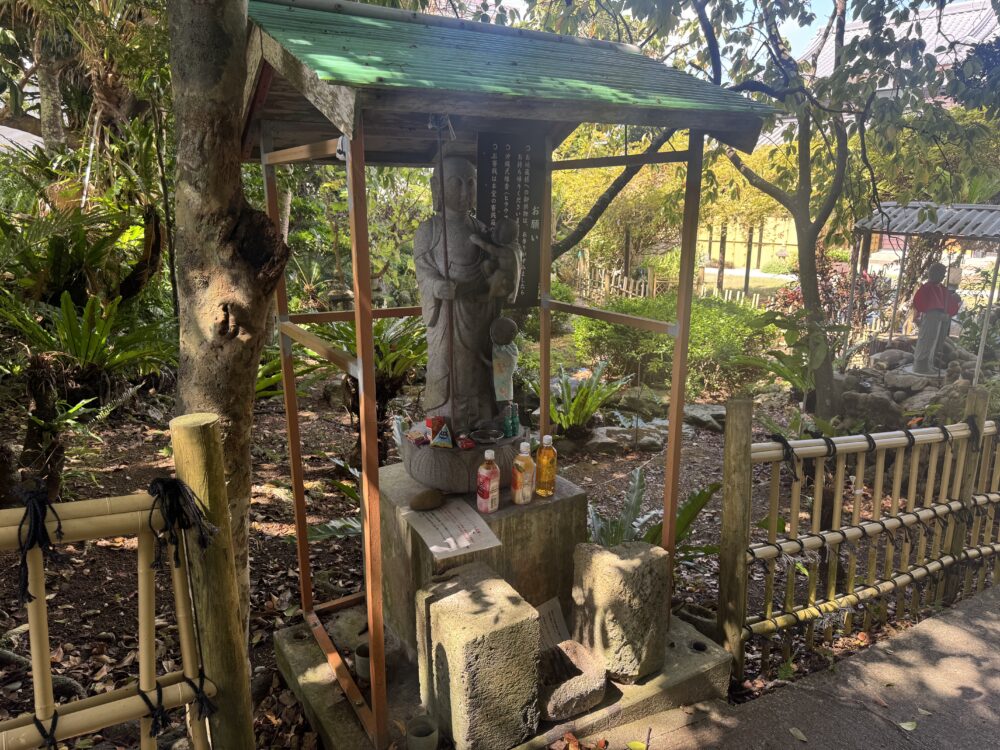
An intriguing legend surrounds the founding of Kin Kannonji. A great serpent is said to have lived in a cave in Kin and tormented the villagers, until Nisshu chanted sutras and sealed it inside, after which the villagers could live in peace again.
Walking the site with the temple’s origins and the story of the land laid over one another makes for a richer visit.
A short video of Kin Kannonji
Here is a short video of Kin Kannonji. Please take a look.
The history of Kin Kannonji
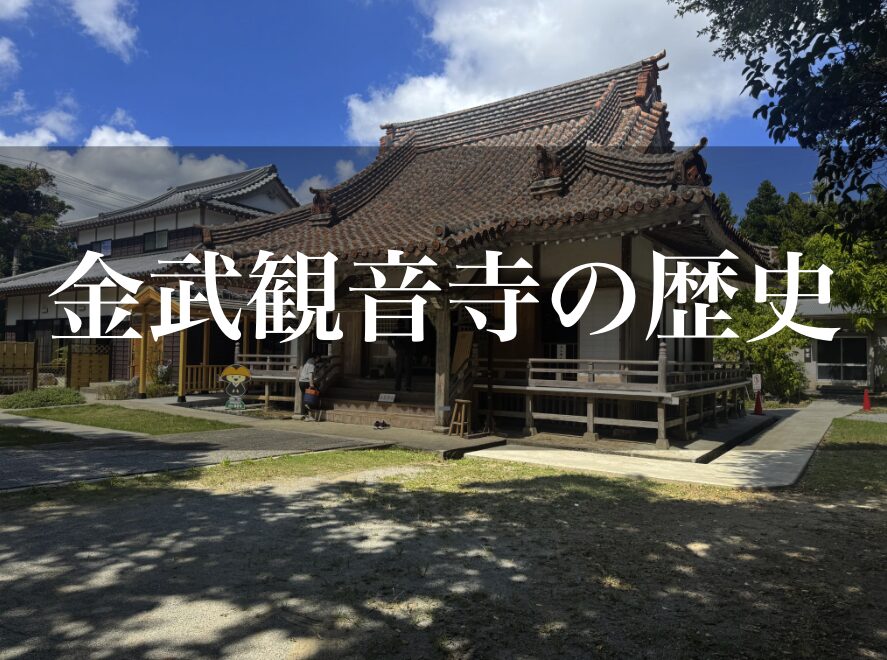
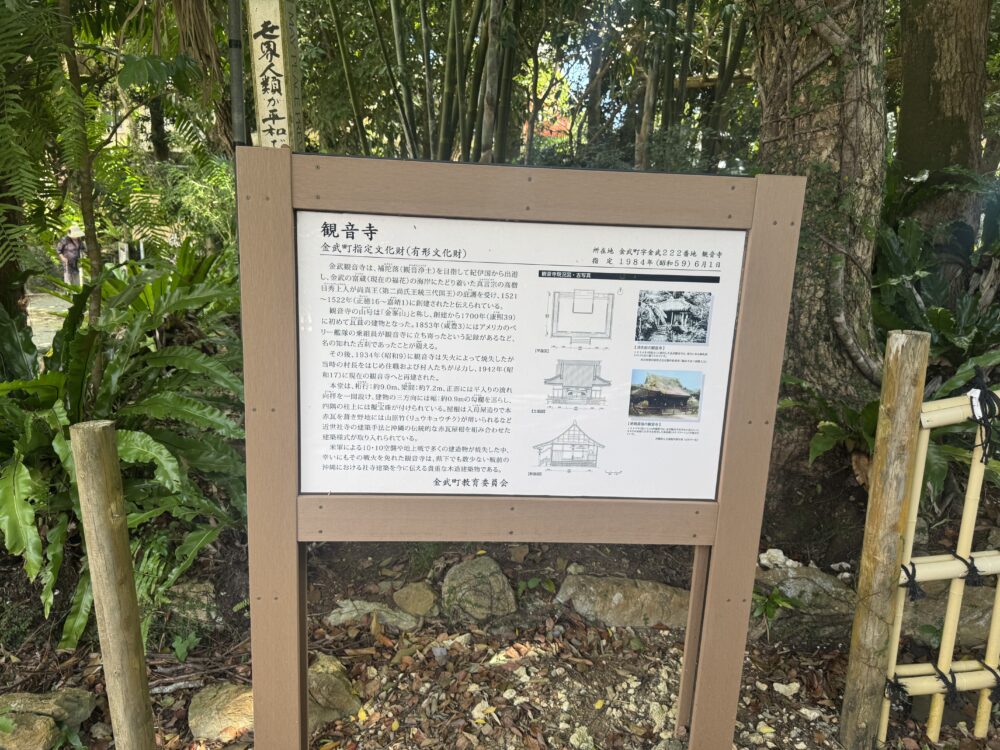
By tradition, Kin Kannonji is a Koyasan Shingon temple founded in the 16th century by the monk Nisshu Shonin. Nisshu set out from Kii Province for Tang China, was shipwrecked, and drifted ashore at Funaya (Fukka Port) in Kin, in the Ryukyu Kingdom. He then made a limestone cave in Kin his base for spreading the teaching and founded Kannonji, with the founding given as 1522. The cave that served as his base is called Nisshu Cave, after the monk himself.
Over its long history the temple has met with disaster as well. It burned down in a fire in 1934, and the Kannonji standing today was rebuilt in 1942, using construction methods drawn from early modern shrine and temple architecture. What stands out most is that it survived the Pacific War. Most shrine and temple buildings in Okinawa Prefecture burned down in the war, but Kannonji was spared and survives as a rare wooden structure retaining the older architectural style, one of very few buildings in the prefecture to carry the prewar style.
Kin Kannonji is also closely tied to Kin-gu, one of the eight shrines given special standing by the royal government in the Ryukyu Kingdom era, known as the Eight Ryukyu Shrines. At the other seven, shrine and temple are separate; at Kin Kannonji and Kin-gu the situation of the era when Shinto and Buddhism were fused remains strongly, and the two are still one. The fukugi tree in the grounds, designated a cultural property by Kin Town, is estimated at around 350 years old, and nature that has weathered the long years alongside the buildings quietly carries this temple’s story into the present.
Access and parking
| Access | About 90 minutes by car from Naha Airport |
| Address | 222 Kin, Kin Town, Kunigami District, Okinawa Prefecture |
| Parking | Yes |
| Restroom | Yes |
Kin Kannonji has parking, so you can drive there.
There is space for around 10 cars.
Around Kin Kannonji
Things to do in Kin Town
Kin Town has a range of water sports on offer.
You can book mangrove tours, snorkeling, SUP, and more.
If you fancy trying something, why not take a look on Viator or GetYourGuide?
ASBO STAY HOTEL
A five-minute walk from KIN Sunrise Beach is the ASBO STAY HOTEL. It opened in January 2022 in the Ginbaru district of Kin Town, which makes it a relatively new resort hotel.
Every room has an ocean view, and even the standard rooms are over 30 square metres. Taking in the sea in front of you and the ridgeline of Mount Onna behind at the same time is something only this hotel offers.
It has a natural hot spring with no added water, a rarity in Okinawa, along with an open-air bath, a jacuzzi, a sauna, and a cold plunge. Being able to soak away the day straight after the beach is a real plus on a trip built around the sea.
A rental car is the way to go in Okinawa

A rental car is by far the best way to get around Okinawa Main Island.
Shuri Castle in Naha, the beautiful beaches of the north, American Village in Chatan and more are scattered across the island, and with a car you can take them at your own pace. Buses are infrequent and do not always run on time, so having a car or not makes a real difference to the trip.
Cars fill up quickly in the peak season, so we recommend booking early once your travel dates are set. One important note for overseas visitors: to drive in Japan you must obtain an International Driving Permit (Geneva Convention) in your home country before you depart, and remember that traffic in Japan drives on the left.
Summary
Kin Kannonji is a temple with 500 years of history, and one of very few wooden buildings in the prefecture to have come through the Battle of Okinawa with its old form intact. The blessings of Sho Kannon, the mystical Nisshu Cave, the fukugi tree estimated at around 350 years old, and the unity with Kin-gu of the Eight Ryukyu Shrines: a great deal is packed into a single set of grounds.
It is not a showy spot crowded with visitors, and that is exactly why you can face the history and faith of Okinawa properly, in quiet and settled air. Walking the green-shaded grounds should leave you feeling lighter.
Admission is free and there is parking and a restroom on site, which makes it easy to drop in. If you are touring the north or centre of Okinawa Main Island, do make time for it. It suits anyone who loves history, and equally anyone after power spots or a slightly different kind of Okinawa trip.
Comments