
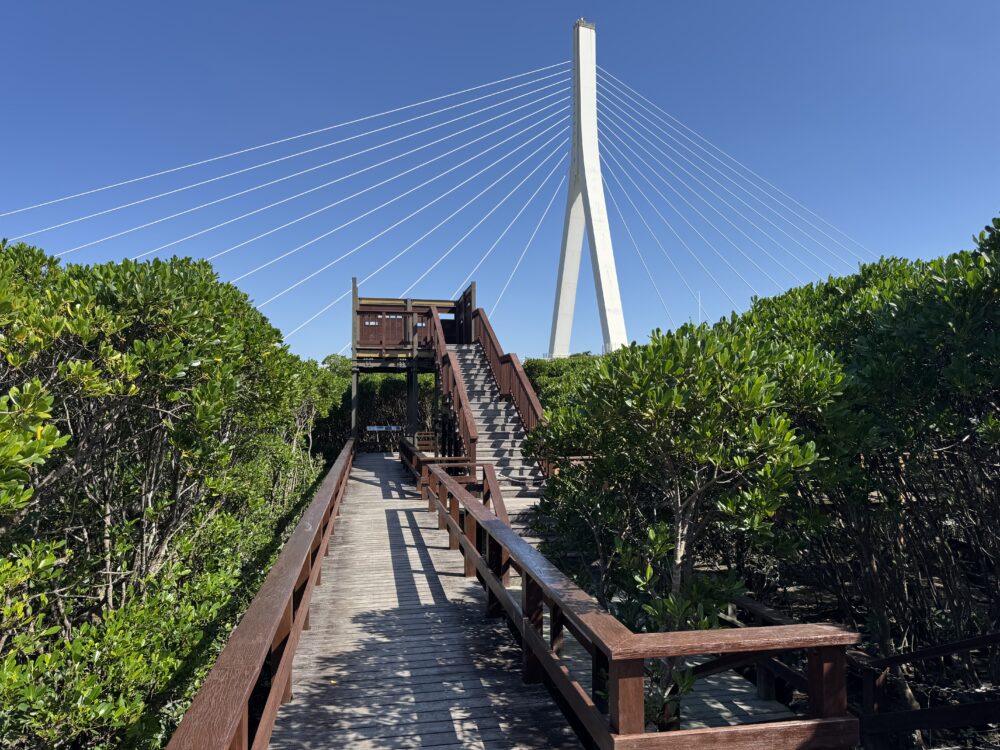
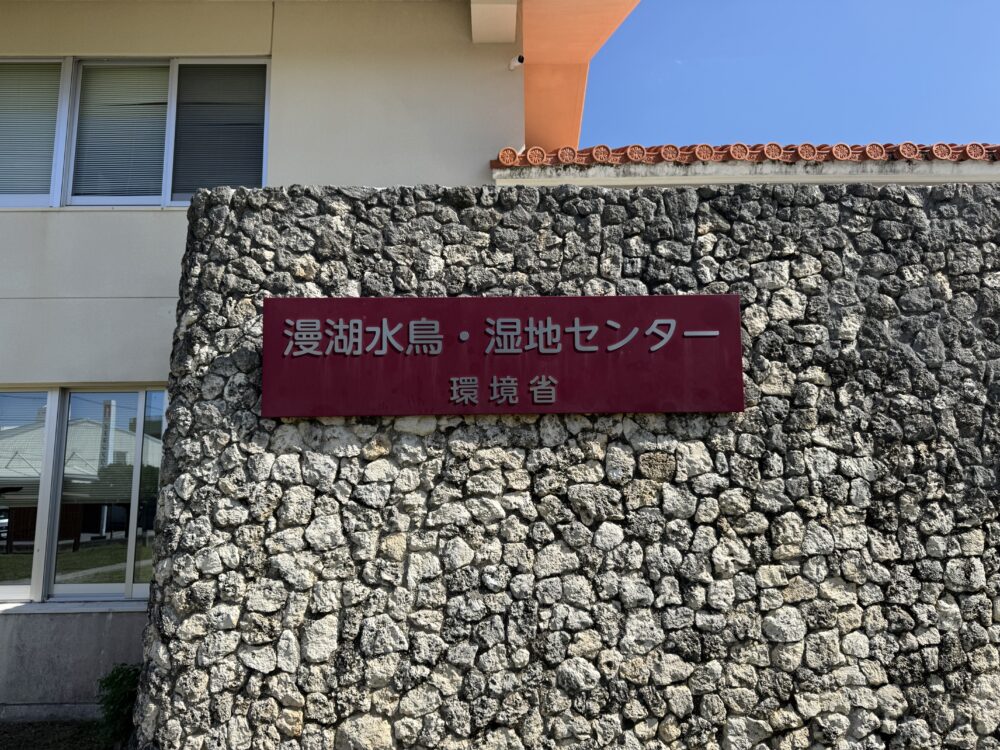
The Manko Waterbird & Wetland Center is a nature center in Tomigusuku City, in the south of Okinawa’s main island.
Japan’s Ministry of the Environment opened it in 2003 on the shore of Manko, a tidal flat that straddles Naha and Tomigusuku.
Manko was registered as a Ramsar wetland in 1999 and is known as a stopover for migrating shorebirds such as sandpipers and plovers.
Inside, exhibits introduce Manko’s wildlife, and from a boardwalk through the mangroves and a second-floor observation room you can watch crabs, mudskippers and waterbirds.
Admission is free, and the center is about 20 minutes by car from Naha Airport.
Rating: Manko Waterbird & Wetland Center
*Ratings are the personal view of the Okinawa Bookmark editor, based on comparison with other sights in the prefecture
Manko Waterbird & Wetland Center: the basics
| Opening hours | 9:00〜17:00 |
| Closed | Mondays (or the following day if Monday is a public holiday) Okinawa Memorial Day (June 23) New Year holidays (December 29 to January 3) |
| Admission | Free |
| Restrooms | Available (including an accessible restroom) |
| Official website | https://www.manko-mizudori.net/ |
When Monday is a public holiday, the center opens and closes on the following day instead.
Groups of 10 or more, and anyone who would like a guided talk from the staff, need to apply in advance.
Highlights
Manko, a Ramsar-listed tidal flat
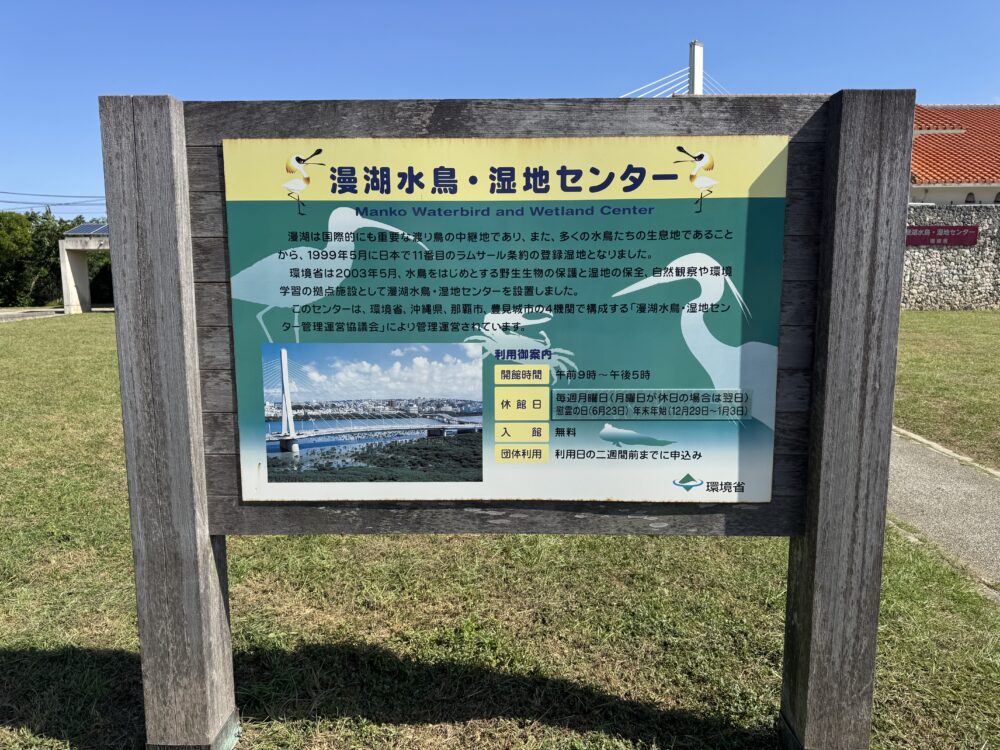
Manko is a tidal flat that spreads across the mouth where the Kokuba River and the Noha River meet.
It is known across Japan as a stopover for migrating sandpipers and plovers, and in May 1999 it became Japan’s 11th Ramsar wetland.
It was made a national wildlife protection area in 1977, and part of it was designated a special protection zone in 1997.
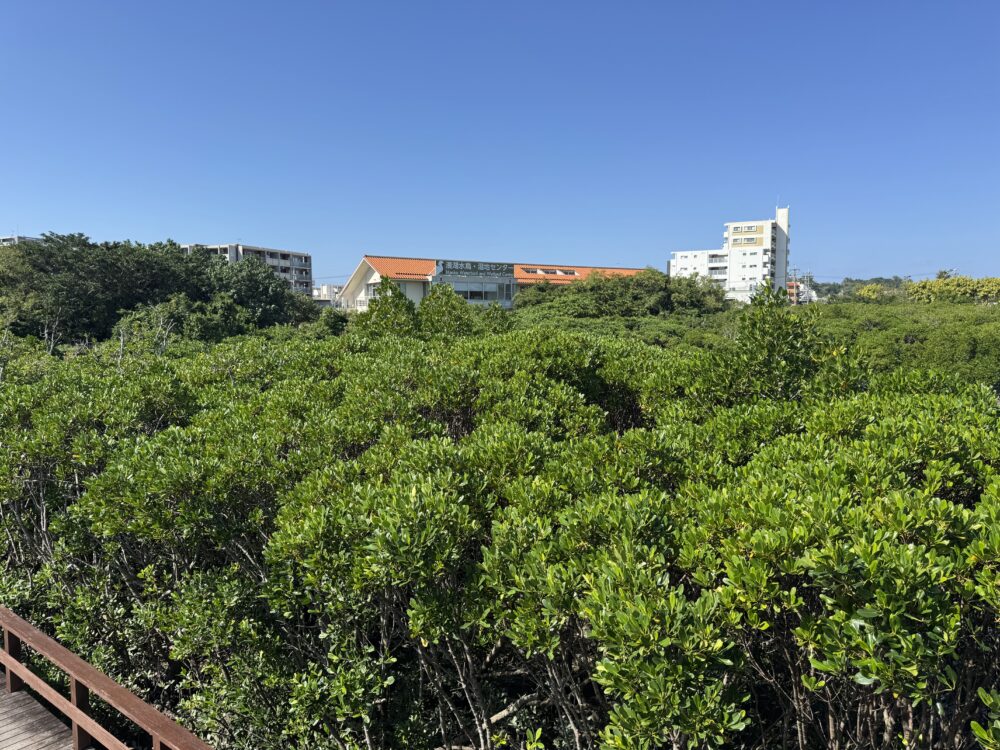
A boardwalk through the mangroves
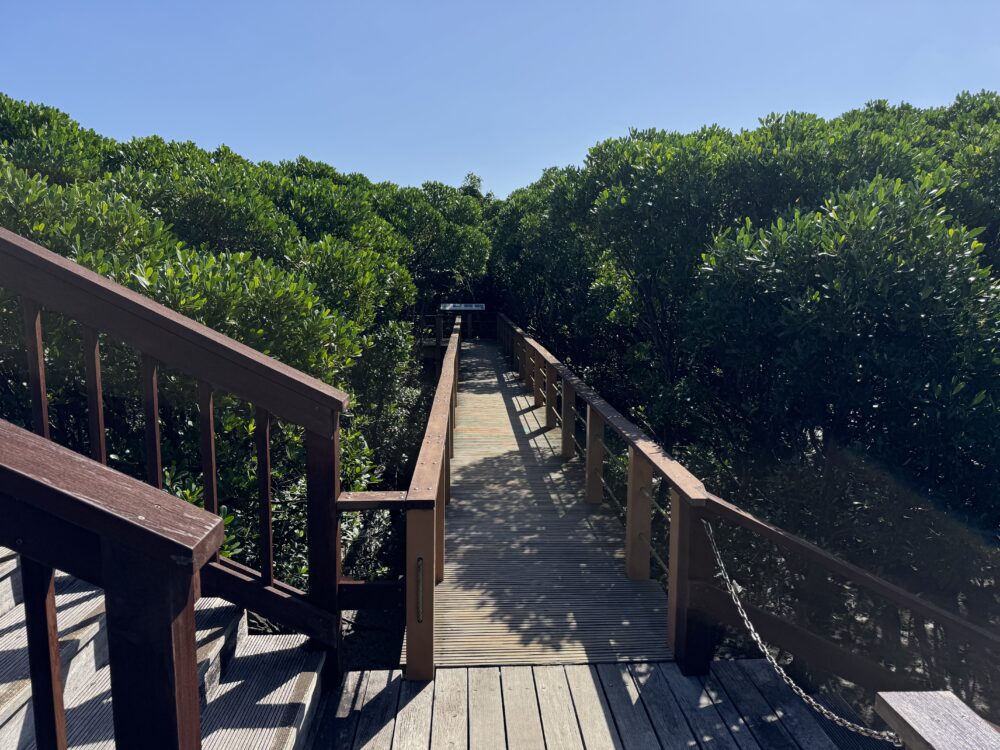
From the first-floor terrace, a 264-meter boardwalk leads out into the mangrove forest.
The mangroves are mostly Kandelia obovata, with some Rhizophora stylosa and Bruguiera gymnorhiza as well.
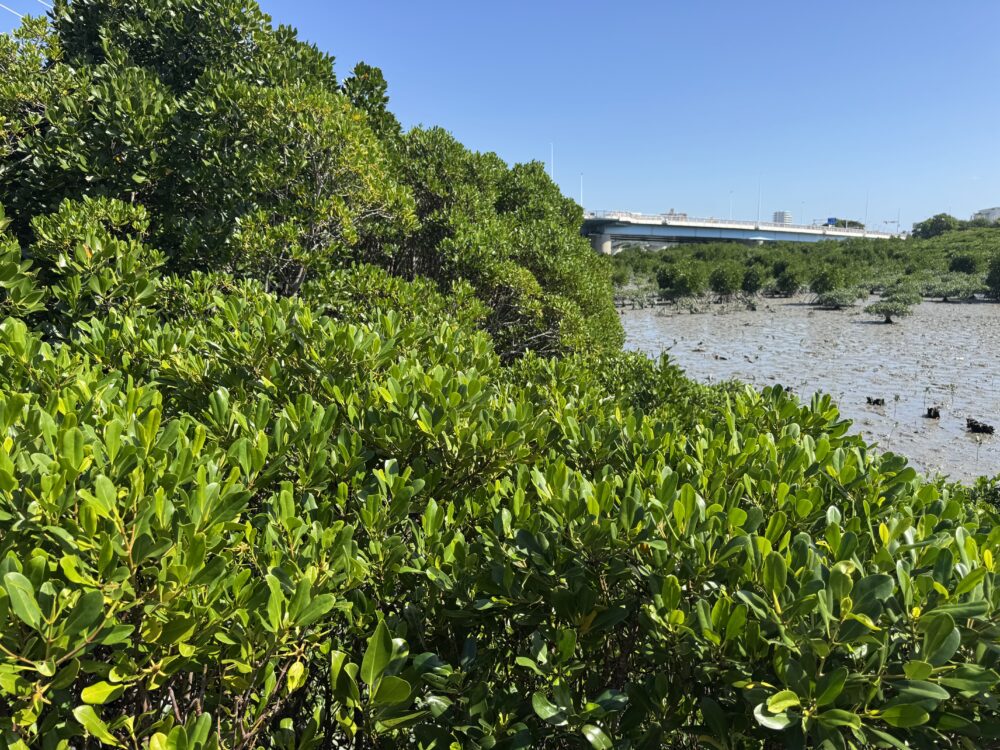
On the mudflat below you can watch fiddler crabs and other crabs, as well as mudskippers, scurrying around up close.
There are no steps on the first floor or the boardwalk, so it is easy to get around with a wheelchair or stroller.
Birdwatching from the second-floor observation room
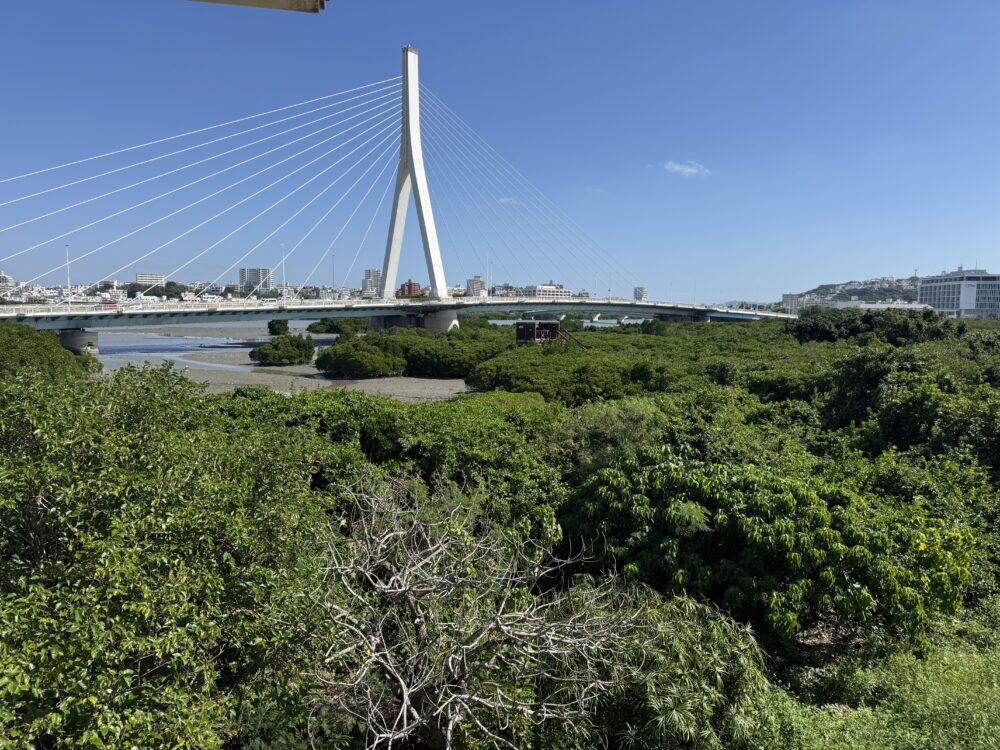
The second-floor observation room has four telescopes that you are free to use to watch the birds on the mudflat.
More than 170 bird species have been recorded at Manko, and little egrets, great egrets and ospreys can be seen all year round.
From autumn into winter, migrants such as Pacific golden plovers, dunlins and grey plovers arrive as well.
Next to the observation room there is a reading corner with picture books and field guides.
Rare black-faced spoonbills in winter
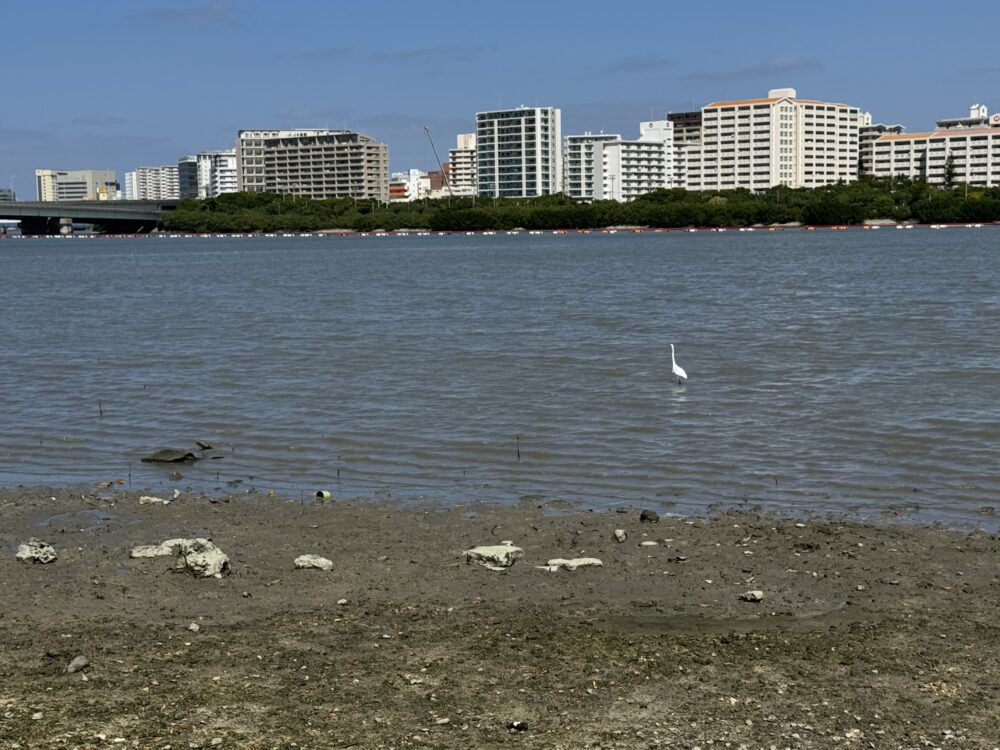
In winter, Manko is visited by the black-faced spoonbill, a precious bird found in small numbers worldwide.
They usually arrive between late October and early December and can be seen until around May.
The best time to see them is from around December to April.
Usually only a few to about ten birds come, and the number varies a lot from year to year.
Learn about Manko in the exhibition room
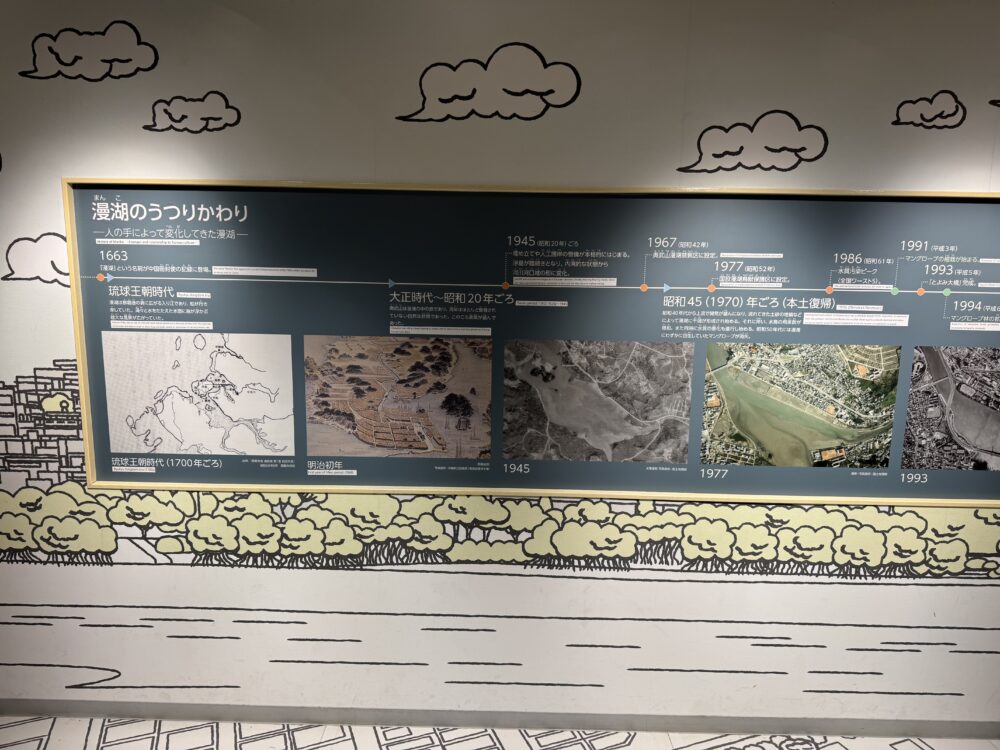
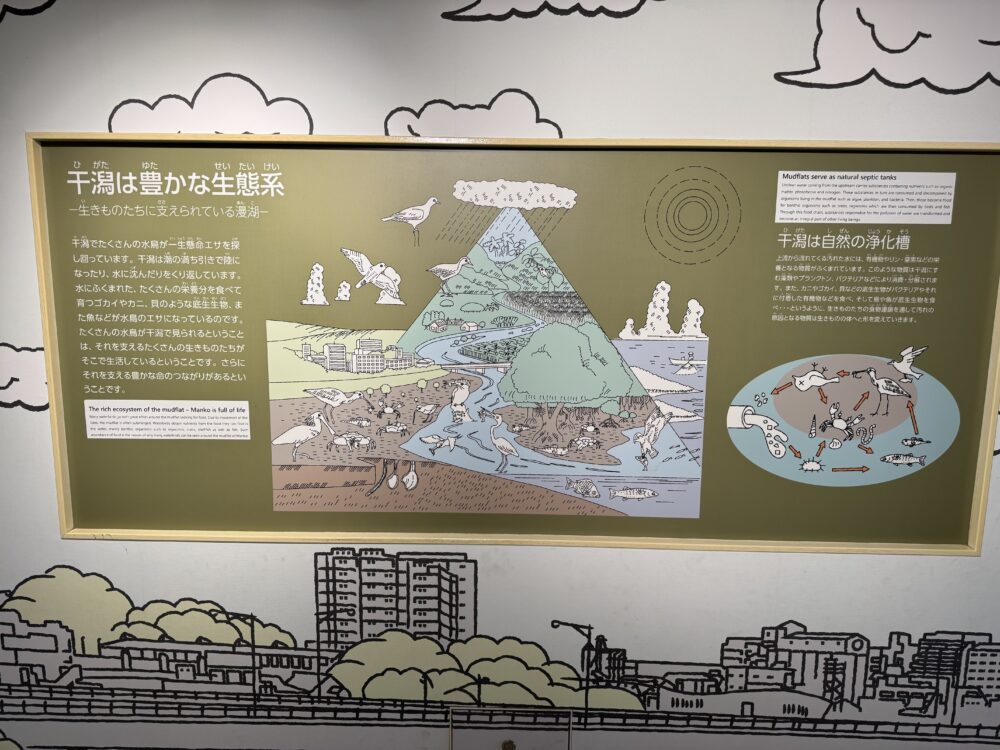
In the permanent exhibition room on the first floor, an 80-inch screen shows a roughly 12-minute film about Manko’s history and nature.
There are also dioramas of black-faced spoonbills, mud crabs, mudskippers and more, making it a fun place to learn with children.
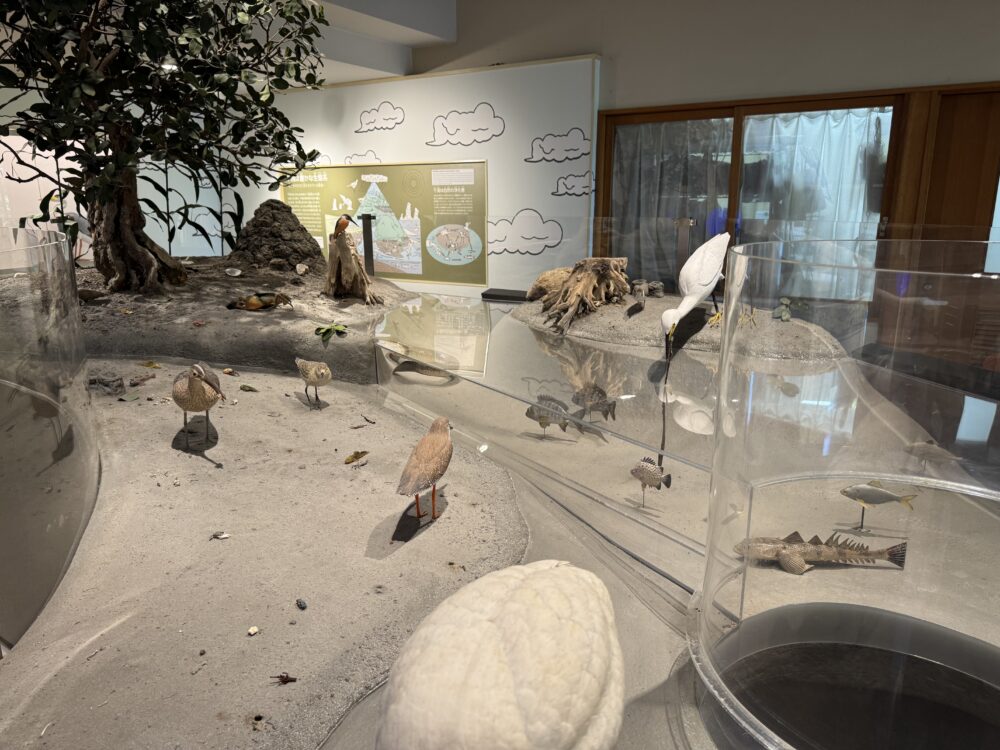
The special exhibition corner on the first floor hosts shows such as bird photo exhibitions and children’s artwork.
Nature walks and other events
The center holds regular birdwatching walks, nature observation sessions and craft workshops.
During the summer holidays it also runs a children’s program called the “Manko Nature School”.
Check the news section of the official website for dates and how to sign up.
Best seasons and tide times
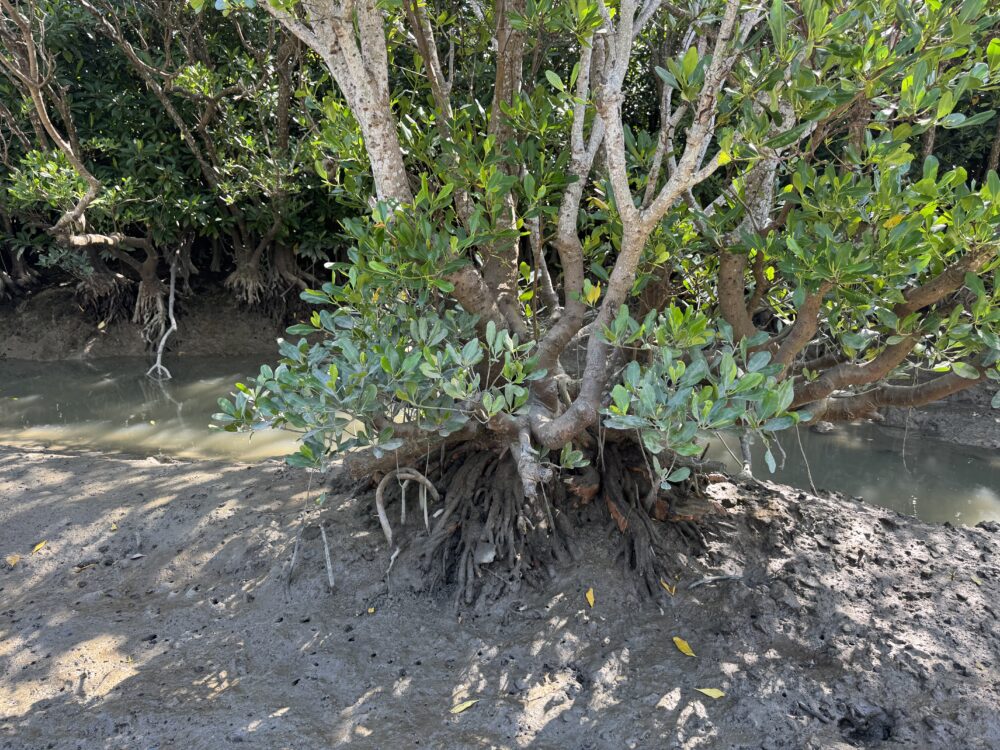
For waterbirds, the best time is around November to February, when migrants are most numerous; for crabs, go on a summer day at low tide between June and September.
If you are going for the birds, try to avoid the exact times of high and low tide. Check the tide table before you set off.
At low tide the birds move far out toward the main channel of the Kokuba River, so binoculars make them much easier to see.
*Source: https://www.manko-mizudori.net/welcome/recommend/
Access & Parking
| Access | About 20 minutes by car from Naha Airport |
| Address | 982 Tomigusuku, Tomigusuku City, Okinawa |
| Parking | Available (free) |
| Restrooms | Available |
The Manko Waterbird & Wetland Center has a free parking lot that can also take large buses.
By Yui Rail monorail, it is about a 15-minute walk from Onoyama-koen Station.
By local bus, it is about a 10-minute walk from the Oroku bus stop (served by routes 9, 11, 101 and 105).
See the Google Map below for details.
Around the Manko Waterbird & Wetland Center
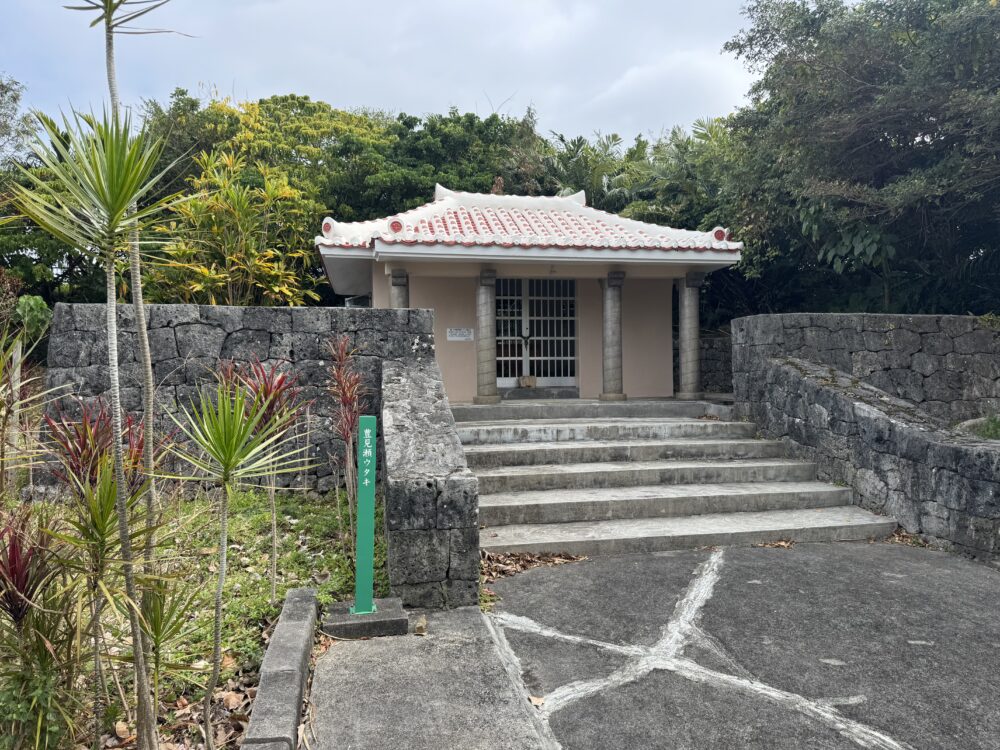
Tomigusuku Gusuku
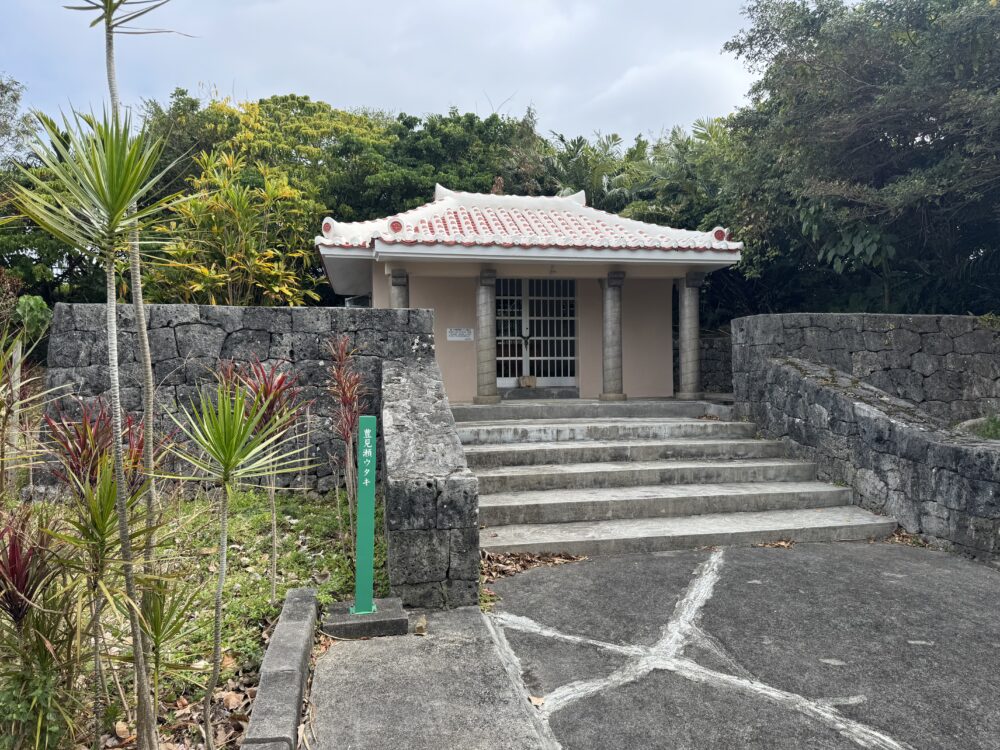
Tomigusuku Gusuku is a castle site on high ground overlooking Manko, and is said to be the birthplace of Haarii dragon boat racing.
On February 21, 2026, it reopened to the public as the Tomigusuku Castle Ruins for the first time in about 22 years.
Activities in Tomigusuku
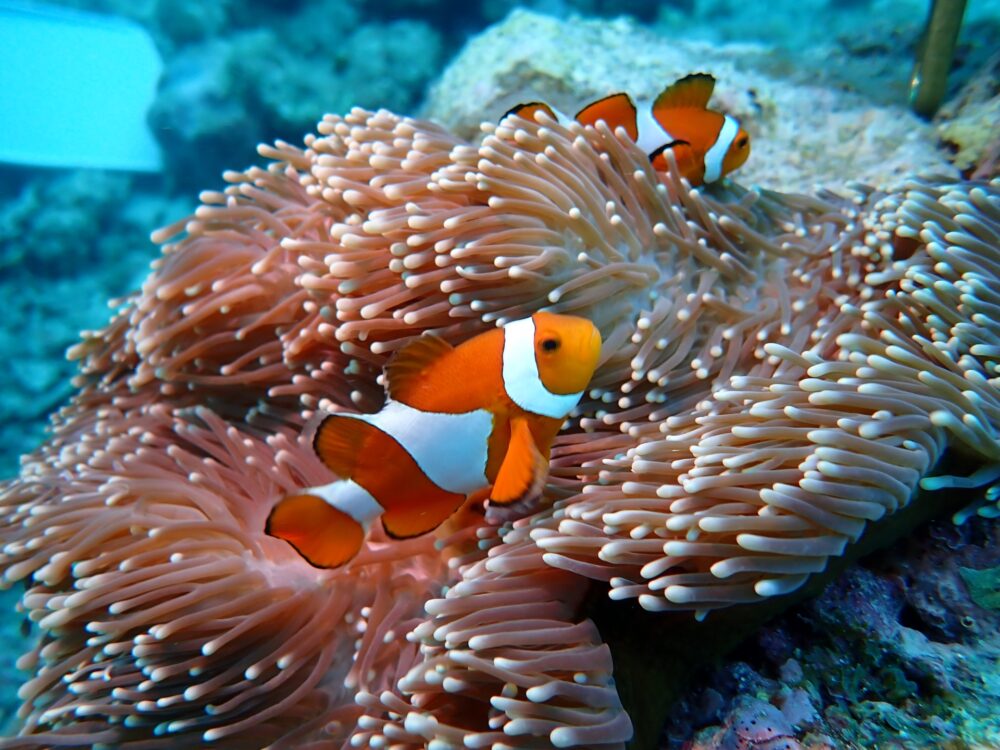
Tomigusuku offers plenty of activities, from snorkeling to SUP.
You can book through Viator or GetYourGuide, so it is worth a look.
A Rental Car Is the Way to Go in Okinawa
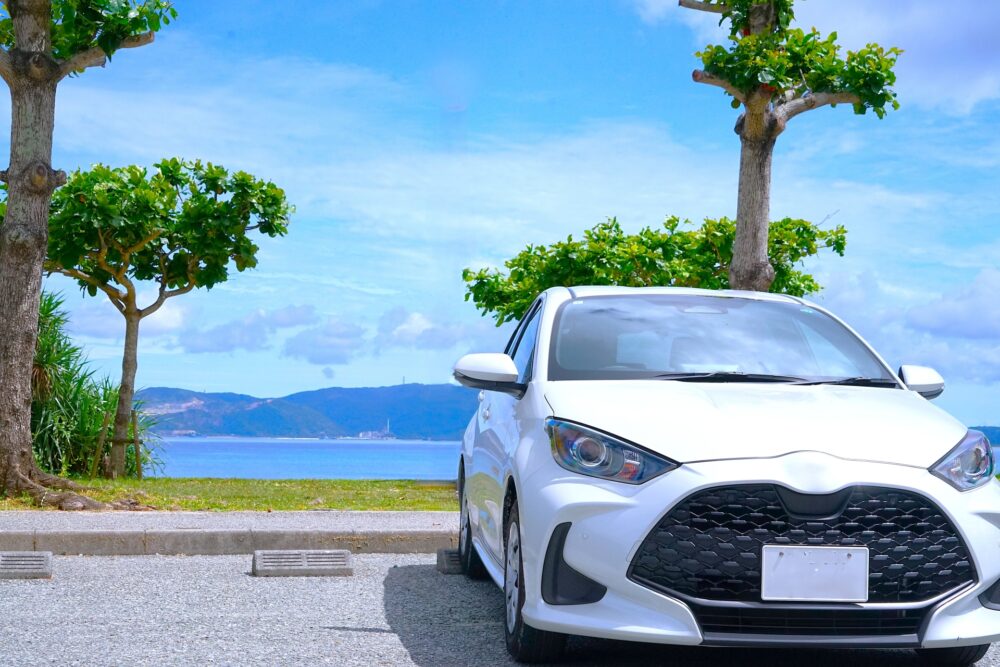
A rental car is by far the best way to explore Okinawa’s main island.
Sights such as Shuri Castle in Naha, the beautiful beaches of the north and American Village in Chatan are spread across the island, so with a car you can explore freely at your own pace. Buses are infrequent and often late, so having a rental car makes a big difference to how much you get out of your trip.
Popular seasons book up quickly, so reserve early once your dates are set.
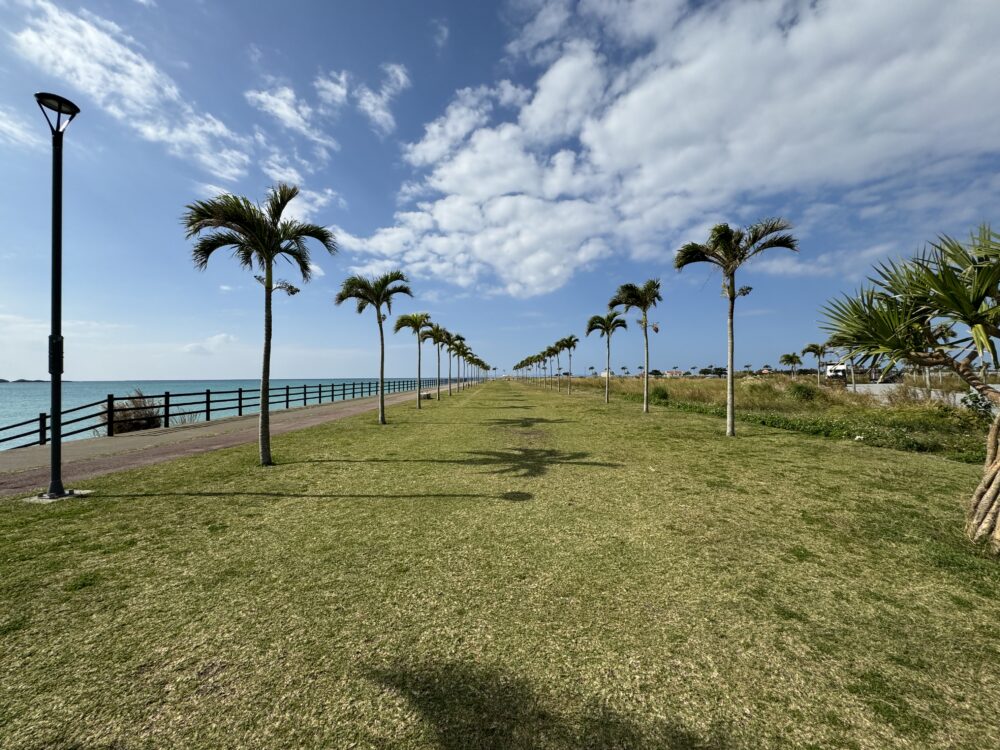
Yashinoki Road
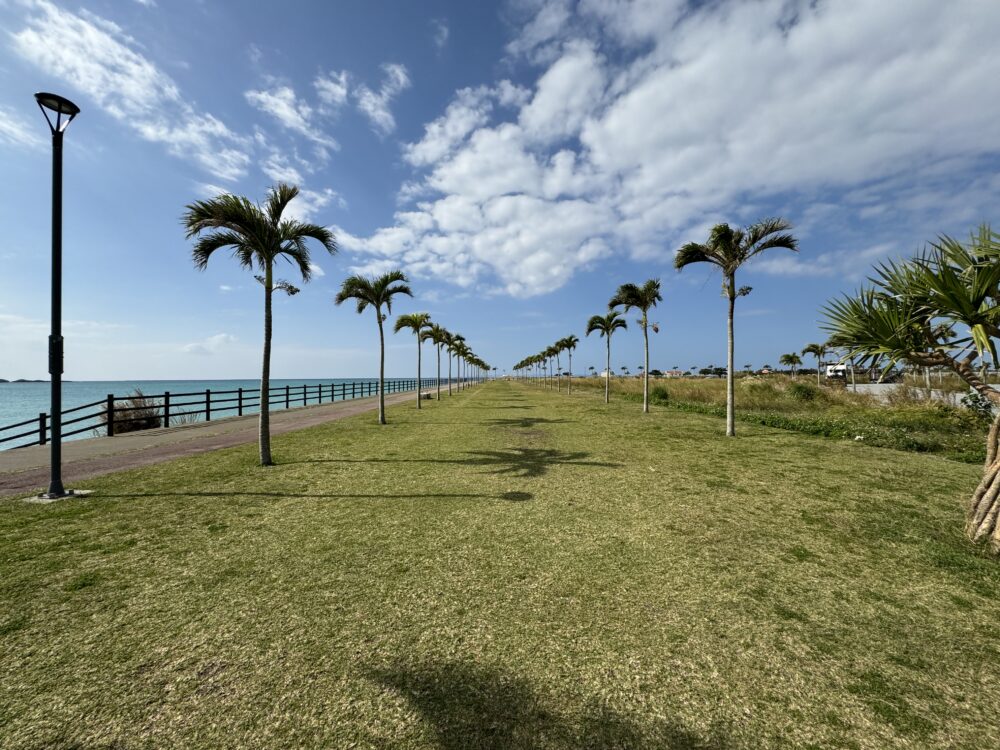
Yashinoki Road is a popular photo spot in Toyosaki, Tomigusuku.
Palm trees line both sides of the road for about a kilometer, and you can get them in your photos together with the beautiful sea.
Summary
In this article we introduced the Manko Waterbird & Wetland Center.
The Manko Waterbird & Wetland Center is a free facility on the shore of Manko, a Ramsar-listed tidal flat.
With a boardwalk through the mangroves and an observation room where you can watch birds through telescopes, it is a place where both children and adults can get close to Okinawa’s nature.
The center is closed on Mondays (or the following day if Monday is a public holiday), so check before you go.
If you are visiting Tomigusuku, be sure to stop by the Manko Waterbird & Wetland Center!
Thank you for reading to the end.
Comments