
This time we’re looking at the dive sites around Irabu Island, Miyako Island.
Irabu Island is linked to Miyako Island’s main island by the Irabu Ohashi Bridge, and together with Shimoji Island just to the west it forms the heart of diving on Miyako Island.
If Shimoji Island is the island of big terrain, headlined by the Three Great Formations, Irabu Island’s strengths are shallow arches and holes plus big animals such as turtles and pelagics.
Most sites are shallow, so even divers who have only just been certified can enjoy terrain diving here.
This article covers 19 dive sites around Irabu Island, with depths and levels.
What makes the Irabu Island area special
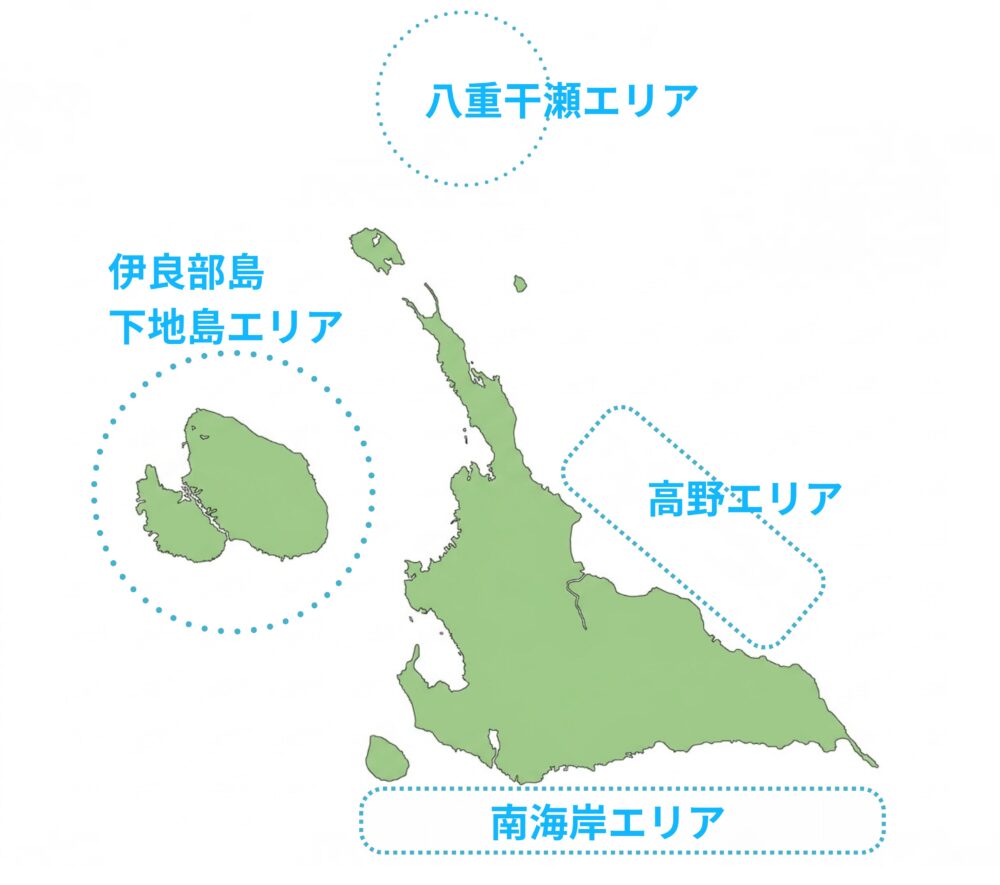
The Irabu Island area lies northwest of Miyako Island and is known for clear water and atmospheric terrain.
The character of Irabu Island comes down to these three points.
| Feature | Details |
|---|---|
| Shallow arches and holes | Most sites sit between 2m and 18m, so beginners can enjoy the terrain |
| Big animals and schooling fish | Turtles, dogtooth tuna, schools of anthias and more |
| Main season: spring to summer | An area you dive when southerly winds blow |
Shallow arches and holes all in one place
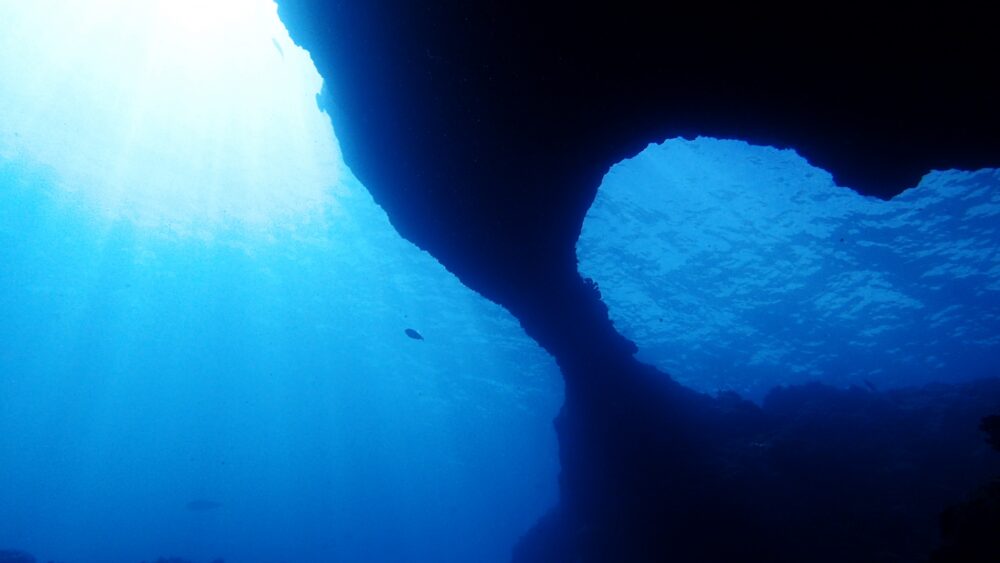
The sites around Irabu Island are mostly shallow arches and holes.
Shiratori Hole, Twin Hole and Surprise Hole all start from around 2m, so even a first taste of terrain diving is manageable.
At the same time, sites like L-Shaped Arch and Warp Hole reach 30m, so you can pick to suit your experience.
| Terrain | Typical depth | Representative sites |
|---|---|---|
| Arches | 5–30m | L-Shaped Arch / W Arch / Z Arch |
| Holes | 2–27m | Cross Hole / Shiratori Hole / Surprise Hole / Twin Hole |
| Caves | 5–30m | Warp Hole / Snake Hole (Gakeshita) |
| Bommies and reef | 5–30m | Hanadai no Ne / Surgeon Reef / Saba-oki / Shiratorizaki / Overhang |
Big animals and schooling fish
Irabu Island’s other strength is its big animals and fish schools.
Overhang in particular is known for a high turtle encounter rate.
| Dive site | Marine life to look for |
|---|---|
| Overhang | Sea turtles (high encounter rate) |
| L-Shaped Arch | Dogtooth tuna |
| Surgeon Reef | Sea turtles, dogtooth tuna, striped large-eye bream |
| Hanadai no Ne | Schools of scalefin and purple queen anthias |
| Twin Hole | Schools of silversides |
| Saba-oki | Schools of scissortail sergeant, whitetip reef sharks |
Main season: spring to summer
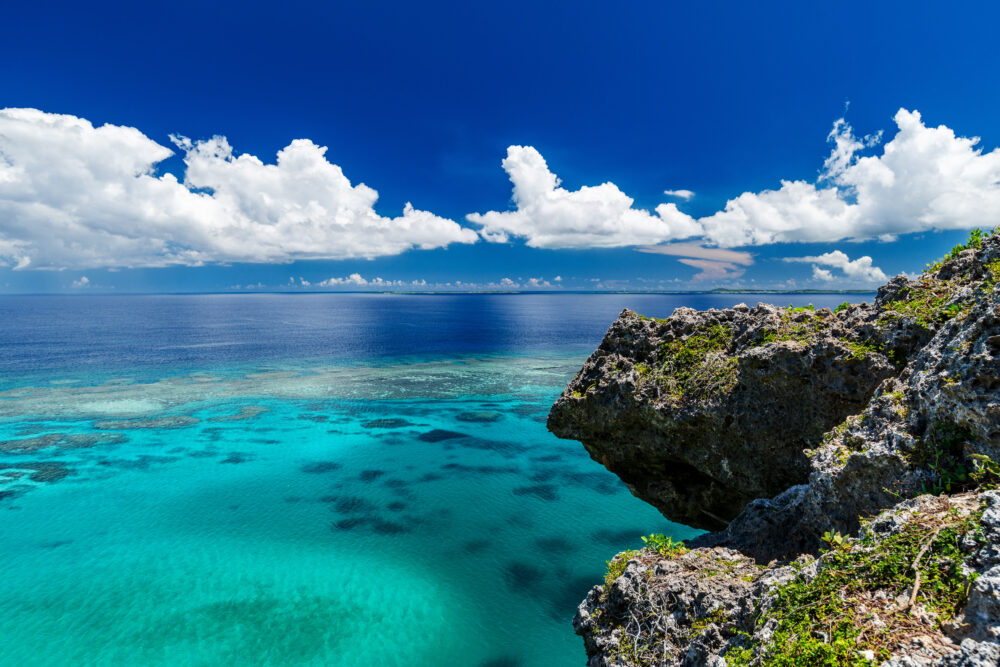
Irabu Island’s main season runs from spring to summer, when southerly winds blow.
Conversely, from autumn through spring when northerlies dominate, the Shimoji Island area next door takes over.
| Season | Wind | Main area | Representative sites |
|---|---|---|---|
| Spring–summer | Southerly | Irabu Island | W Arch / Cross Hole / Hanadai no Ne / Overhang |
| Autumn–spring | Northerly | Shimoji Island | Toriike / Devil’s Palace / Antonio Gaudi / Queen’s Room |
That said, the wind on the day decides where you go, so either season can work.
*Which sites are reachable changes with the wind and sea conditions on the day. Follow your dive shop’s judgment.
Irabu Island area dive site list
Here are the 19 dive sites in the Irabu Island area.
If you’d like the overview first, start with the table below.
| Dive site | Depth | Level | Highlights |
|---|---|---|---|
| Cross Hole | 5–27m | Beginner | A cross-shaped opening |
| L-Shaped Arch | 20–30m | Advanced | Huge arch, dogtooth tuna |
| Warp Hole | 18–30m | Advanced | A cave running roughly 30m |
| Snake Hole (Gakeshita) | 5–15m | Intermediate | A blue cave with a shape found almost nowhere else |
| Hanadai no Ne | 10–18m | Beginner | Orange in every direction |
| Shiratori Hole | 2–10m | Beginner | Shafts of light |
| W Arch | 5–18m | Beginner | An arch that looks like a heart |
| Z Arch | 5–30m | Intermediate | Complex arch, red sea fans |
| Twin Hole | 2–12m | Beginner | Blue cave, schools of silversides |
| Surgeon Reef | 15–25m | Intermediate | Sea turtles, dogtooth tuna, striped large-eye bream |
| Overhang | 7–25m | Intermediate | No.1 for turtle encounters |
| The Wreck | Up to 20m | Beginner | A car ferry on the seabed, with batfish |
| Surprise Hole | 2–12m | Beginner | A hideaway where you can surface and rest |
| Shiratori Kindergarten | Up to 20m | Beginner | A bommie where juveniles gather |
| Shiratorizaki | 5–20m | Beginner | Scalefin anthias, pink anemonefish |
| Saba-oki | 7–30m | Beginner | Schools of scissortail sergeant, big animals |
| Saba-oki Hills | Up to 30m | Intermediate | A hill-like bommie with dense fish life |
| Denter Rock | Up to 30m | Intermediate | Boulders and bommies, macro |
| Turtle Town | Up to 10m | Beginner | Sea turtles |
*Depths and levels vary by shop and course. Always check with your dive shop before booking.
Dive sites in the Irabu Island area
Cross Hole
| Depth | 5–27m |
| Level | Beginner |
| Current | Rarely |
| Highlights | A cross-shaped opening |
Cross Hole takes its name from the cross-shaped fissure that opens at around 5m, and it’s a firm favorite.
Look up from the bottom of the hole and the opening forms a cross, with shafts of light pouring down onto pure white sand.
Yellowfin goatfish and striped large-eye bream school near the entrance, while soldierfish and sweepers gather inside the hole.
Depths reach 27m, so leave yourself margin on air and depth.
L-Shaped Arch
| Depth | 20–30m |
| Level | Advanced |
| Current | Occasional |
| Highlights | Huge arch, dogtooth tuna |
L-Shaped Arch is a dramatic site where you swim through a huge L-shaped arch.
Dogtooth tuna and rays pass by the arch from time to time, so you get terrain and big animals together.
Warp Hole
| Depth | 18–30m |
| Level | Advanced |
| Current | Occasional |
| Highlights | A cave running roughly 30m |
Warp Hole is defined by a long cave that runs for around 30m.
Inside you’ll find soldierfish and spiny lobsters.
Because of the distance involved, a light and careful air management are essential.
Snake Hole (Gakeshita)
| Depth | 5–15m |
| Level | Intermediate |
| Current | Rarely |
| Highlights | A blue cave with a shape found almost nowhere else |
Snake Hole is known as a blue cave with a shape you’ll struggle to find anywhere else in the world.
Its entrance sits below the waterline, so no light enters from above — which is exactly why the blue is deeper here than in a typical blue cave.
Partway in there’s an air dome where you can surface and take a breather.
Outside the cave, anthias swarm in their thousands.
Hanadai no Ne
| Depth | 10–18m |
| Level | Beginner |
| Current | Rarely |
| Highlights | Orange in every direction |
As the name suggests, Hanadai no Ne is a bommie completely covered in anthias.
Purple queen anthias, scalefin anthias and other species mix together until the whole 360-degree view turns orange — it’s genuinely overwhelming.
Beneath the bommie you’ll find dusky batfish, giant trevally and bluefin trevally, and when plankton is thick, manta rays sometimes appear.
Shiratori Hole
| Depth | 2–10m |
| Level | Beginner |
| Current | Rarely |
| Highlights | Shafts of light |
Shiratori Hole is a spectacular site where light pours down from the ceiling.
The light is at its best around the middle of the day.
W Arch
| Depth | 5–18m |
| Level | Beginner |
| Current | Rarely |
| Highlights | An arch that looks like a heart |
W Arch has two arches side by side, and from the right angle one of them looks like a heart.
It’s shallow with almost no current, so beginners can enjoy the terrain.
The beams of light falling beneath the arch are wonderfully photogenic.
Z Arch
| Depth | 5–30m |
| Level | Intermediate |
| Current | Occasional |
| Highlights | Complex arch, red sea fans |
Z Arch is named for an arch that looks like the letter Z.
Red sea fans cling to the wall, standing out vividly against the blue water.
Twin Hole
| Depth | 2–12m |
| Level | Beginner |
| Current | Rarely |
| Highlights | Blue cave, schools of silversides |
Twin Hole is a blue cave with two openings side by side.
Silversides gather at the entrance, and with the light behind them the scene turns magical.
Surgeon Reef
| Depth | 15–25m |
| Level | Intermediate |
| Current | Occasional |
| Highlights | Sea turtles, dogtooth tuna, striped large-eye bream |
Surgeon Reef is dived by drifting along the edge of the reef.
You may meet sea turtles, dogtooth tuna, whitetip reef sharks and schools of striped large-eye bream.
The current can pick up, so some experience with moving water is reassuring.
Overhang
| Depth | 7–25m |
| Level | Intermediate |
| Current | Occasional |
| Highlights | No.1 for turtle encounters |
Overhang is a site defined by a large bommie that juts out over the bottom. Scalefin and purple queen anthias school above it.
Sea turtles turn up around that bommie so often that it’s known as one of the best places on Irabu Island to meet them.
The Wreck
| Depth | Up to 20m |
| Level | Beginner |
| Current | Rarely |
| Highlights | A car ferry on the seabed, with batfish |
The Wreck lies between Irabu Island and Miyako Island, and is the closest site to Miyako Island. It’s about 15 minutes by boat from Nikadori Port.
It’s a car ferry that ran before the Irabu Ohashi Bridge opened, sunk here and now serving as an artificial reef.
Coral has taken hold on the hull, and friendly batfish swim right up to divers. In summer you’ll also find schools of glassfish and sweepers.
Inside there’s a vehicle deck, a passenger cabin and a wheelhouse, making it one of the few wrecks you can penetrate.
Surprise Hole
| Depth | 2–12m |
| Level | Beginner |
| Current | Rarely |
| Highlights | A hideaway where you can surface and rest |
Surprise Hole is a hideaway that only divers get to see.
You can surface inside the cave and take a break, which makes for a distinctive experience.
Shiratori Kindergarten
| Depth | Up to 20m |
| Level | Beginner |
| Current | Rarely |
| Highlights | A bommie where juveniles gather |
Shiratori Kindergarten is a bommie site near Shiratorizaki.
True to the name, it draws large numbers of juvenile fish, which makes it ideal for macro photography.
Shiratorizaki
| Depth | 5–20m |
| Level | Beginner |
| Current | Rarely |
| Highlights | Scalefin anthias, pink anemonefish |
Shiratorizaki is a calm site off Shiratorizaki (Shiratori Cape) on the west coast of Irabu Island.
You’ll see plenty of brightly colored fish here, including scalefin anthias and pink anemonefish.
Saba-oki
| Depth | 7–30m |
| Level | Beginner |
| Current | Rarely |
| Highlights | Schools of scissortail sergeant, big animals |
Saba-oki is a coral and sand site offshore from Irabu Island. It splits into several bommies, including Out Reef and East Coral.
The shallower bommies are thick with fish, including schools of scissortail sergeant. Anemonefish, pink anemonefish and striped large-eye bream are plentiful too.
Some spots reach 30m, where you may run into big animals such as whitetip reef sharks, dogtooth tuna and sea turtles.
Saba-oki Hills
| Depth | Up to 30m |
| Level | Intermediate |
| Current | Occasional |
| Highlights | A hill-like bommie with dense fish life |
Saba-oki Hills is a bommie site within Saba-oki.
Depths reach 30m, and fish gather around the bommie.
Denter Rock
| Depth | Up to 30m |
| Level | Intermediate |
| Current | Occasional |
| Highlights | Boulders and bommies, macro |
Denter Rock lies offshore from Shiratorizaki and is marked by a large tooth-shaped bommie — which is where the name comes from.
Depths reach 30m, and you get both wide-angle scenery and macro life in one dive.
Turtle Town
| Depth | Up to 10m |
| Level | Beginner |
| Current | Rarely |
| Highlights | Sea turtles |
Turtle Town is, as the name says, a site for finding sea turtles.
It’s shallow at up to 10m with gentle current, so you can follow the turtles at your own pace.
Recommended sites for beginners
If you’ve just been certified, or it’s your first time terrain diving, these are the sites to go for.
All of them are shallow with gentle current, which makes them an ideal way into terrain diving.
| Surprise Hole | 2–12m. A hideaway of a site where you can surface inside the cave and rest |
| W Arch | 5–18m. The heart-shaped arch is wonderfully photogenic |
| Shiratori Hole | 2–10m. Shafts of light pouring down from the ceiling are the highlight |
| Twin Hole | 2–12m. A bright opening known as a blue cave, with silversides schooling inside |
| Hanadai no Ne | 10–18m. The full 360 degrees turns anthias orange |
Diving safely around Irabu Island
L-Shaped Arch, Warp Hole, Z Arch, Cross Hole and Saba-oki all reach around 30m. Leave margin on your air and no-decompression limit.
Many sites take you into caves and holes, so always carry a light. Unstable buoyancy can damage the terrain or wreck the visibility.
L-Shaped Arch and Surgeon Reef can get current. If you aren’t confident in current, don’t push it — talk to your dive shop.
Never touch the coral or the rock formations. What took decades or centuries to grow can be destroyed by a single contact.
You need to leave time between diving and flying. Plan with room to spare — for example, don’t dive on the day you leave Miyako Island.
FAQ
Can beginners dive here?
There are plenty of shallow sites you can enter from around 2m, including Shiratori Hole, Twin Hole and Surprise Hole.
For a first go at terrain diving, Irabu Island is the easier area to start in.
Can I go on a try dive?
At shallow, sheltered sites, some shops accept try divers.
Which site you get depends on the sea conditions and the shop’s judgment on the day, so check when you book.
When is the best time to go?
If Irabu Island is your target, the main season runs from spring to summer when southerly winds blow.
That said, the wind on the day decides where you go, so either season can work.
How is it different from Shimoji Island?
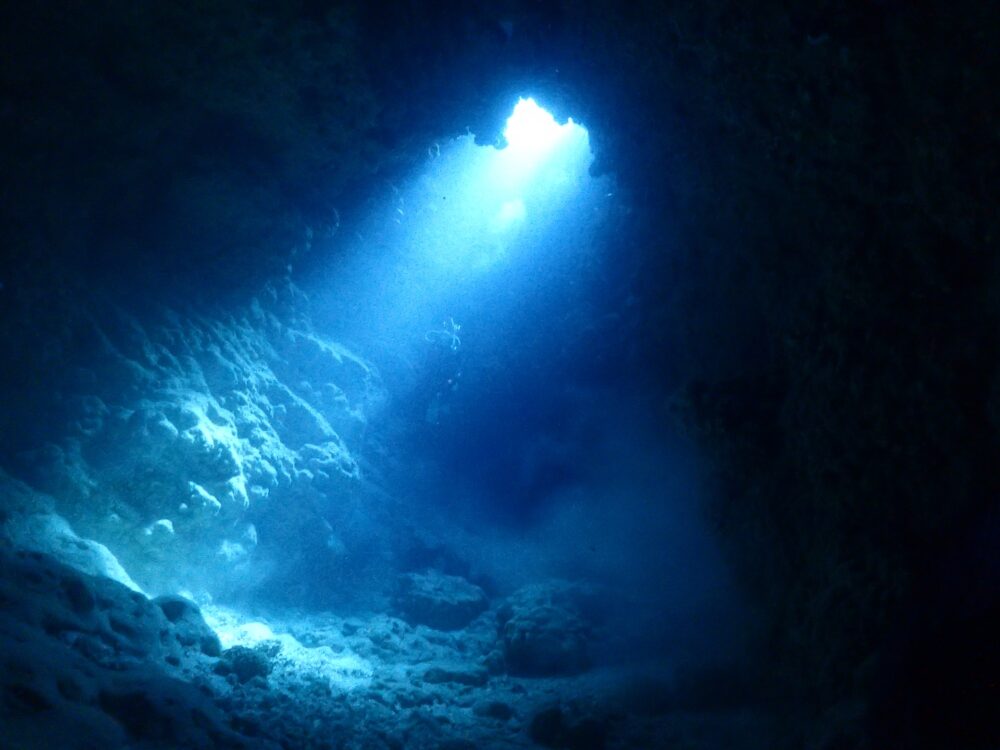
Irabu Island is mostly shallow arches and holes, with big animals such as turtles and pelagics on the cards too.
Shimoji Island, on the other hand, has all three of Miyako Island’s Three Great Formations: Toriike, Devil’s Palace and Antonio Gaudi. See dive sites in the Shimoji Island area for details.
Around Irabu Island
Beaches on Irabu Island and Shimoji Island
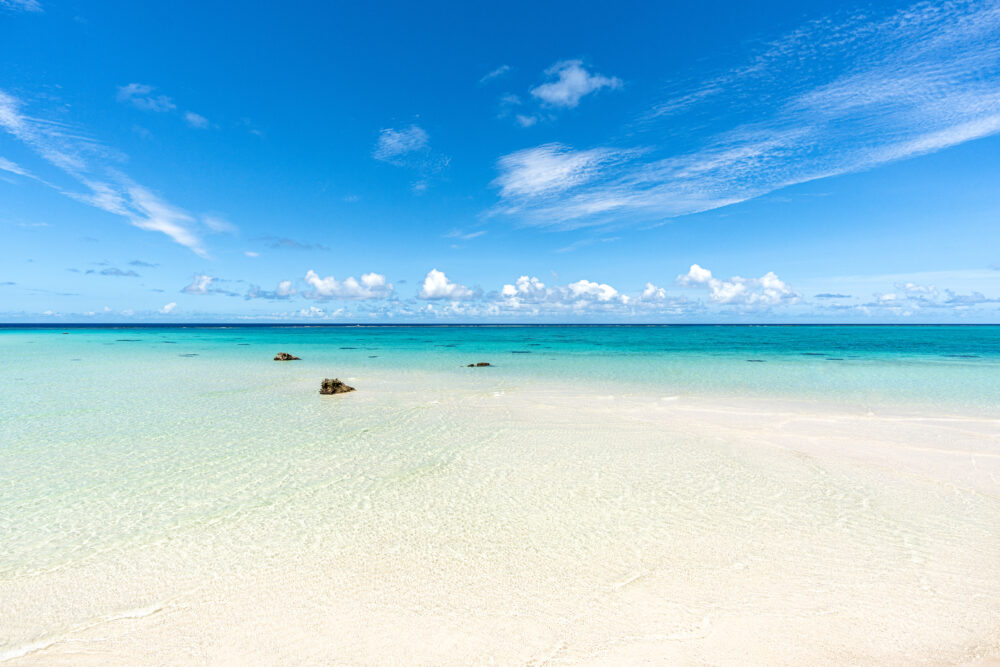
7 beaches on Irabu Island and Shimoji Island covers spots you can enjoy from land, including Toguchi-no-hama, 17END and Sawada-no-hama.
There’s plenty to stop in at before or after a dive, so it’s worth a look.

Dive sites on Shimoji Island
Shimoji Island, connected by bridge, has the big terrain sites headlined by Miyako Island’s Three Great Formations. Autumn through spring is its main season.

Activities on Miyako Island
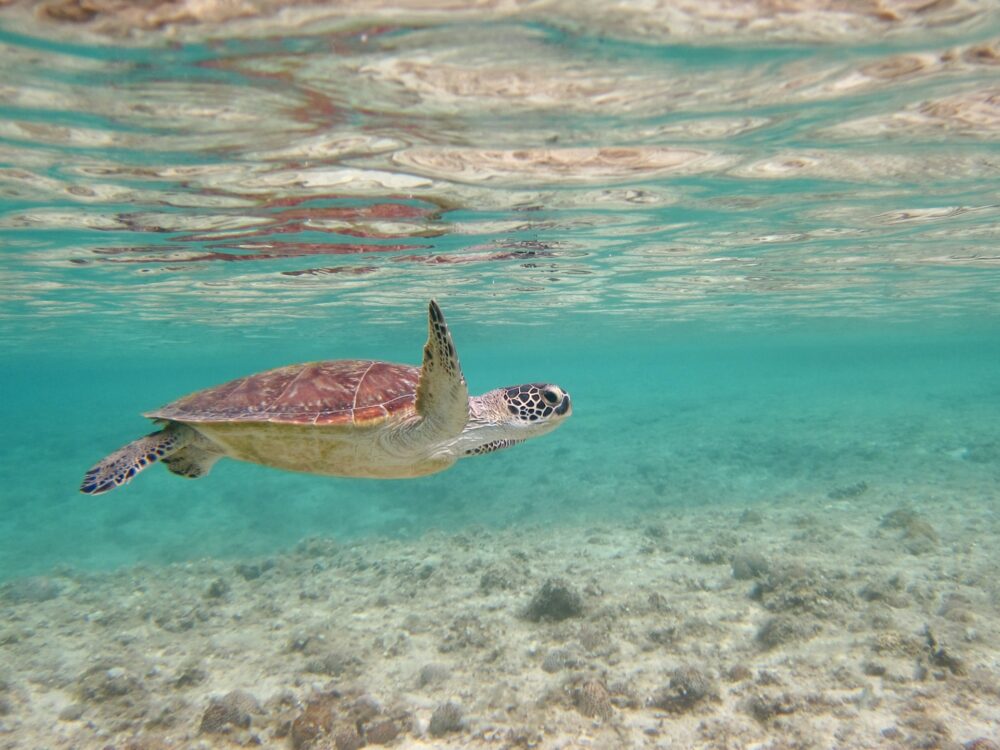
Miyako Island offers all kinds of marine activities.
Alongside fun dives and try dives, you can book snorkeling, SUP and more.
If you’re interested, take a look at what’s on offer through Viator or GetYourGuide.
Renting a car on Miyako Island
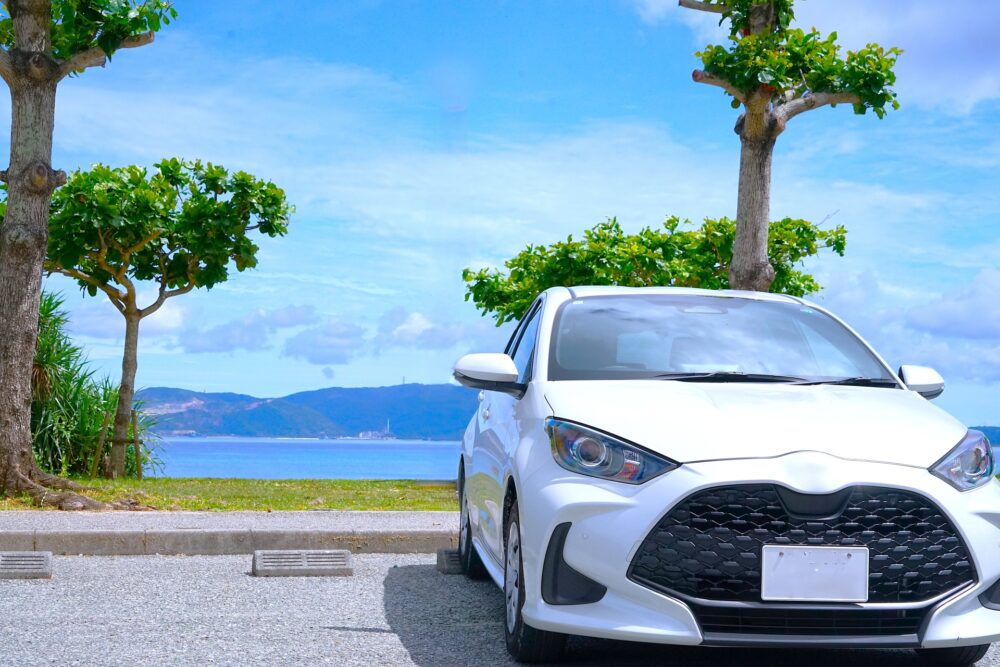
A rental car is by far the best way to get around Miyako Island.
Scenic spots such as Yonaha Maehama and Irabu Ohashi Bridge are scattered across the island, so having a car lets you explore at your own pace. With so few buses on Miyako Island, whether or not you have a car makes a real difference to the trip.
Popular seasons book up quickly, so reserve early once your dates are set.
Summary
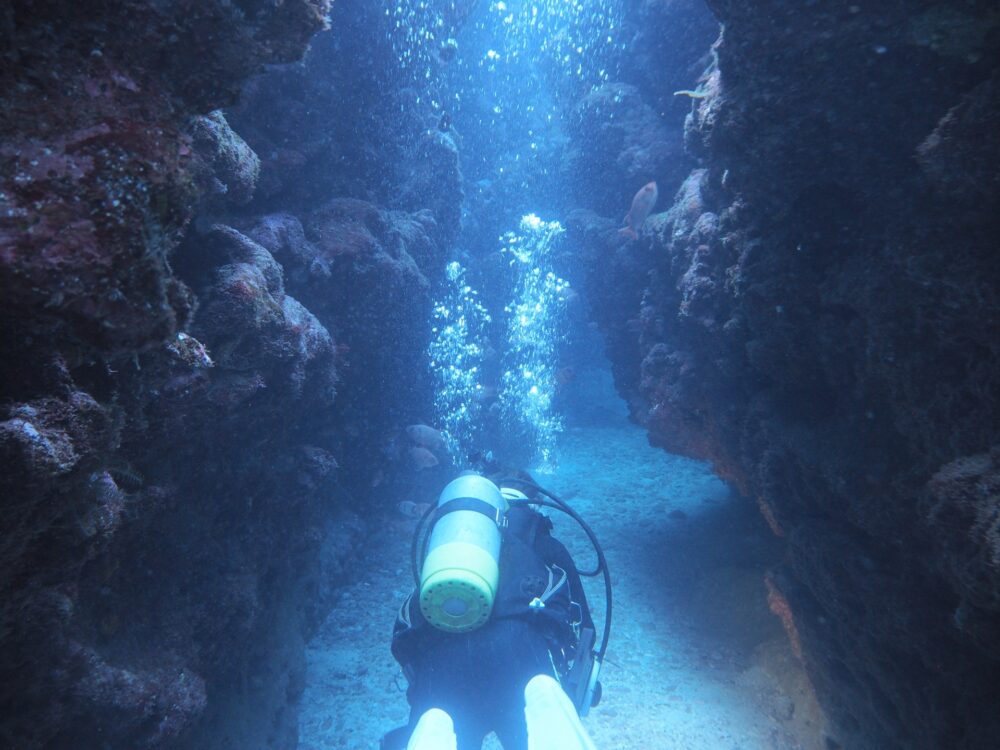
This article covered 19 dive sites around Irabu Island.
Irabu Island is mostly shallow arches and holes you can enter from around 2m, which makes it easy to enjoy even on your first terrain dives.
The turtles at Overhang, the dogtooth tuna at L-Shaped Arch and the schools at Hanadai no Ne mean big animals and dense fish life are highlights too.
The main season runs from spring to summer when southerly winds blow, so plan around that.
Dive sites in Miyako Island’s other areas are covered together in the articles below.
Thank you for reading to the end.
Comments