
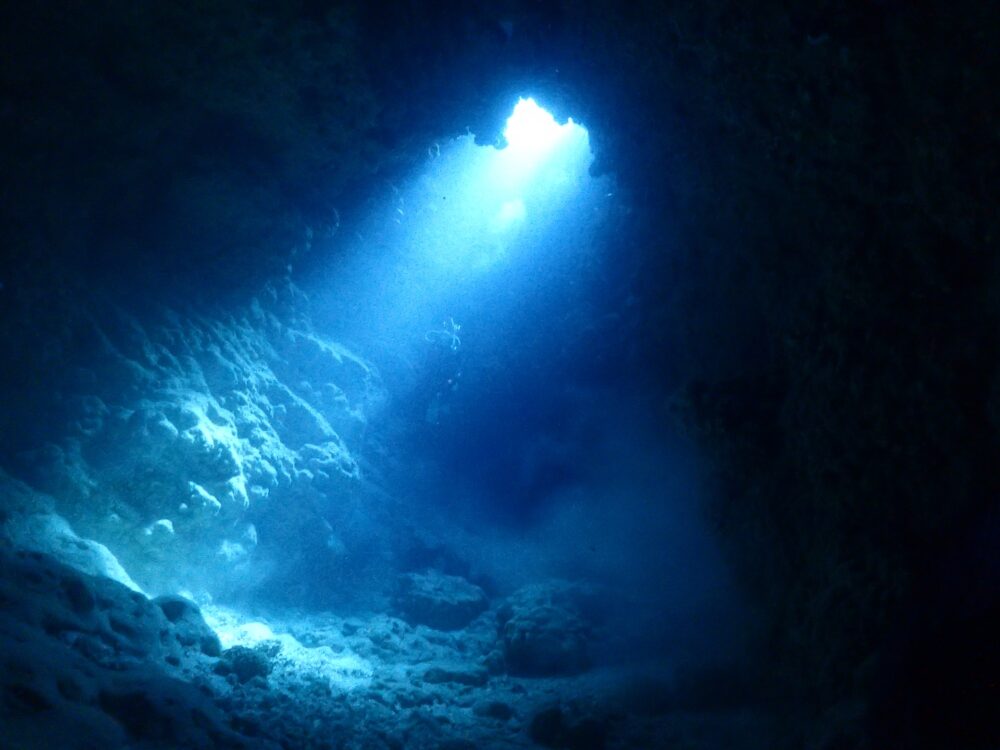
This time we’re looking at the dive sites around Shimoji Island, Miyako Island.
Shimoji Island lies immediately west of Irabu Island, and it’s the best known dive area on Miyako Island.
Toriike, Devil’s Palace and Antonio Gaudi — the “Three Great Formations of Miyako Island” — are all here on Shimoji Island.
Caves, holes, arches, crevices, drop-offs and ponds: the sheer range of terrain here is unmatched.
This article covers 27 dive sites around Shimoji Island, with depths and levels.
- What makes the Shimoji Island area special
- Shimoji Island area dive site list
- Dive sites in the Shimoji Island area
- Devil’s Palace
- Antonio Gaudi
- Toriike
- Nakanoshima Hole
- Hachinosu Hole (Marine Lake)
- Queen’s Room
- 35 Hole
- Mini Grotto (Mini Toriike)
- Nakanoshima Channel
- Ichinose Hole
- Twin Cave
- Naruhodo The Cave
- Panata
- Hon Drop
- 333 (Triple Three)
- Sango Hole
- Ichinose Drop
- Crystal Park
- Rock Beauty
- Moonlight Hole
- Witch’s Room
- Drop No.1
- Tsunami-iwa
- Tsunami-iwa Drop
- Dango-iwa
- Umiushi Goten
- Nakanoshima Beach (Kayaffa)
- Recommended sites for beginners
- Diving safely around Shimoji Island
- FAQ
- Around Shimoji Island
- Summary
What makes the Shimoji Island area special
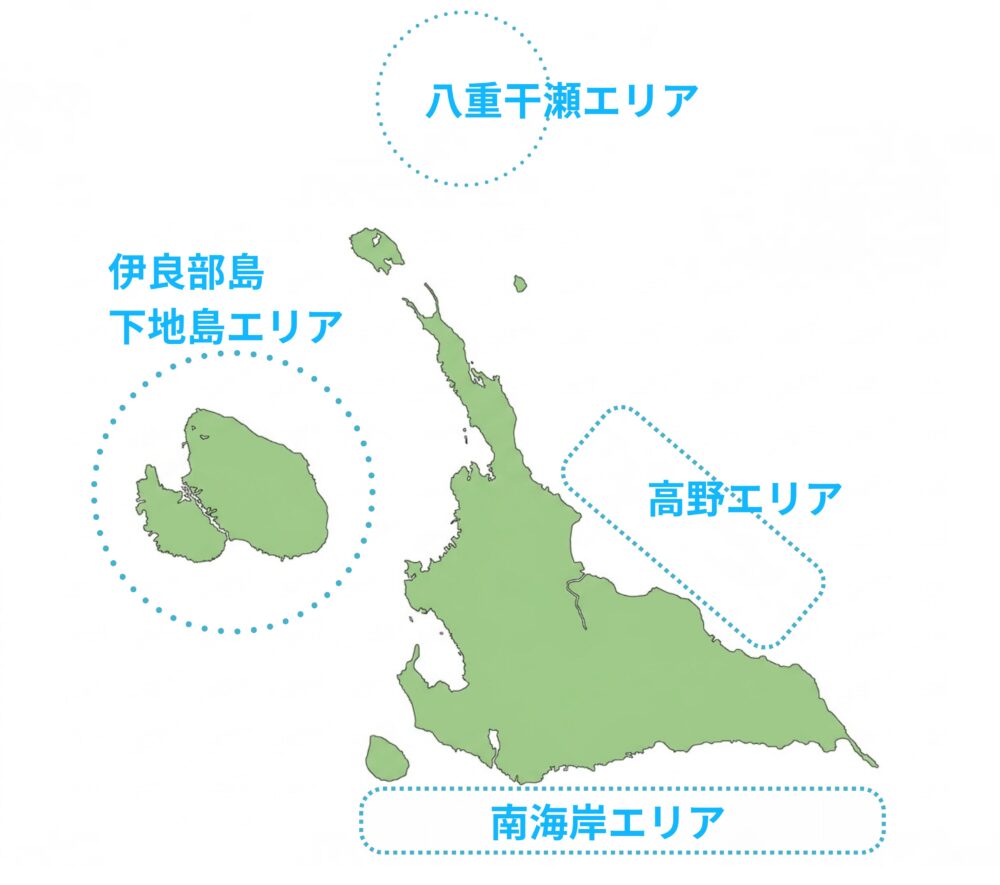
The Shimoji Island area lies northwest of Miyako Island and is known for dramatic terrain, clear water and beautiful caves and arches.
The character of Shimoji Island comes down to these three points.
| Feature | Details |
|---|---|
| All three of the Great Formations | Toriike, Devil’s Palace and Antonio Gaudi are all here |
| A huge range of terrain | Caves, holes, arches, crevices, drop-offs and ponds, all in one area |
| Main season: autumn to spring | An area you dive when northerly winds blow |
All three Great Formations are on Shimoji Island
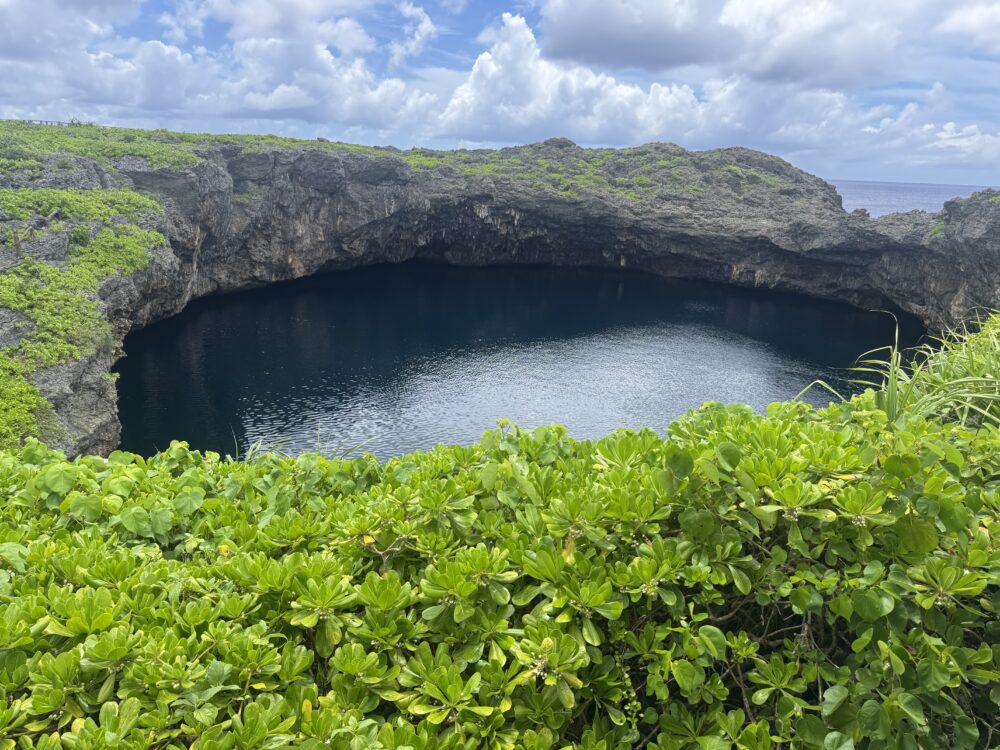
All three of the formations known as Miyako Island’s Three Great Formations are on Shimoji Island, about 30 to 40 minutes by boat from Hirara Port.
All three are deep with complex terrain, so they call for intermediate experience or above.
| Dive site | Depth | Level | Feature |
|---|---|---|---|
| Toriike | 8–40m | Advanced | A chemocline where fresh water meets seawater |
| Devil’s Palace | 5–28m | Intermediate | Three chambers, with light falling from above |
| Antonio Gaudi | 8–37m | Advanced | Layer upon layer of intricate arches |
A huge range of terrain diving
What makes Shimoji Island special is that it has essentially every type of terrain.
From shallow caves at 3m to drop-offs at 40m, there’s something for every level from beginner to advanced.
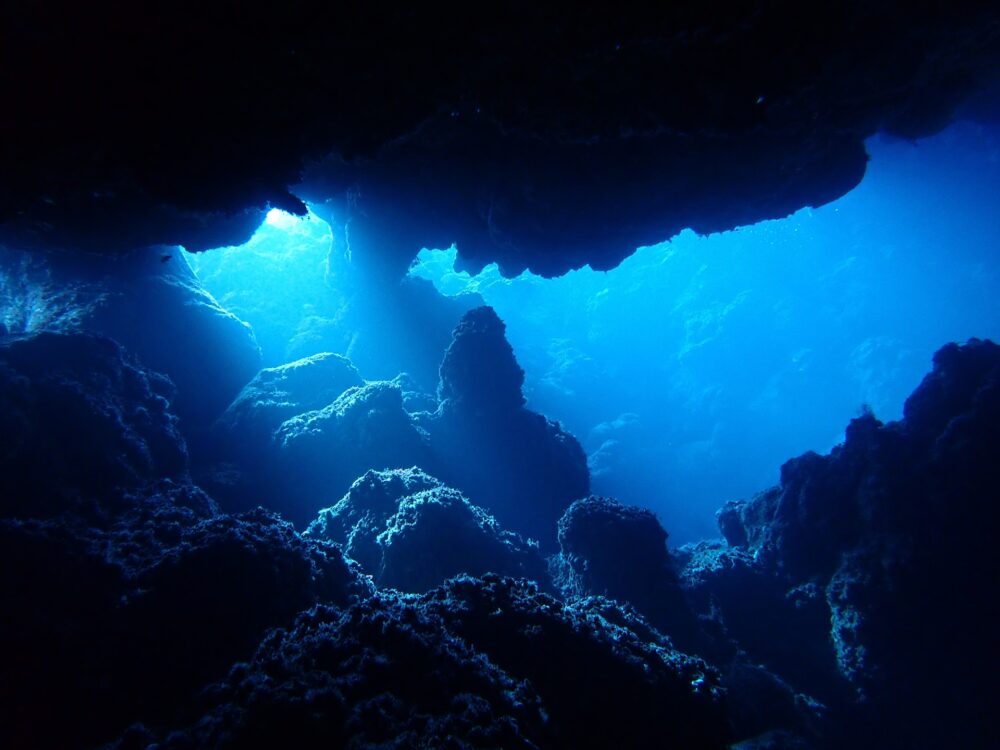
It also has an unusual number of sites where you can catch sunbeams pouring into a cave — another Shimoji Island signature.
| Terrain | Typical depth | Representative sites |
|---|---|---|
| Caves | 3–18m | Naruhodo The Cave / Twin Cave / Moonlight Hole |
| Holes | 5–40m | Devil’s Palace / Queen’s Room / Ichinose Hole / Sango Hole / Nakanoshima Hole / 35 Hole |
| Arches | 8–40m | Antonio Gaudi / 333 |
| Crevices | 4–22m | Nakanoshima Channel |
| Drop-offs | 6–40m | Hon Drop / Ichinose Drop / Drop No.1 |
| Ponds | 5–40m | Toriike / Mini Grotto / Hachinosu Hole |
| Sand and coral | Up to 13m | Rock Beauty / Crystal Park |
Main season: autumn to spring
Shimoji Island’s main season runs from autumn to spring, when northerly winds blow.
Conversely, from spring through summer when southerlies dominate, the Irabu Island area next door takes over.
| Season | Wind | Main area | Representative sites |
|---|---|---|---|
| Autumn–spring | Northerly | Shimoji Island | Toriike / Devil’s Palace / Antonio Gaudi / Queen’s Room |
| Spring–summer | Southerly | Irabu Island | W Arch / Cross Hole / Hanadai no Ne / Overhang |
That said, the wind on the day decides where you go, so either season can work.
*Which sites are reachable changes with the wind and sea conditions on the day. Follow your dive shop’s judgment.
Shimoji Island area dive site list
Here are the 27 dive sites in the Shimoji Island area.
If you’d like the overview first, start with the table below.
| Dive site | Depth | Level | Highlights |
|---|---|---|---|
| Devil’s Palace | 5–28m | Intermediate | Three chambers, a curtain of light |
| Antonio Gaudi | 8–37m | Advanced | Layer upon layer of intricate arches |
| Toriike | 8–40m | Advanced | Chemocline, the biggest formation on Miyako Island |
| Nakanoshima Hole | 5–33m | Advanced | A chimney, and Moomin’s profile |
| Hachinosu Hole (Marine Lake) | 6–15m | Beginner | Light like laser beams |
| Queen’s Room | 10–40m | Advanced | A blue hall over white sand |
| 35 Hole | 25–30m | Intermediate | Blue light falling through a chimney |
| Mini Grotto (Mini Toriike) | 5–25m | Beginner | A miniature Toriike you can surface into |
| Nakanoshima Channel | 4–22m | Beginner | Crevice after crevice, try dives possible |
| Ichinose Hole | 5–30m | Intermediate | A pillar of light |
| Twin Cave | 3–18m | Beginner | Two caves side by side |
| Naruhodo The Cave | 6–15m | Beginner | A doughnut-shaped cave, light and shadow |
| Panata | 10–25m | Advanced | Schools of bigeye trevally |
| Hon Drop | 8–40m | Advanced | Giant trevally, dogtooth tuna |
| 333 (Triple Three) | 8–40m | Advanced | Three arches, pelagics |
| Sango Hole | 6–32m | Intermediate | A heart-shaped opening, soft coral |
| Ichinose Drop | 6–40m | Intermediate | Huge sea fans and a drop-off |
| Crystal Park | Up to 10m | Beginner | Schools of glassfish |
| Rock Beauty | Up to 13m | Beginner | Garden eels, sand flats |
| Moonlight Hole | 3–15m | Beginner | A corridor of light |
| Witch’s Room | 15–25m | Intermediate | Blue through the opening, hawksbill turtles |
| Drop No.1 | 7–18m | Beginner | High encounter rate for giant trevally |
| Tsunami-iwa | Up to 28m | Intermediate | Arches and crevices, manta rays and turtles |
| Tsunami-iwa Drop | Up to 18m | Intermediate | Giant trevally |
| Dango-iwa | Up to 33m | Intermediate | A giant boulder |
| Umiushi Goten | Up to 10m | Beginner | Nudibranchs and other macro life |
| Nakanoshima Beach (Kayaffa) | Up to 10m | Beginner | Shore entry, good for try dives |
*Depths and levels vary by shop and course. Always check with your dive shop before booking.
Dive sites in the Shimoji Island area
Devil’s Palace
| Depth | 5–28m |
| Level | Intermediate |
| Current | Occasional |
| Highlights | Three chambers, a curtain of light |
Devil’s Palace is a maze-like site where several holes are linked by caves.
The three chambers are known as the Entrance, the Devil’s Palace and the Devil’s Bedroom, and light reaches all of them from the surface.
The innermost chamber is called the Throne, where light through a hole in the ceiling spreads out like a king’s cloak.
It’s hugely popular with repeat divers, and counts as one of Miyako Island’s Three Great Formations.
The light is at its most beautiful around midday in summer, when the sun is highest.
Antonio Gaudi
| Depth | 8–37m |
| Level | Advanced |
| Current | Rarely |
| Highlights | Layer upon layer of intricate arches |
Antonio Gaudi is defined by intricate terrain where arches and openings pile up on one another.
The shapes bring to mind the work of the Spanish architect Antoni Gaudí, which is how the site got its name.
It’s deep, so bottom time is limited, but as one of Miyako Island’s showpiece formations it belongs to the Three Great Formations.
Toriike
| Depth | 8–40m |
| Level | Advanced |
| Current | Sometimes strong |
| Highlights | Chemocline, the biggest formation on Miyako Island |
Toriike is where two ponds on land on Shimoji Island connect to the sea — and it’s the site that represents Miyako Island diving.
A large arch linking the sea and the ponds sits at around 20m, and you swim through it and surface inside the pond.
The sand beneath the arch falls away to almost 40m, so depth management is essential.
Inside the pond you can see the “chemocline” where fresh water meets seawater, a shimmering scene you won’t find anywhere else.
It’s deep with complex terrain, and is regarded as the most demanding site on Miyako Island.
Nakanoshima Hole
| Depth | 5–33m |
| Level | Advanced |
| Current | Occasional |
| Highlights | A chimney, and Moomin’s profile |
Nakanoshima Hole drops from a chimney at around 5m straight down to about 30m — a dramatic site.
It’s known for an exit whose shape looks like “Moomin’s profile.”
It’s deep, so you need a dive plan with margin on air and decompression.
Hachinosu Hole (Marine Lake)
| Depth | 6–15m |
| Level | Beginner |
| Current | Rarely |
| Highlights | Light like laser beams |
Hachinosu Hole, also known as Marine Lake, is a complex pond-like formation.
It’s one of Miyako Island’s best sites for laser-like beams, with several fine, sharp shafts of light coming through.
It’s shallow, so you can wait for the light and take your time shooting.
Queen’s Room
| Depth | 10–40m |
| Level | Advanced |
| Current | Occasional |
| Highlights | A blue hall over white sand |
Queen’s Room is a hole with one of the most dramatic spaces on Miyako Island.
The contrast between white sand and blue water is beautiful, and it’s a popular site for photography.
It’s deep at its maximum, so it suits divers with some experience behind them.
35 Hole
| Depth | 25–30m |
| Level | Intermediate |
| Current | Occasional |
| Highlights | Blue light falling through a chimney |
35 Hole is a site where a chimney opens inside a pitch-dark cave.
Away from the chimney the blue is deep and intense; directly beneath it, the water turns a lighter, sunlit blue.
Whitetip reef sharks sometimes rest here, so you get terrain and marine life together.
*Some shops use “35 Hole” as another name for Sango Hole.
Mini Grotto (Mini Toriike)
| Depth | 5–25m |
| Level | Beginner |
| Current | Occasional |
| Highlights | A miniature Toriike you can surface into |
Mini Grotto is known as a miniature version of Toriike.
A horizontal cave at around 10m leads through to the pond, where you can surface into fresh water.
It’s shallower than Toriike, so beginners can enjoy the terrain too.
Nakanoshima Channel
| Depth | 4–22m |
| Level | Beginner |
| Current | Rarely |
| Highlights | Crevice after crevice, try dives possible |
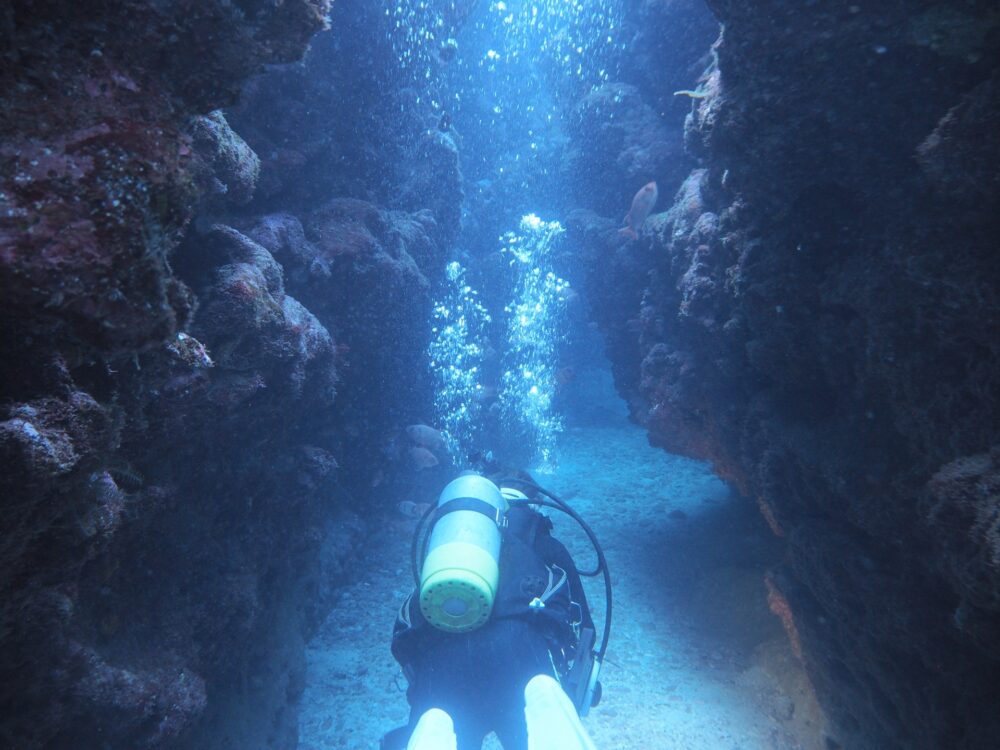
Nakanoshima Channel is a maze-like site where crevices run one after another in shallow water.
It’s shallow with gentle current, so try dives are sometimes possible here.
Coral and small fish are plentiful, making it a nicely balanced site with both terrain and marine life.
Ichinose Hole
| Depth | 5–30m |
| Level | Intermediate |
| Current | Rarely |
| Highlights | A pillar of light |
Ichinose Hole is a spacious hole you enter through a chimney in the shallows, coming out over sand at around 30m.
The moment when light through the ceiling opening forms a pillar is what this site is about.
There’s also a route in from the large seaward opening, heading landward.
Twin Cave
| Depth | 3–18m |
| Level | Beginner |
| Current | Rarely |
| Highlights | Two caves side by side |
Twin Cave is named for its two caves running side by side.
Sweepers and soldierfish school inside, and the light coming through is lovely.
It’s shallow, so you can take your time.
Naruhodo The Cave
| Depth | 6–15m |
| Level | Beginner |
| Current | Rarely |
| Highlights | A doughnut-shaped cave, light and shadow |
Naruhodo The Cave is a doughnut-shaped cave whose entrance and exit are the same.
Light comes in through several openings, and the contrast between light and shadow inside is beautiful.
It’s shallow, so beginners can enjoy the terrain here.
Panata
| Depth | 10–25m |
| Level | Advanced |
| Current | Sometimes strong |
| Highlights | Schools of bigeye trevally |
Panata sits on the northwest side of Shimoji Island; the name means “cliff edge.”
It’s known for schools of bigeye trevally that hold at the tip of a large submerged pinnacle.
Schools of several hundred to a thousand fish are possible, and the encounter rate for Napoleon wrasse and sea turtles is high too.
It sits in the fastest-flowing water on the Shimoji Island side, so you need the experience to handle current.
Hon Drop
| Depth | 8–40m |
| Level | Advanced |
| Current | Occasional |
| Highlights | Giant trevally, dogtooth tuna |
Hon Drop is a drop-off site suited to hunting big animals.
Pelagics such as giant trevally and dogtooth tuna pass through from time to time.
It’s deep and gets current easily, so it suits divers with some experience.
333 (Triple Three)
| Depth | 8–40m |
| Level | Advanced |
| Current | Occasional |
| Highlights | Three arches, pelagics |
333 (Triple Three) is named for three arches running one after another.
You may meet pelagics such as whitetip reef sharks and spotted eagle rays.
Terrain and big animals in one dive — it’s Shimoji Island in a nutshell.
Sango Hole
| Depth | 6–32m |
| Level | Intermediate |
| Current | Rarely |
| Highlights | A heart-shaped opening, soft coral |
Sango Hole is a spacious hole along a wall that falls from the shallows past 30m.
Its heart-shaped opening and the soft coral blanketing the wall are what set it apart.
Plenty of fish gather inside, including soldierfish and sweepers.
Ichinose Drop
| Depth | 6–40m |
| Level | Intermediate |
| Current | Occasional |
| Highlights | Huge sea fans and a drop-off |
Ichinose Drop is dived along a sheer drop-off.
Huge sea fans are the highlight, and pelagics pass by at times.
The terrain makes it easy to slip deeper than you meant to, so watch your depth.
Crystal Park
| Depth | Up to 10m |
| Level | Beginner |
| Current | Rarely |
| Highlights | Schools of glassfish |
Crystal Park is a site where bommies dot the sand at around 10m.
Schools of glassfish and juvenile fish are abundant, which makes it great for watching marine life.
Rock Beauty
| Depth | Up to 13m |
| Level | Beginner |
| Current | Rarely |
| Highlights | Garden eels, sand flats |
Rock Beauty is a relaxed site over shallow sand flats.
You can watch garden eels in the shallows, and it suits macro photography too.
Moonlight Hole
| Depth | 3–15m |
| Level | Beginner |
| Current | Rarely |
| Highlights | A corridor of light |
Moonlight Hole is a shallow site with a magnificent corridor of light.
Schools of sweepers filling the cave are another highlight.
Witch’s Room
| Depth | 15–25m |
| Level | Intermediate |
| Current | Occasional |
| Highlights | Blue through the opening, hawksbill turtles |
Witch’s Room is a site where the blue beyond the opening is beautiful.
It’s also known for a high encounter rate with hawksbill turtles.
Drop No.1
| Depth | 7–18m |
| Level | Beginner |
| Current | Occasional |
| Highlights | High encounter rate for giant trevally |
Drop No.1 has one of the highest giant trevally encounter rates on Miyako Island.
You may see two to four on a single dive, and because it’s fairly shallow, even beginners can target big animals here.
Tsunami-iwa
| Depth | Up to 28m |
| Level | Intermediate |
| Current | Occasional |
| Highlights | Arches and crevices, manta rays and turtles |
Tsunami-iwa lies in the water in front of Obi-iwa, a tsunami boulder said to have been pushed ashore by the Great Meiwa Tsunami.
The terrain looks like arches stacked on top of one another and riddled with openings, running into large crevices and a shallow boulder field.
Green sea turtles, reef manta rays, whitetip reef sharks and giant trevally all turn up at times.
It catches current easily, so air consumption tends to run high.
Tsunami-iwa Drop
| Depth | Up to 18m |
| Level | Intermediate |
| Current | Occasional |
| Highlights | Giant trevally |
Tsunami-iwa Drop is a drop-off site right beside Tsunami-iwa.
It’s known as a site for targeting giant trevally, and at 18m it’s fairly shallow.
Dango-iwa
| Depth | Up to 33m |
| Level | Intermediate |
| Current | Occasional |
| Highlights | A giant boulder |
As the name says, Dango-iwa is a site with a huge boulder lying on the bottom.
It involves a fair bit of swimming, and depths reach 33m.
Umiushi Goten
| Depth | Up to 10m |
| Level | Beginner |
| Current | Rarely |
| Highlights | Nudibranchs and other macro life |
Umiushi Goten is a macro site over sand no deeper than 10m.
True to the name, it’s a great place to hunt nudibranchs, and the shallow depth lets you take your time.
Nakanoshima Beach (Kayaffa)
| Depth | Up to 10m |
| Level | Beginner |
| Current | Rarely |
| Highlights | Shore entry, good for try dives |
Nakanoshima Beach is one of the few inlets on Shimoji Island where you can enter from shore.
It’s bay-shaped so waves rarely get in, and it’s used regularly for try dives and snorkeling.
Recommended sites for beginners
If you’ve just been certified, or it’s your first time terrain diving, these are the sites to go for.
All of them are shallow with gentle current, which makes them an ideal way into terrain diving.
| Nakanoshima Channel | 4–22m. Maze-like terrain of connecting crevices; try dives are sometimes possible |
| Naruhodo The Cave | 6–15m. A doughnut-shaped cave with beautiful contrast between light and shadow |
| Moonlight Hole | 3–15m. Bright terrain known as the corridor of light |
| Drop No.1 | 7–18m. Target giant trevally at a relatively shallow depth |
| Nakanoshima Beach (Kayaffa) | Up to 10m. A shore entry, so it’s also used for try dives |
Diving safely around Shimoji Island
Toriike, Antonio Gaudi, Queen’s Room, 333, Hon Drop and Ichinose Drop all reach around 40m. Leave margin on your air and no-decompression limit.
Many sites take you into caves and holes, so always carry a light. Unstable buoyancy can damage the terrain or wreck the visibility.
Panata and Toriike can get fast current. If you aren’t confident in current, don’t push it — talk to your dive shop.
Never touch the coral or the rock formations. What took decades or centuries to grow can be destroyed by a single contact.
You need to leave time between diving and flying. Plan with room to spare — for example, don’t dive on the day you leave Miyako Island.
FAQ
Can beginners dive the Three Great Formations?
Toriike and Antonio Gaudi are deep, and intermediate experience is required in almost all cases.
Devil’s Palace is more often rated as intermediate, so it’s safer to build up some dives before taking it on.
If terrain diving itself is new to you, start with shallow sites such as Nakanoshima Channel or Naruhodo The Cave.
Can I go on a try dive?
At shallow, sheltered sites such as Nakanoshima Channel and Nakanoshima Beach, some shops accept try divers.
The Three Great Formations are not available on a try dive.
When is the best time to go?
If Shimoji Island’s terrain is your target, the main season runs from autumn to spring when northerly winds blow.
That said, the wind on the day decides where you go, so either season can work.
How is it different from Irabu Island?
Shimoji Island is mostly big terrain, headlined by the Three Great Formations, with plenty of deep sites.
Irabu Island, on the other hand, plays to shallow arches and holes plus big animals such as turtles and pelagics. See dive sites in the Irabu Island area for details.
Around Shimoji Island
Beaches on Irabu Island and Shimoji Island
7 beaches on Irabu Island and Shimoji Island covers spots you can enjoy from land, including Toguchi-no-hama, 17END and Sawada-no-hama.
There’s plenty to stop in at before or after a dive, so it’s worth a look.
Dive sites on Irabu Island
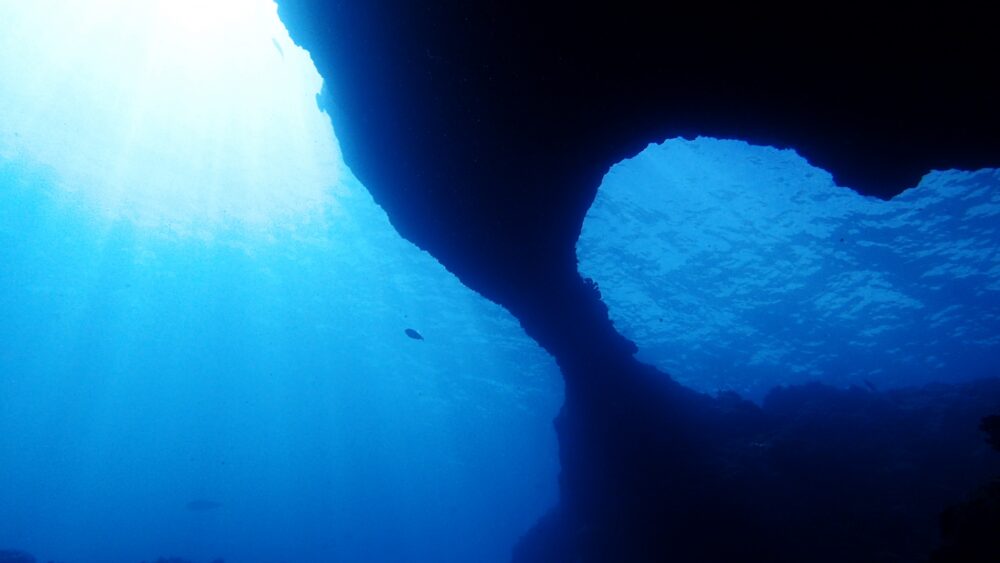
Irabu Island, connected by bridge, has shallow arches and holes plus sites for turtles and pelagics. Spring through summer is its main season.
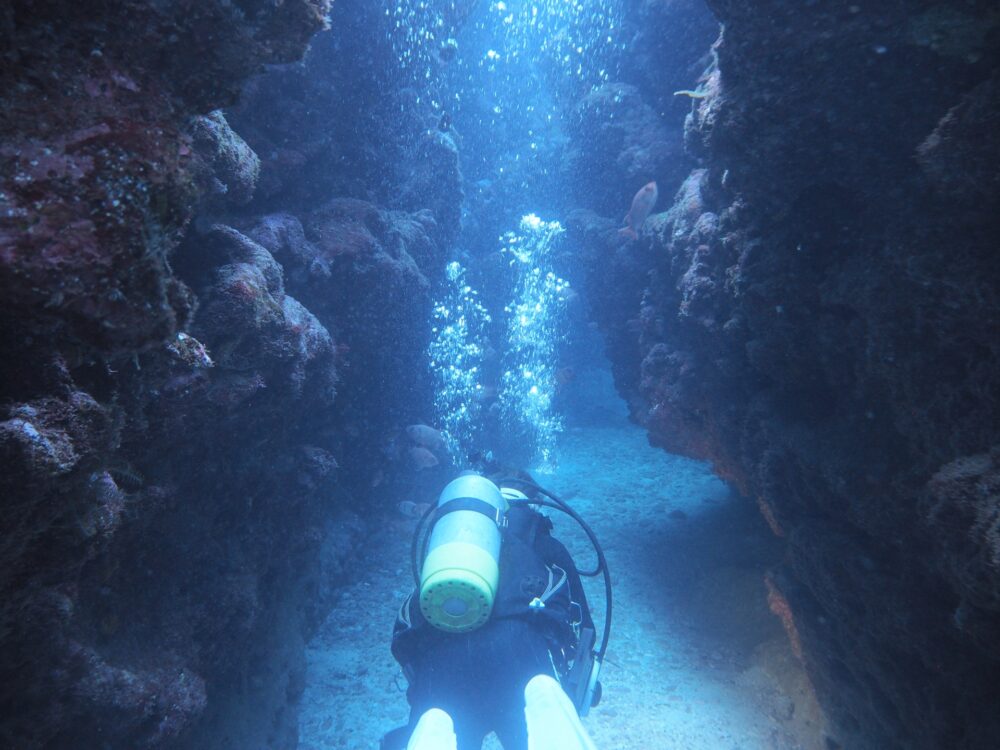
Activities on Miyako Island
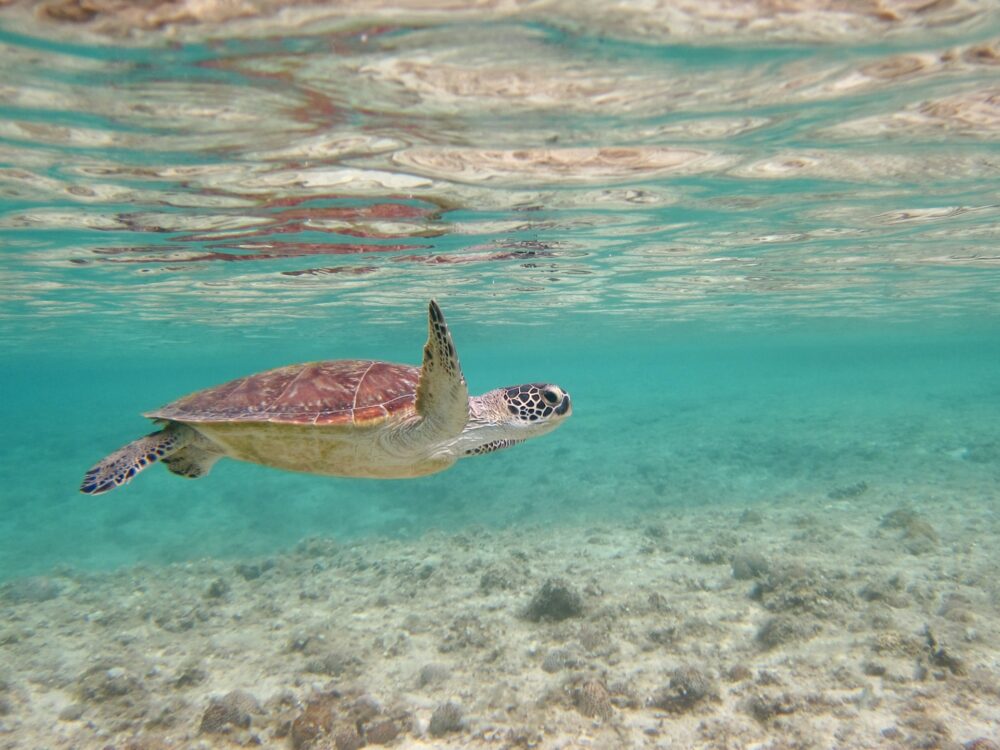
Miyako Island offers all kinds of marine activities.
Alongside fun dives and try dives, you can book snorkeling, SUP and more.
If you’re interested, take a look at what’s on offer through Viator or GetYourGuide.
Renting a car on Miyako Island
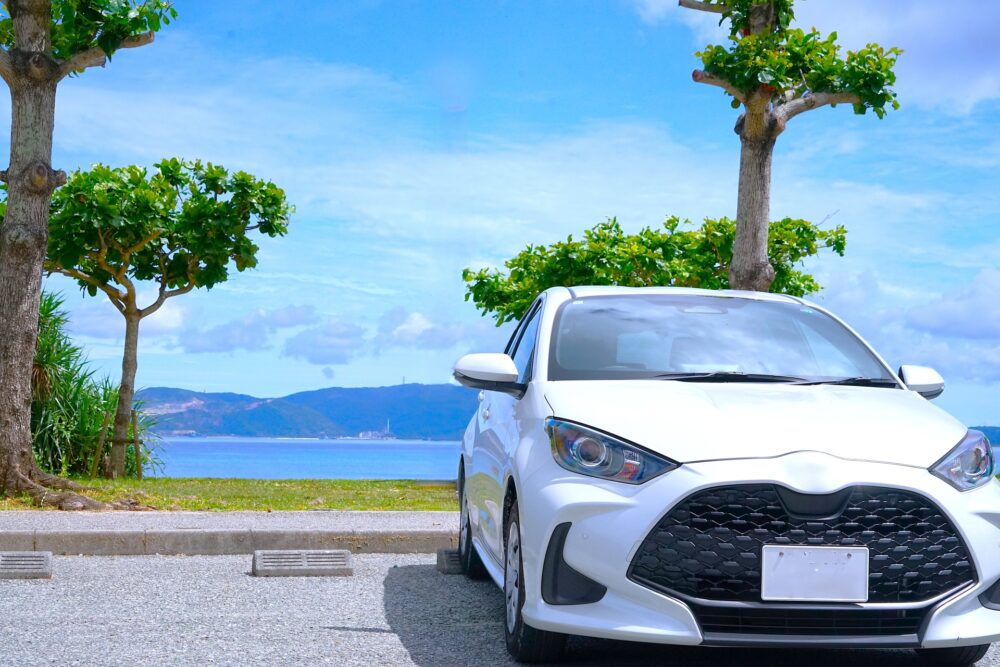
A rental car is by far the best way to get around Miyako Island.
Scenic spots such as Yonaha Maehama and Irabu Ohashi Bridge are scattered across the island, so having a car lets you explore at your own pace. With so few buses on Miyako Island, whether or not you have a car makes a real difference to the trip.
Popular seasons book up quickly, so reserve early once your dates are set.
Summary
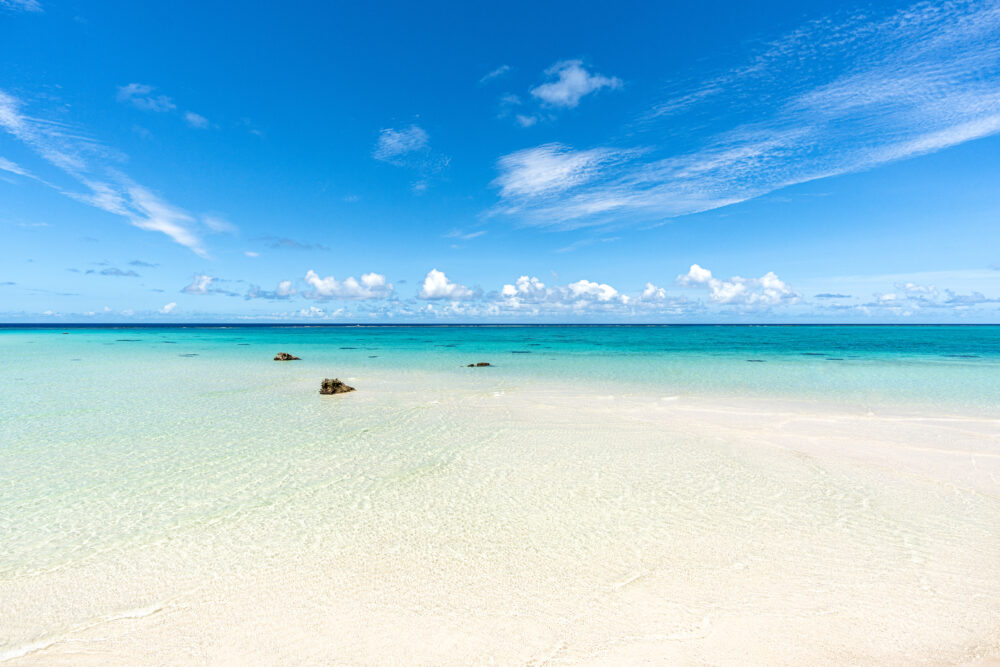
This article covered 27 dive sites in the Shimoji Island area.
Shimoji Island has all three of Miyako Island’s Three Great Formations: Toriike, Devil’s Palace and Antonio Gaudi.
From shallow caves at 3m to drop-offs at 40m, there’s something for every level from beginner to advanced — and that’s the appeal.
The main season runs from autumn to spring when northerly winds blow, so plan around that if the Three Great Formations are your goal.
Dive sites in Miyako Island’s other areas are covered together in the articles below.
Thank you for reading to the end.
Comments