
In the middle of the Chibana neighborhood of Okinawa City stands a lone limestone hill: Chibana Castle Ruins (Chibana Gusuku). Built on a karst remnant hill about 87 m high, it has a presence that tells you at a glance it is no ordinary hill.
This is known as the place where Uni-Ufugusuku (Ufugusuku Kenyu), a 15th-century warrior famed for his strength, met his end, and it holds a dramatic history. Along with the castle remains, places of worship and utaki (sacred sites) where local people still pray are preserved here, so history and faith quietly overlap.
There are no flashy tourist facilities, but it is a little-known spot where you can feel the atmosphere of Okinawa’s age of warring lords and the faith rooted in the land. This article covers the highlights, history and access information for Chibana Gusuku.
- Our Rating of Chibana Castle Ruins (Chibana Gusuku)
- Basic Information on Chibana Castle Ruins (Chibana Gusuku)
- Highlights
- About Chibana Gusuku
- A natural stronghold on a karst remnant hill
- Where Uni-Ufugusuku met his end
- A castle made up of five enclosures
- A place of faith with utaki and places of worship
- A tomb built by Uni-Ufugusuku’s descendants
- Views over the streets of Chibana
- Access and things to note
- Short Video of Chibana Castle Ruins (Chibana Gusuku)
- History of Chibana Castle Ruins (Chibana Gusuku)
- Access & Parking
- Summary
Our Rating of Chibana Castle Ruins (Chibana Gusuku)
*Ratings are the subjective view of the Okinawa Bookmark editor, compared with other castles and castle ruins in Okinawa
Basic Information on Chibana Castle Ruins (Chibana Gusuku)
| Hours | None in particular |
| Admission (individual) | Free |
| Time needed | About 30 minutes |
| Parking | Available (free) |
| Restroom | None |
| Address | 5-12 Chibana, Okinawa City, Okinawa |
Chibana Castle Ruins (Chibana Gusuku) is not a crowded tourist spot, but we recommend it to anyone interested in the deeper history of Okinawa and its castles.
Highlights
About Chibana Gusuku
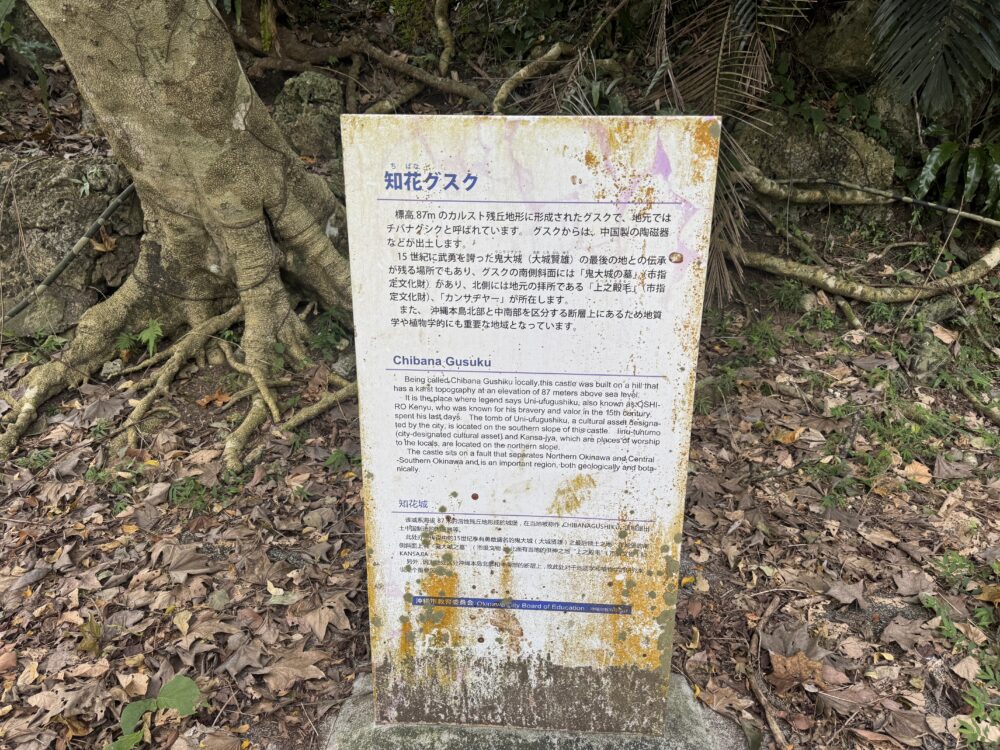
This gusuku was built on a karst remnant hill 87 m high, and locals call it Chibana Gushiku. Chinese ceramics and other artifacts have been excavated here.
Legend says this is where Uni-Ufugusuku (Ufugusuku Kenyu), a 15th-century warrior famed for his strength, spent his last days. On the southern slope is the Tomb of Uni-Ufugusuku (a city-designated cultural property), and on the north side are the local places of worship Ue-no-Tonmo (a city-designated cultural property) and Kansa-Jiya.
It also sits on the fault line that divides the north of Okinawa’s main island from the central and southern parts, which makes it an important area for geology and botany.
A natural stronghold on a karst remnant hill
About 300 m northwest of the Chibana intersection, the gusuku was built on a karst remnant hill about 87 m high.
It sits on a limestone hill surrounded by cliffs and steep slopes, forming a natural stronghold.
Its silhouette as a free-standing rocky hill, recognizable at a glance, is the gusuku’s greatest topographical highlight.
Where Uni-Ufugusuku met his end
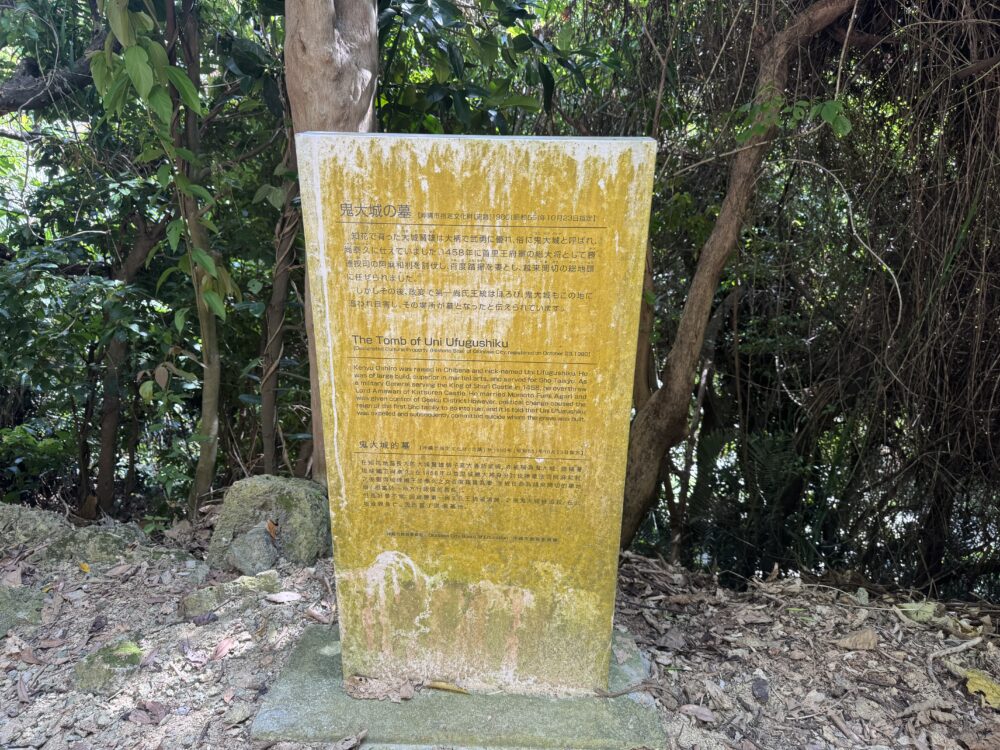
Uni-Ufugusuku, who led the Shuri royal government’s army and defeated Amawari, lord of Katsuren Castle, is said to have been pursued by the Second Sho dynasty after the First Sho dynasty fell, and to have taken his own life here.
It is widely known as the final resting place of Ufugusuku Kenyu (Uni-Ufugusuku), a warrior of great valor, and is a dramatic historic site that conveys the turmoil of Okinawa’s age of warring lords.
A castle made up of five enclosures
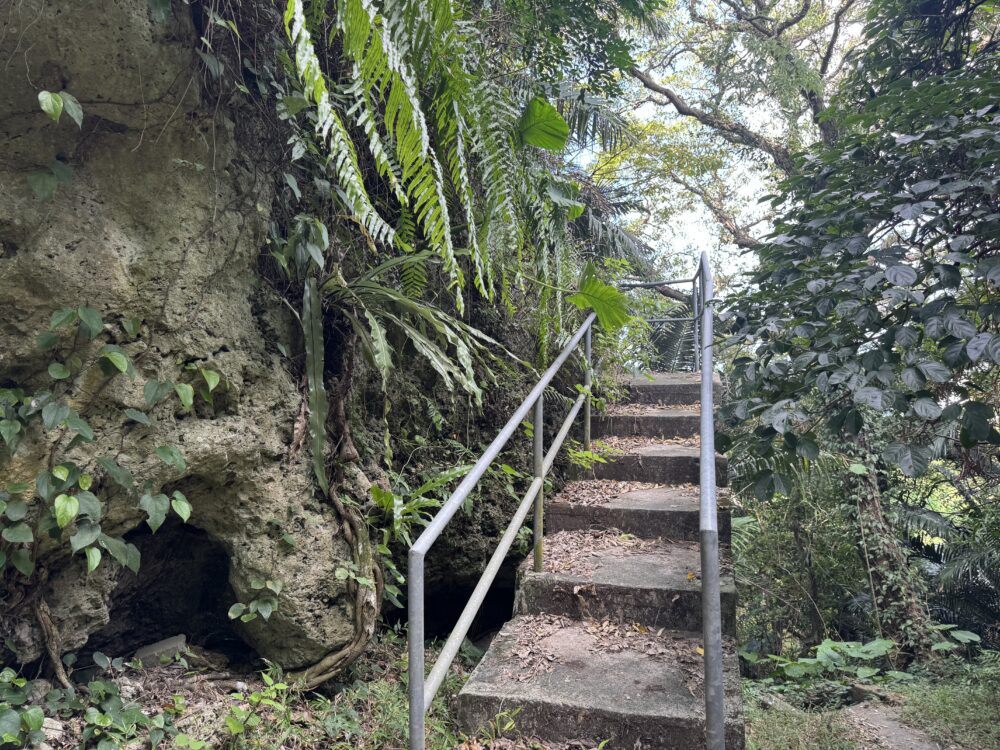
The spot with the observation platform is thought to be the first enclosure, and together with the area between it and the rocky hill opposite, and the leveled ground below on the south side, the castle appears to consist of five enclosures.
You can see an enclosure on top of a large rock and four leveled areas, all surrounded by steep slopes. It is said that there was once a stone enclosure partway up the hill.
A place of faith with utaki and places of worship
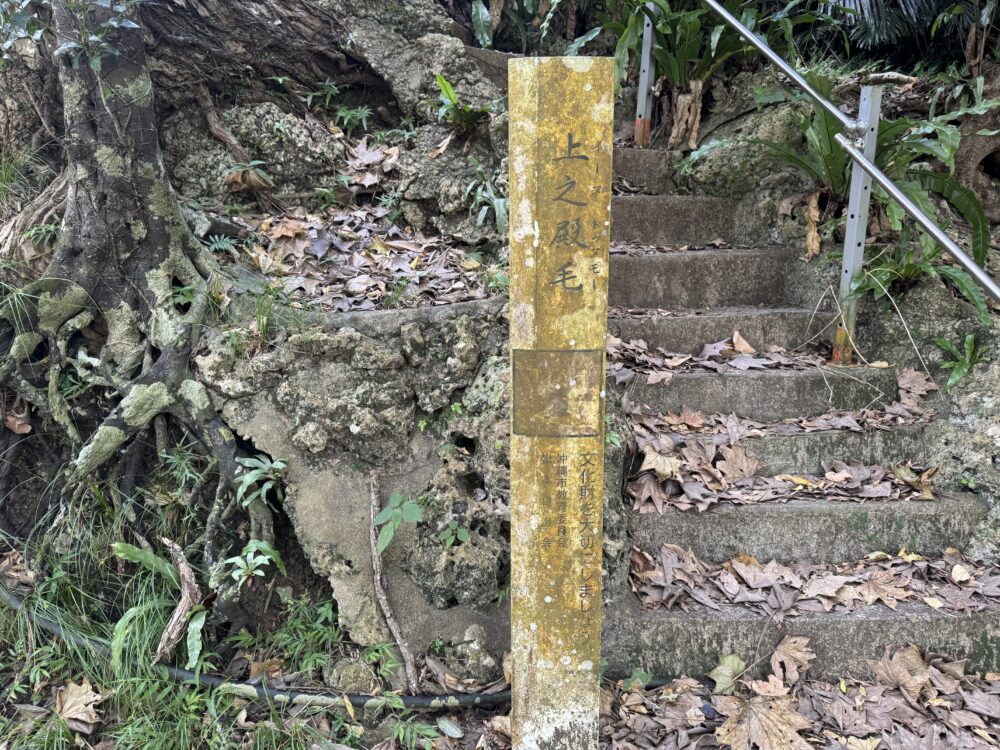
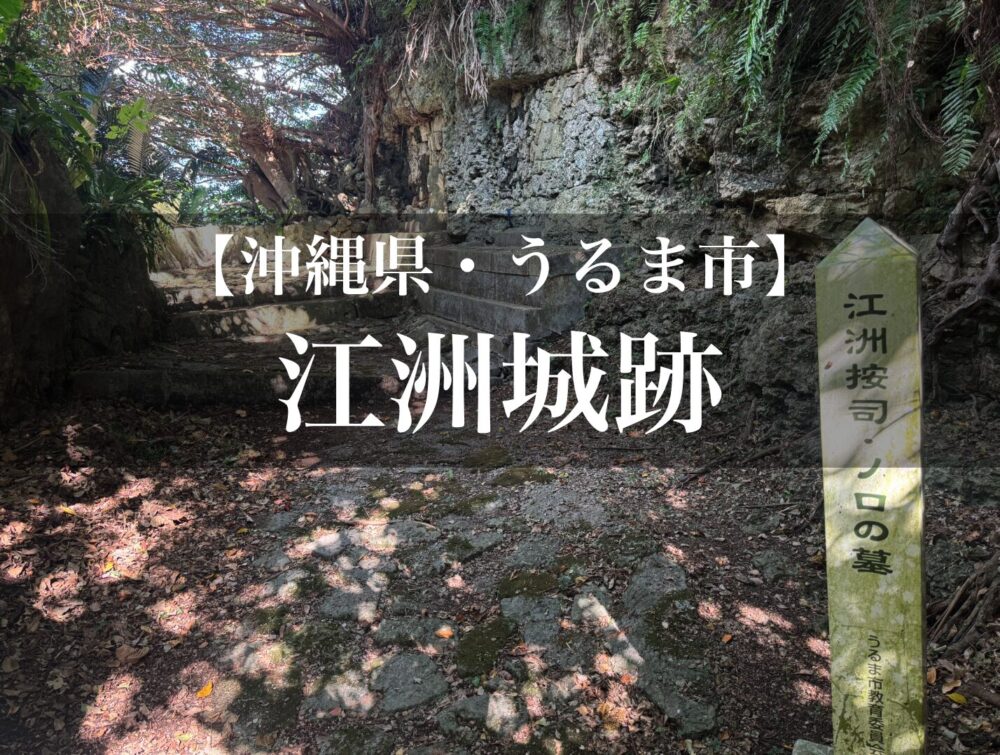
Through the entrance you come out into a plaza with a kami-asagi (ritual building), and Ue-no-Tonmo is on the left.
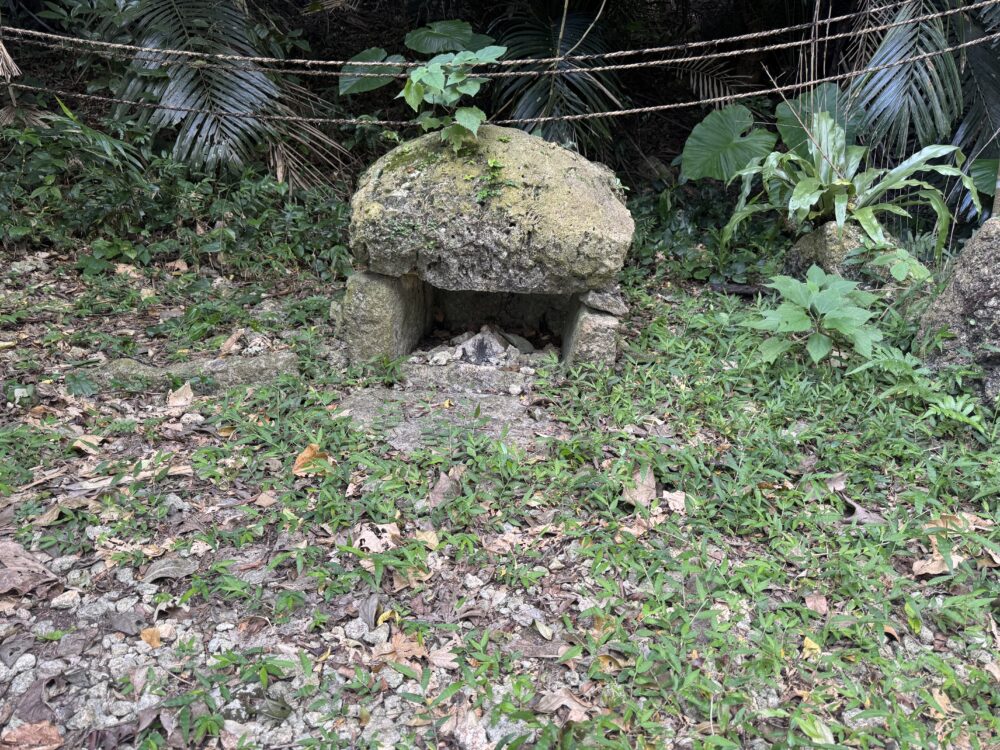
Small shrine-like places of worship where locals pray still remain, so as well as a castle ruin it is a sacred site of the community and a power spot, where history and faith overlap.
A tomb built by Uni-Ufugusuku’s descendants
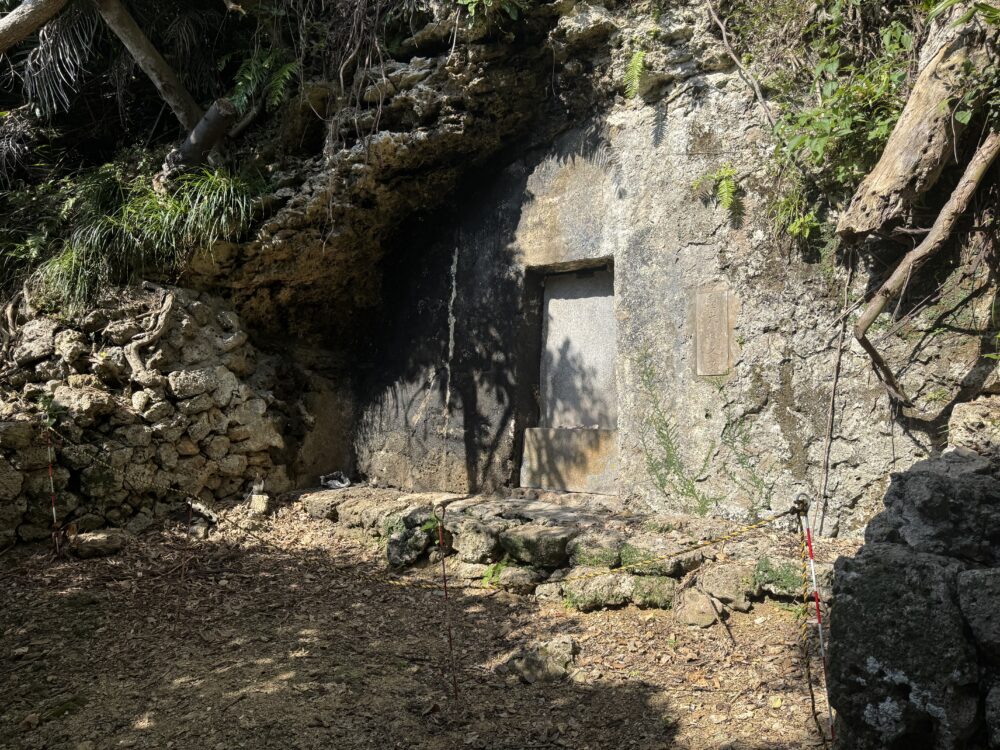
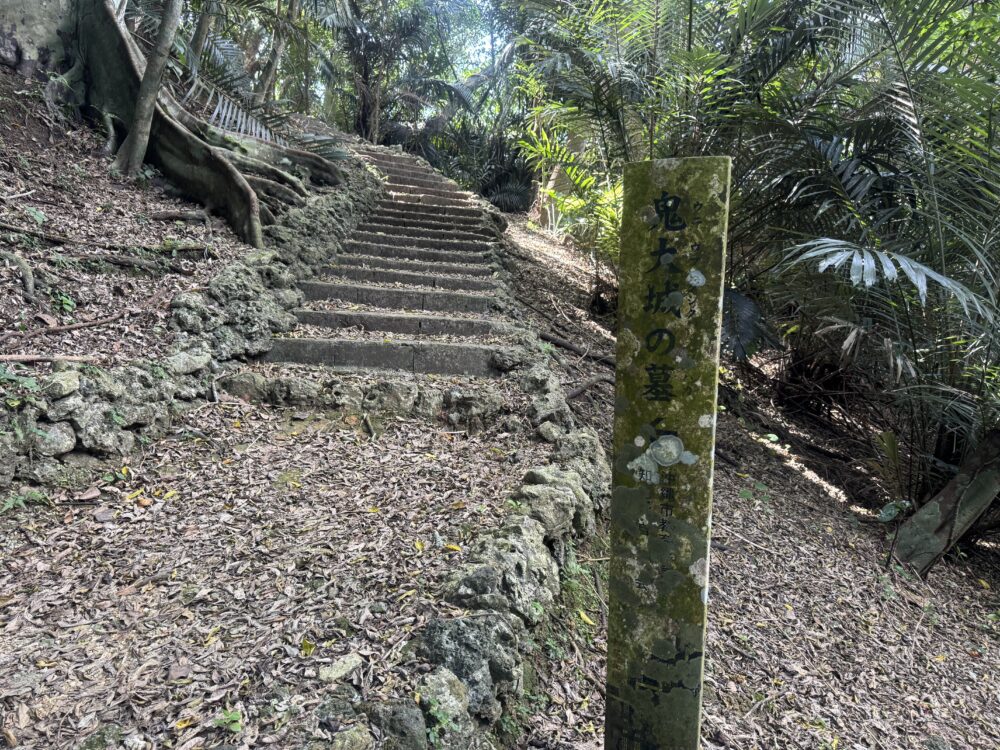
Partway up the southern cliff is a tomb built by Uni-Ufugusuku’s descendants.
Under the classification of Nakama Gisho, this tomb is an “enclosed rock-cave tomb”, located on the hillside south of Chibana Gusuku. It is a valuable remain where you can observe Okinawa’s unique burial customs up close.
Views over the streets of Chibana
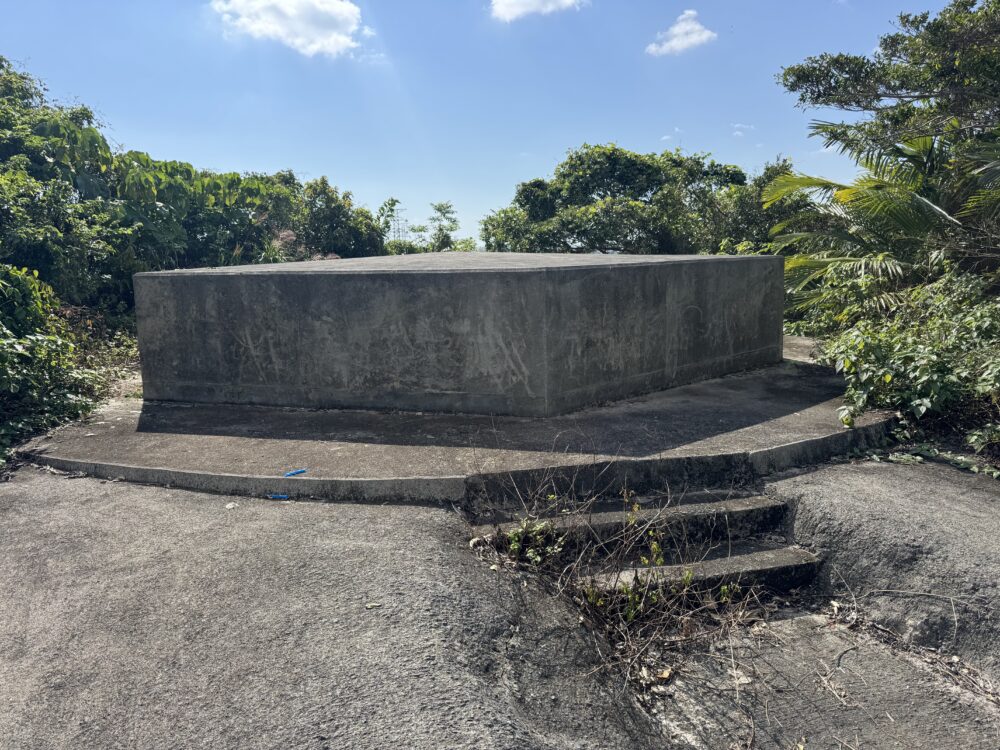
From the observation spot, the view over the Chibana area is superb, and the natural surroundings are part of the appeal.
The view was once chosen as a scenic spot, but trees have since grown and now block part of it.
Even so, the scenery from the high ground is worth the visit.
Access and things to note
From the Chibana intersection, head about 160 m toward Ishikawa, turn left, and after about 180 m more the entrance is on your left.
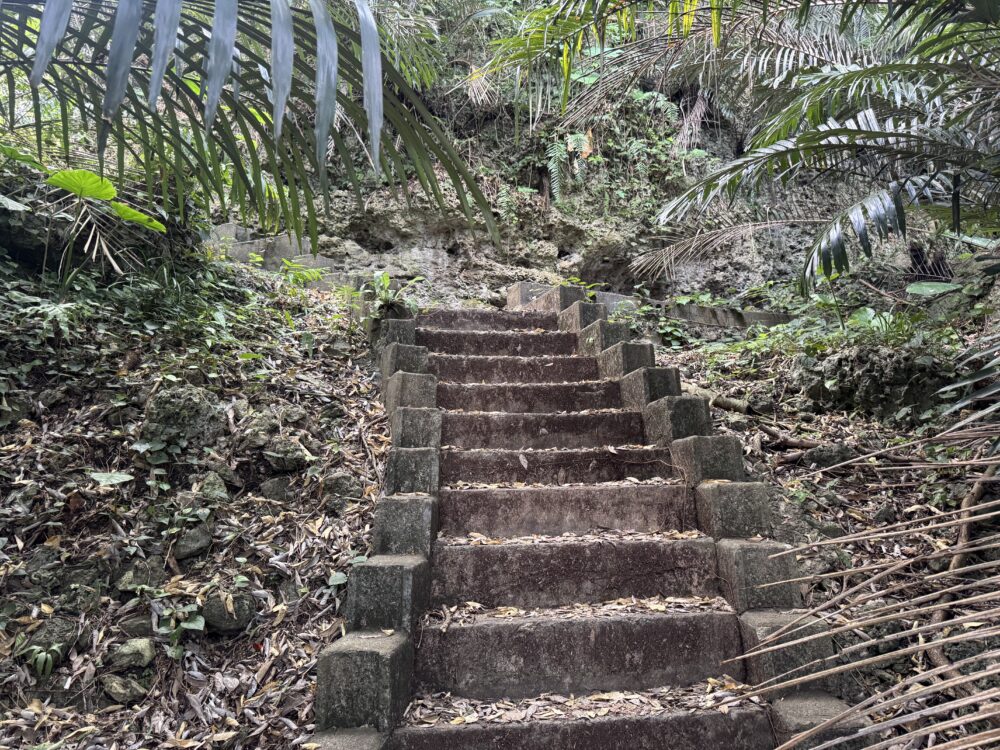
There is space for a few cars near the trailhead, but the stairs to the top are steep, so take care.
Beyond the maintained section the undergrowth is thick in places, so wear clothes that are easy to walk in.
Short Video of Chibana Castle Ruins (Chibana Gusuku)
Here is a short video of Chibana Castle Ruins (Chibana Gusuku). Take a look.
History of Chibana Castle Ruins (Chibana Gusuku)
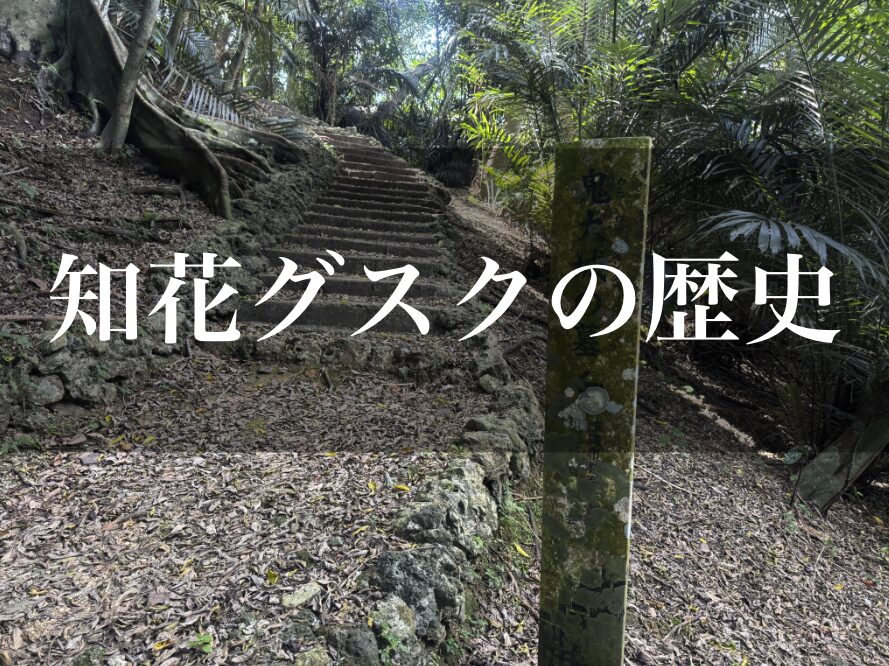
Chibana Gusuku is a hill castle thought to have been built around the 14th to 15th centuries, with stonework at an elevation of about 80 m. Details such as when it was built are unknown; the Omoro Soshi suggests an aji (local lord) lived here, but no clear legend has come down to us. Even who the lord was remains unclear, making it an ancient castle full of mysteries.
What put this gusuku’s name into history is the warrior Uni-Ufugusuku (Ufugusuku Kenyu). Ufugusuku Kenyu was a large man of great valor, popularly called Uni-Ufugusuku (“Ufugusuku the Demon”). In 1458, as commander of the Shuri royal army, he defeated Amawari, the aji of Katsuren, and for this he was appointed chief steward of Goeku district. Having distinguished himself in the Gosamaru-Amawari Rebellion, Kenyu moved into Goeku Gusuku, and Chibana Gusuku is thought to have been used as a base at that time.
Later political upheaval, however, changed his fate completely. When the First Sho dynasty was overthrown in 1469, Kenyu showed resistance and was attacked by the forces of the Second Sho dynasty, fleeing from Goeku Gusuku to Chibana Gusuku. He is said to have taken his own life here, and Chibana Gusuku is widely known as the place where Uni-Ufugusuku met his end.
The memory of Uni-Ufugusuku has been handed down here ever since. Partway up the southern cliff is a tomb built by his descendants. Although the full picture of the castle is still unclear, it is a historic site of great value that conveys the turmoil of Okinawa’s age of warring lords and the life of one warrior.
Access & Parking
| Access | About 60 minutes by car from Naha Airport |
| Address | 5-12 Chibana, Okinawa City, Okinawa |
| Parking | Available (free) |
| Restroom | None |
Chibana Castle Ruins (Chibana Gusuku) has a parking area where you can park.
We recommend parking there.
Summary
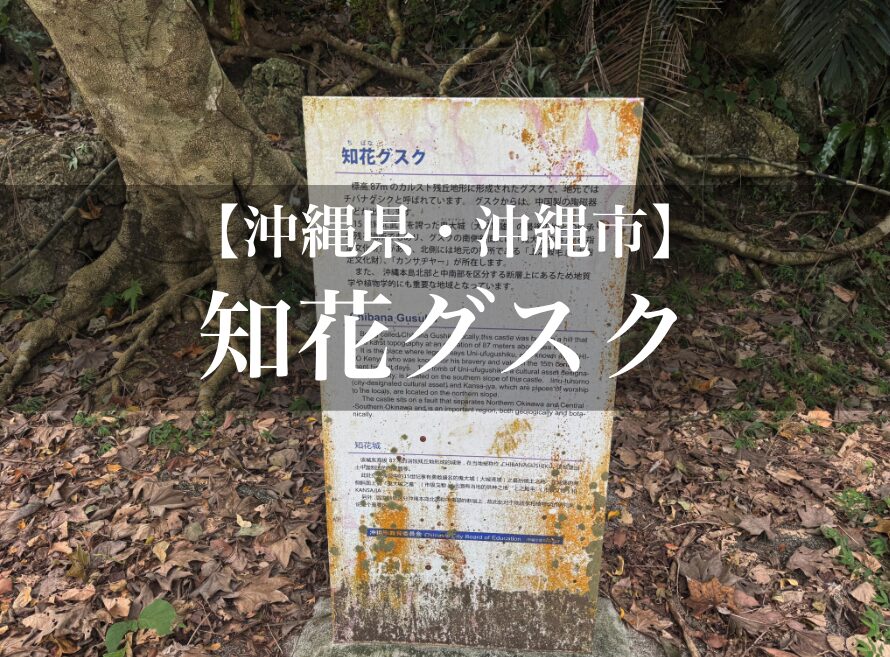
Chibana Castle Ruins (Chibana Gusuku) is a natural stronghold that makes use of a distinctive karst remnant hill, and it brings together the history of Uni-Ufugusuku’s last stand, a castle made up of five enclosures, and places of faith such as utaki and places of worship. It is a site with real depth.
It lacks the glamour of a tourist attraction, but that is exactly its charm: you can take your time with Okinawa’s history and the memory of the land. The view over Chibana from the high ground and the quiet, nature-filled atmosphere are sure to stay with you.
The stairs to the top are steep, so wear clothes that are easy to walk in. If you are interested in Okinawan history or touring gusuku, why not pay it a visit?
Comments