
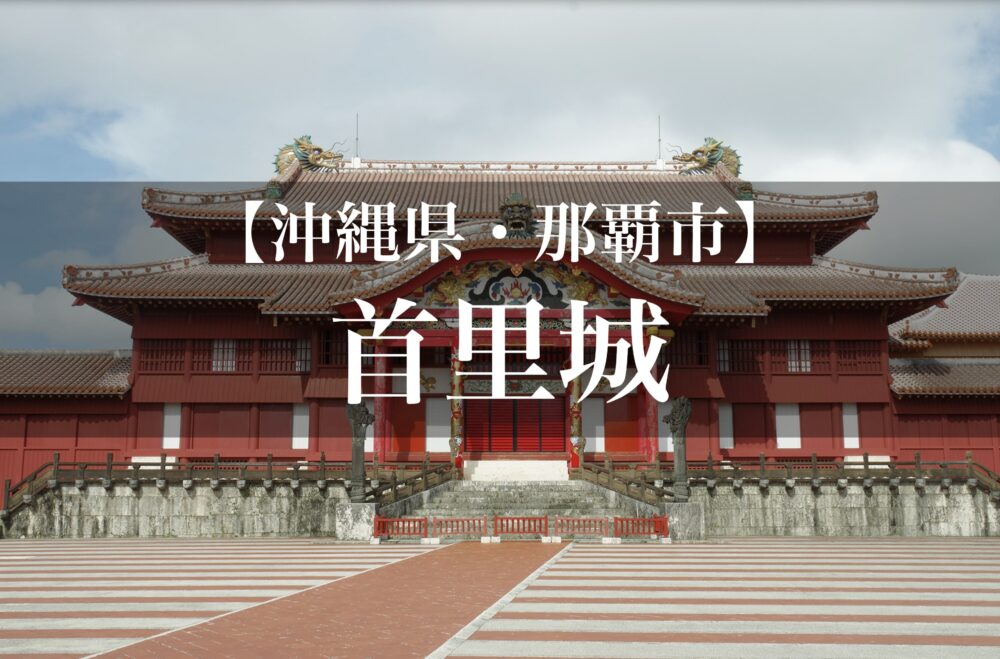
Shuri Castle is a castle in Naha, in the southern part of Okinawa’s main island.
From 1429 to 1875, through the Ryukyu Kingdom, Shuri Castle was the centre of the kingdom’s politics, diplomacy and culture.
In 2000 it was inscribed as a World Heritage Site as part of the Gusuku Sites and Related Properties of the Kingdom of Ryukyu.
Allow about 80 minutes; pick and choose what you see and you can get round it faster.
There is paid parking, and with Naha Airport close by it is an easy place to reach.
*Following the fire in 2019, the main hall and the north and south halls burned down and cannot be seen. (Restoration is due for completion in 2026.)
- Shuri Castle ratings
- Shuri Castle at a glance
- Highlights of Shuri Castle
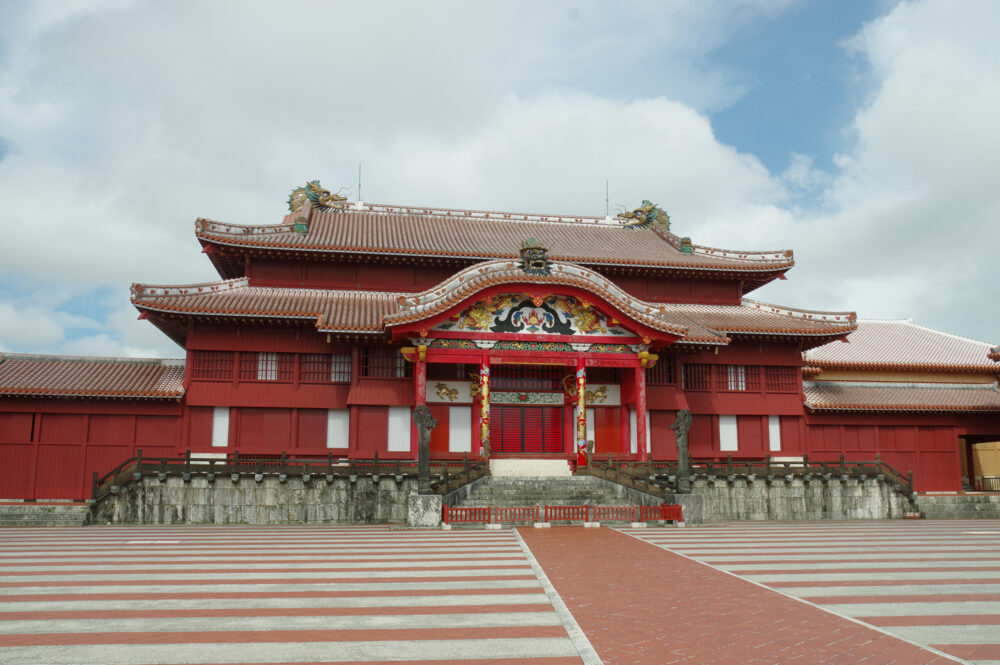
- The main hall — the vivid vermilion symbol of Okinawa
- Shureimon — the gate on the 2,000-yen note
- The Sonohyan-utaki Stone Gate — a World Heritage gate for worship
- Kyukeimon
- Kankaimon — with a shisa on either side
- Zuisenmon — a historic entrance
- Rokokumon and Hikagedai — telling the time the old way
- The Bridge of Nations Bell — a symbol of a maritime kingdom
- Beautiful stone walls with their sweeping curves
- Nishi-no-Azana (lookout) — a fine viewpoint
- Higashi-no-Azana — Shuri from about 140 metres up
- Suimuikan — where to learn the history
- Allow about 80 minutes
- Shuri Castle admission
- History of Shuri Castle
- Access & Parking
- Nearby Information
- Summary
Shuri Castle ratings
*Ratings are the personal view of the Okinawa Bookmark editor, based on comparison with other castles and castle ruins in Okinawa
Shuri Castle at a glance
| Hours Free area within the castle grounds | April-June and October-November: 8:00-19:30 July-September: 8:00-20:30 December-March: 8:00-18:30 |
| Hours Paid area within the castle grounds | April-June and October-November: 8:30-19:00 July-September: 8:30-20:00 December-March: 8:00-18:00 |
| Hours Suimuikan and prefectural parking | April-June and October-November: 8:00-19:30 July-September: 8:00-20:30 December-March: 8:00-18:30 |
| Closed | Open year-round |
| Admission (individual) *Fewer than 20 people | ・Adults: 400 yen ・High school students: 300 yen ・Elementary and junior high students: 160 yen |
| Admission (group) *20 or more people | ・Adults: 320 yen ・High school students: 240 yen ・Elementary and junior high students: 120 yen |
| Time needed | About 80-120 minutes |
| Parking | Yes (paid) |
| Restroom | Yes |
| Address | 1-2 Shuri Kinjocho, Naha, Okinawa |
Shuri Castle is a symbol of Okinawa, and through the Ryukyu Kingdom it was the centre of the kingdom’s politics, diplomacy and culture.
In 2000 they were inscribed as part of the World Heritage Site “Gusuku Sites and Related Properties of the Kingdom of Ryukyu”.
Highlights of Shuri Castle
The main hall — the vivid vermilion symbol of Okinawa
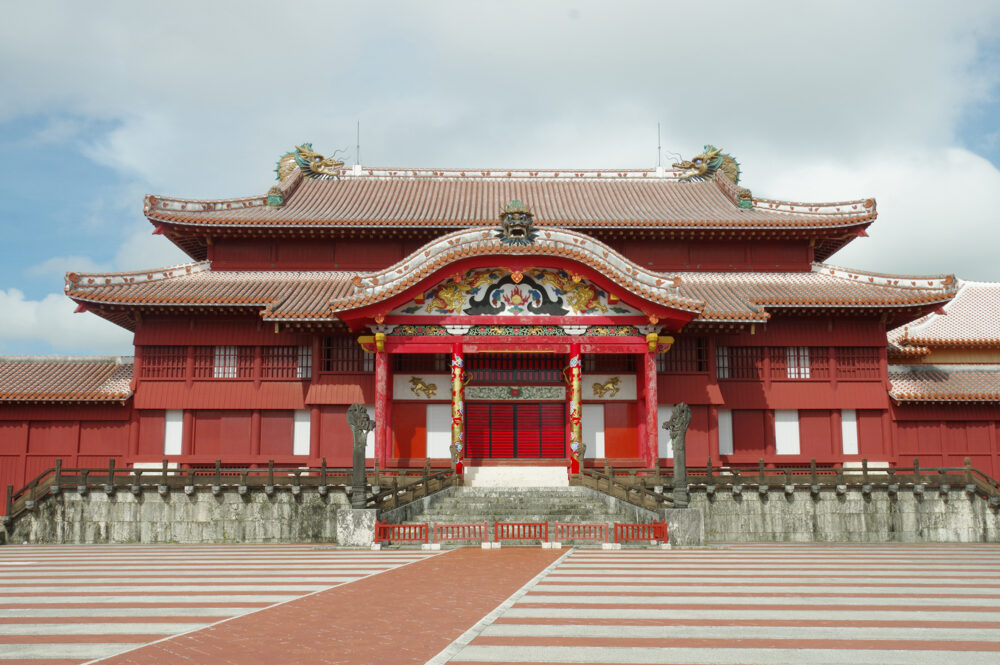
The main hall is the emblem of Shuri Castle, and its vivid vermilion is what most visitors remember.
The throne and the finely carved interior are a valuable record of Ryukyuan history.
*Following the fire in 2019, the main hall and the north and south halls burned down and cannot be seen. (Restoration is due for completion in 2026.)
Shureimon — the gate on the 2,000-yen note
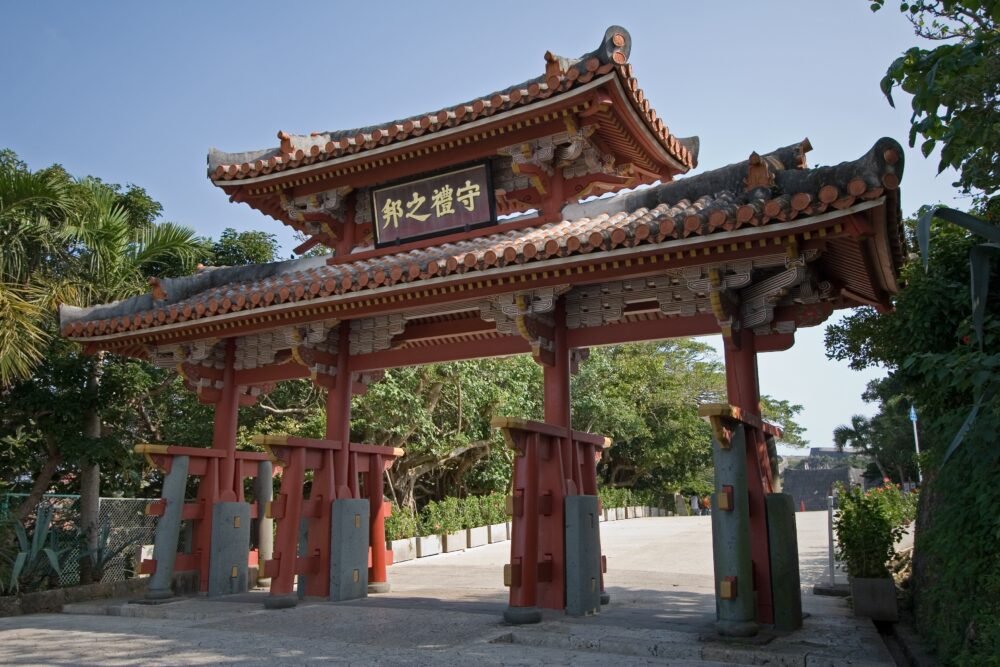
Shureimon appears on Japan’s 2,000-yen banknote.
It stands for the Ryukyuan ideal of shurei-no-kuni, a land that observes propriety, and it carries that with some dignity.
The Sonohyan-utaki Stone Gate — a World Heritage gate for worship
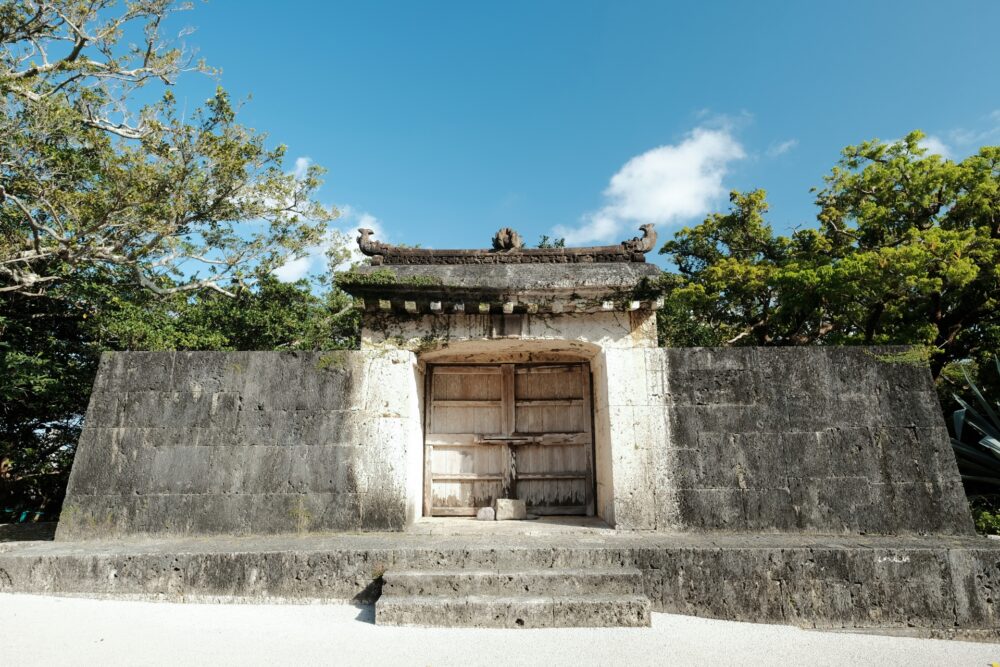
The Sonohyan-utaki Stone Gate was never an entrance for people to pass through: it is a sacred place where the Ryukyuan king prayed for safe passage.
The woodland behind it is an utaki, a sacred grove, and was a centre of Ryukyuan faith.
Standing before this gate brings you into contact with something of old Okinawa.
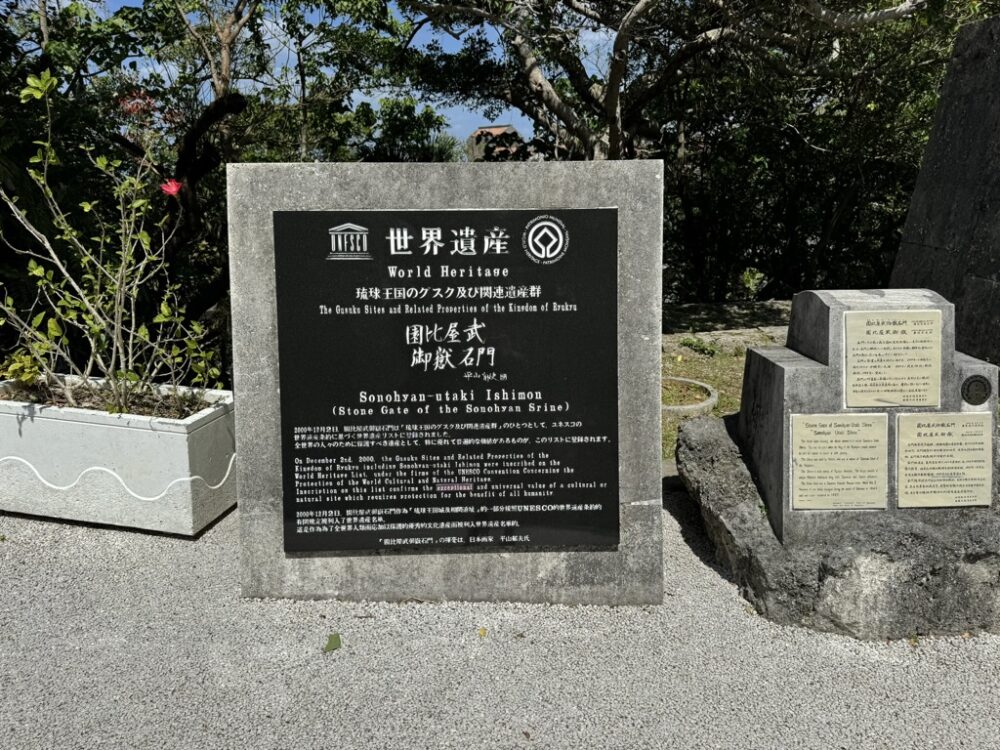
*The Sonohyan-utaki Stone Gate is part of the World Heritage Gusuku Sites and Related Properties of the Kingdom of Ryukyu.
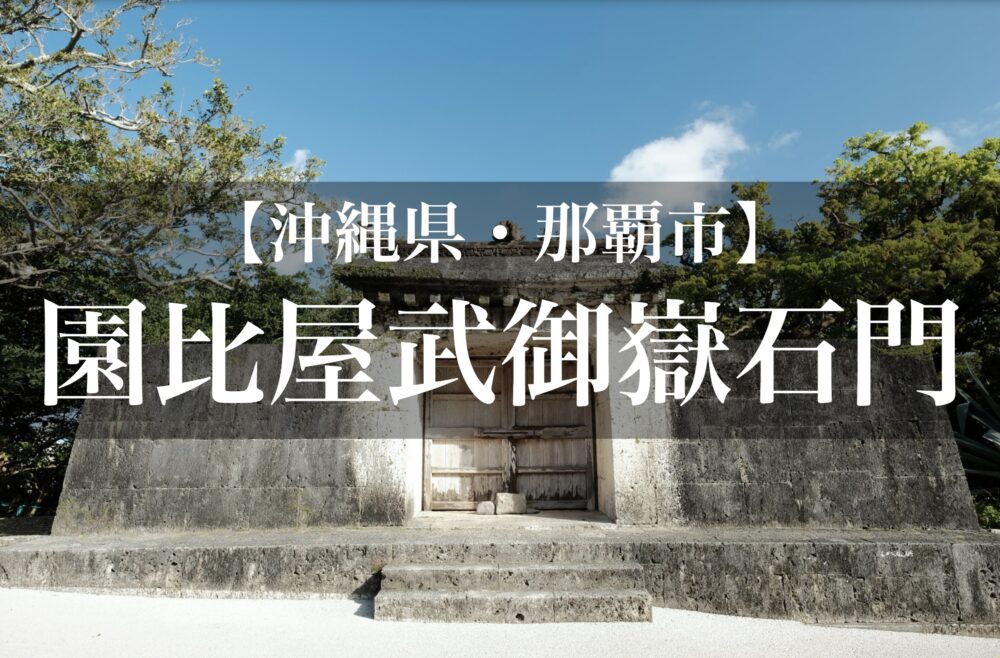
Kyukeimon
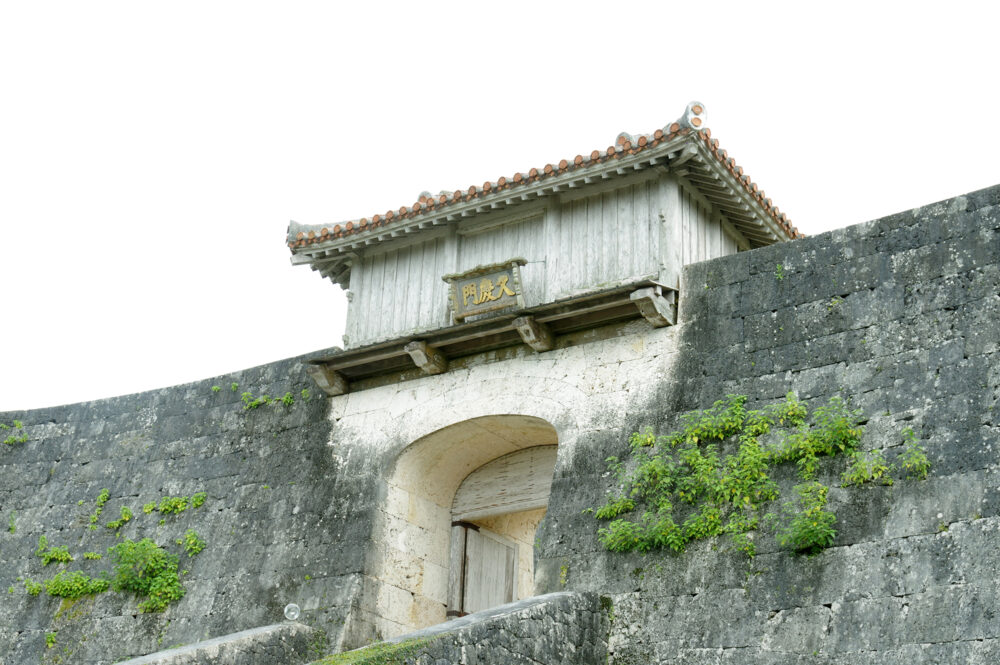
Kyukeimon was a service gate, said to have been used mainly by women.
Kankaimon — with a shisa on either side
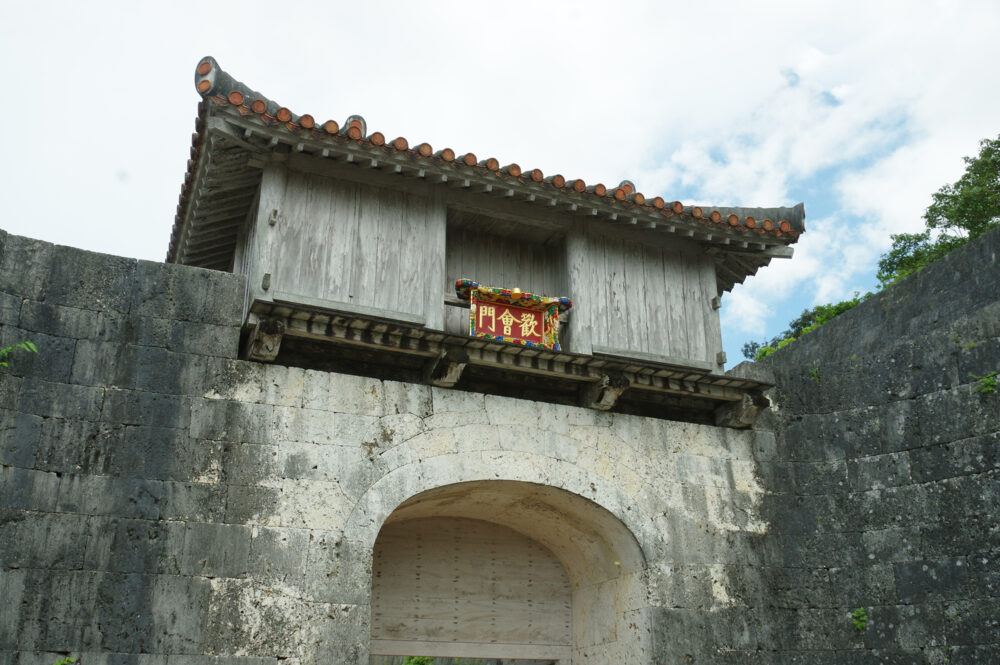
A pair of imposing shisa flank Kankaimon, the gate that welcomes visitors in.
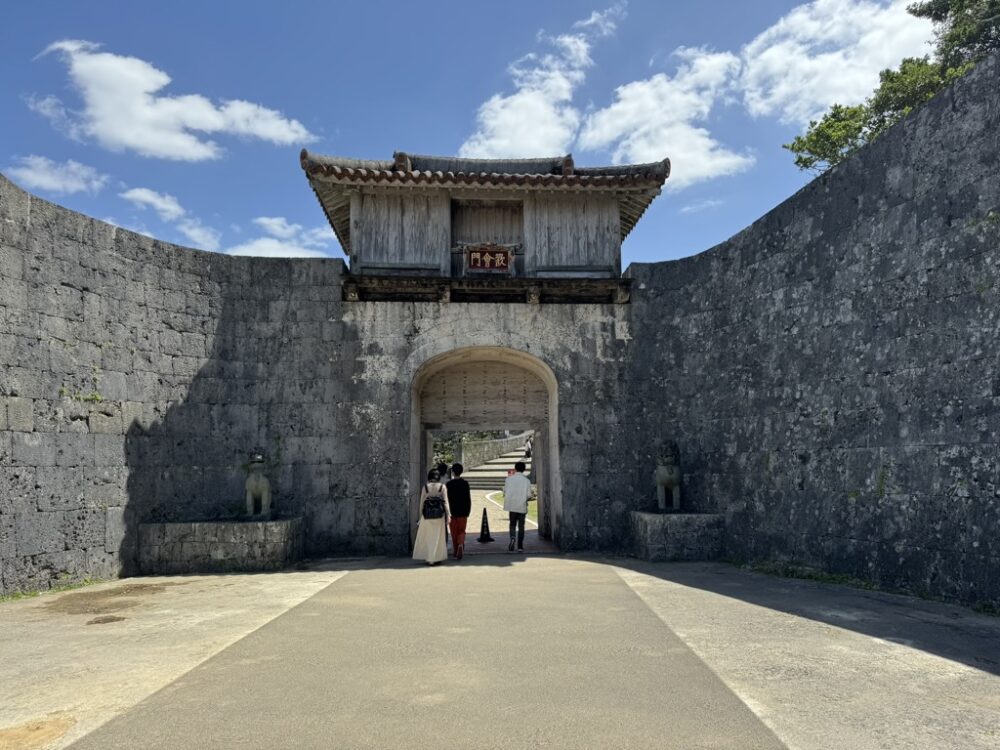
Their distinctive shapes are as Okinawan as it gets.
Zuisenmon — a historic entrance
Before Kankaimon and Kyukeimon were built, Zuisenmon was the main gate to Shuri Castle, the entrance used by royalty and by visiting envoys.
Rokokumon and Hikagedai — telling the time the old way
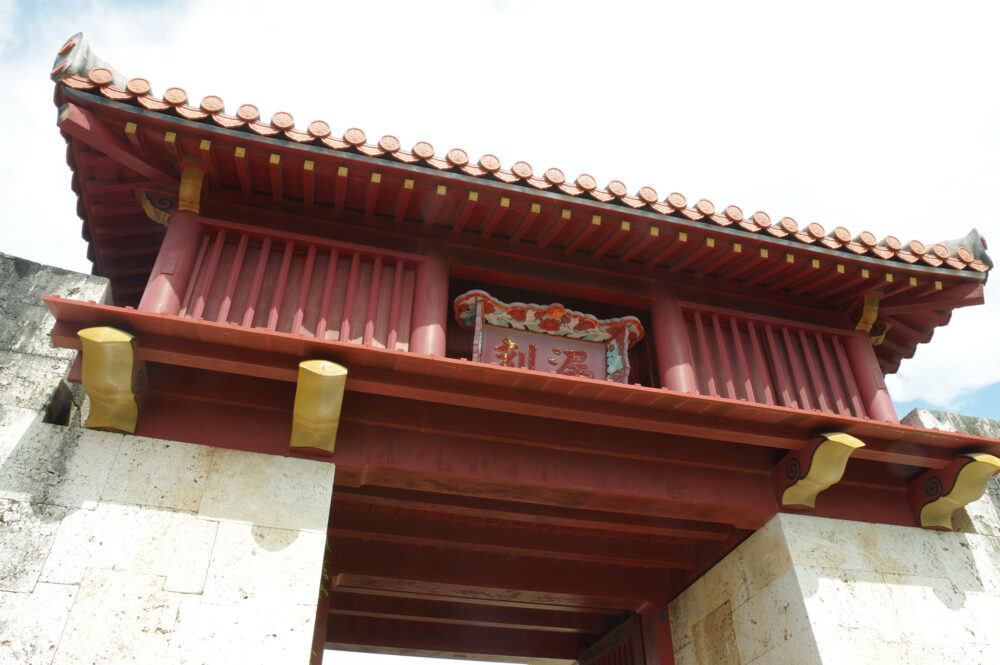
Between Rokokumon and Hikagedai stand ancient timekeeping devices that work from the movement of the sun.
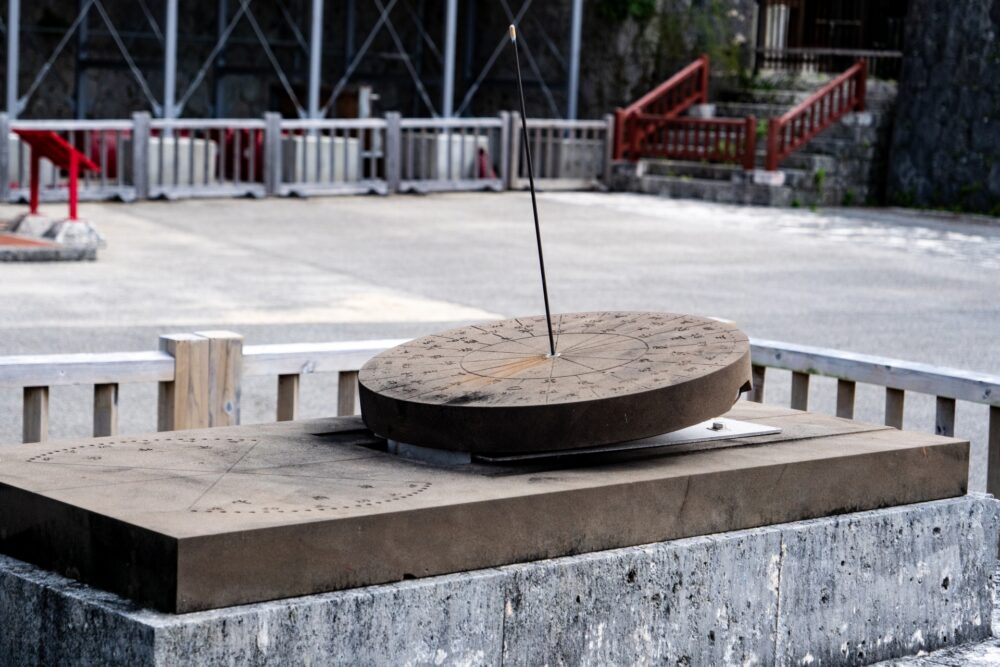
It is a good place to feel time passing at its own pace.
The Bridge of Nations Bell — a symbol of a maritime kingdom
The Bridge of Nations Bell stood at the heart of trade, culture and faith in the Ryukyu Kingdom, and it carries into the present the part Okinawa played across East Asia.
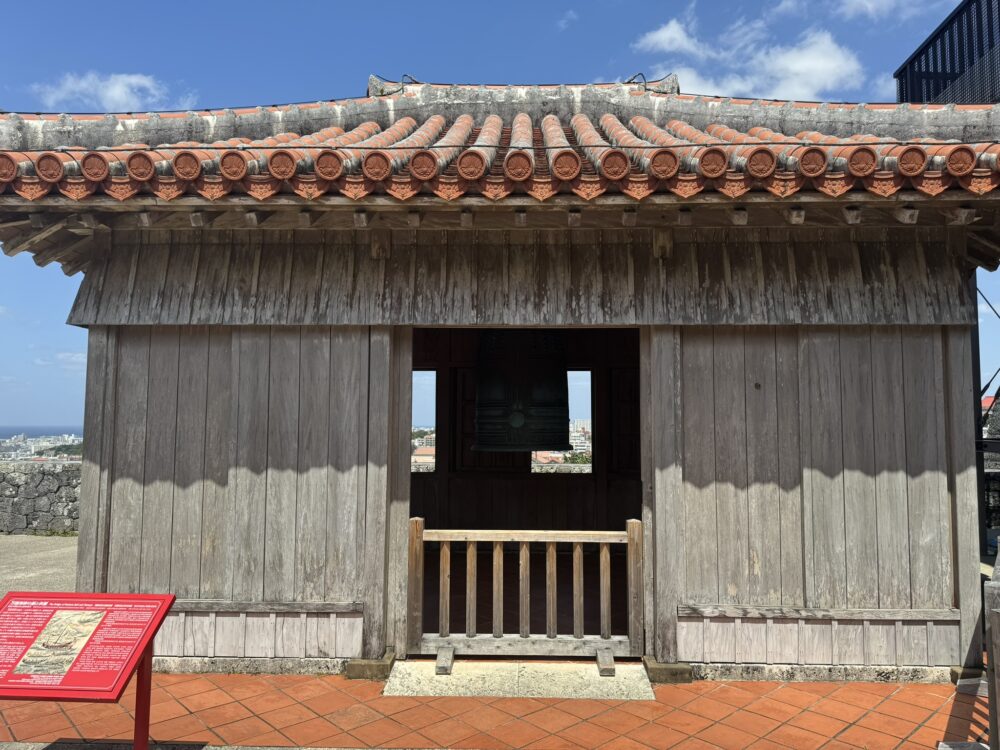
The building housing the bell is currently closed to visitors.
Beautiful stone walls with their sweeping curves
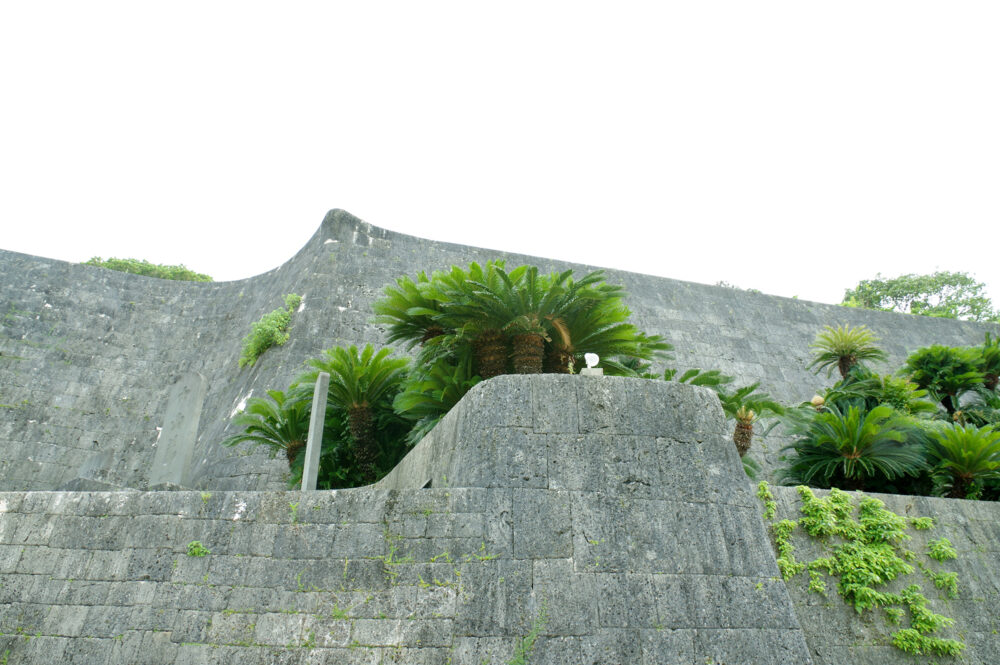
The stone walls at Shuri Castle are known for both the skill behind them and their looks.
Those long curves are what hold the eye.
Nishi-no-Azana (lookout) — a fine viewpoint
Nishi-no-Azana is the viewpoint that takes in the surroundings of Shuri Castle.
You can see as far as the East China Sea, and dusk is the time to be here.
Higashi-no-Azana — Shuri from about 140 metres up
From Higashi-no-Azana the whole of Shuri opens out below you.
Standing in the wind up on the castle, it is the kind of view that stays with you.
Suimuikan — where to learn the history
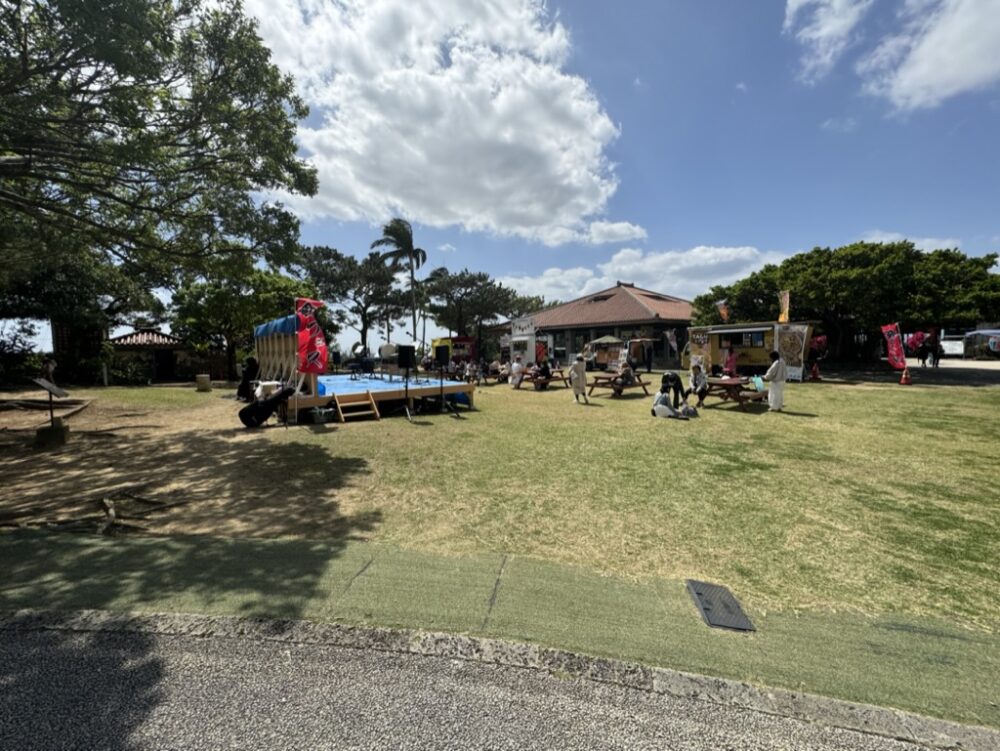
Suimuikan serves as an exhibition and study space.
For anyone wanting to get into the culture and history of the Ryukyu Kingdom, it is worth the time.
Allow about 80 minutes
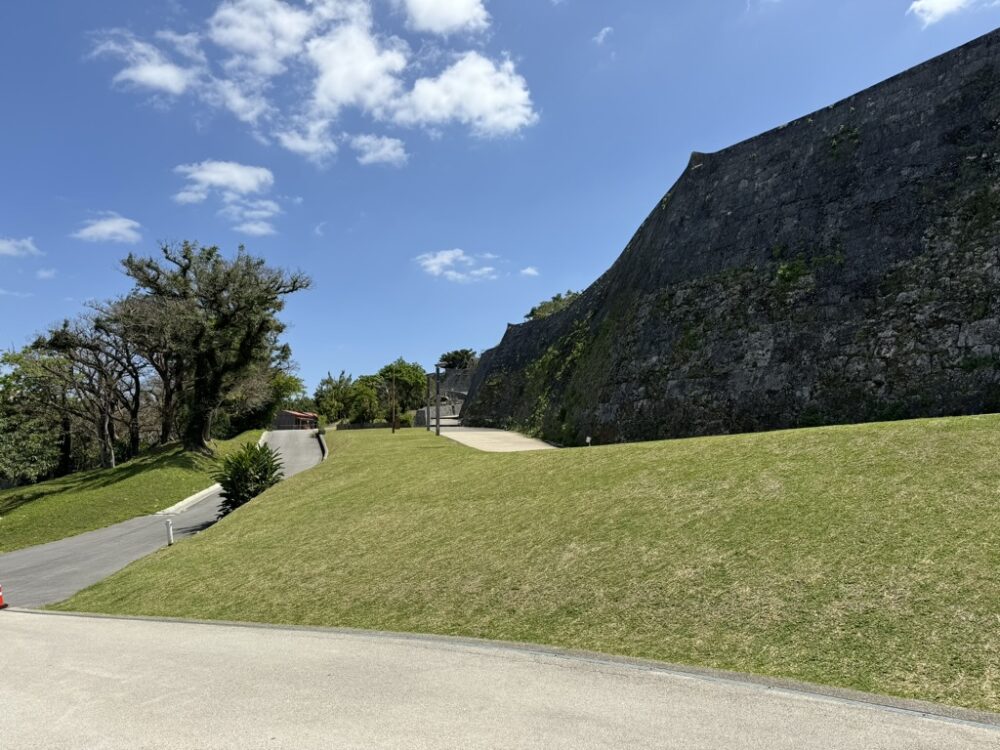
To do Shuri Castle properly, plan on at least 80 minutes.
For the free area alone, 30-60 minutes is enough; add the paid area and you will want 80-120 minutes.
Take your time at each of the highlights and let Okinawa’s history and culture sink in.
Shuri Castle admission
| Admission (individual) *Fewer than 20 people | ・Adults: 400 yen ・High school students: 300 yen ・Elementary and junior high students: 160 yen |
| Admission (group) *20 or more people | ・Adults: 320 yen ・High school students: 240 yen ・Elementary and junior high students: 120 yen |
You can buy tickets for Shuri Castle on site, or in advance through GetYourGuide or Viator.
If you are planning a visit, it is worth a look.
History of Shuri Castle

Shuri Castle is one of the most important sites in the story of Okinawa.
The castle was once the political centre of the Ryukyu Kingdom, and excavation suggests it already existed by the late 13th or 14th century.
After Sho Hashi unified the Ryukyu Kingdom in 1429, Shuri Castle became the seat of its government.
It burned down and was rebuilt many times over.
In 1945, during the Second World War, it was destroyed entirely by American attack, and after the war the site was used as the campus of the University of the Ryukyus.
Once the university moved, restoration work went ahead, and in December 2000 the site was inscribed as a World Heritage Site as part of the Gusuku Sites and Related Properties of the Kingdom of Ryukyu.
The restored castle is modelled on its 18th-century form and was rebuilt from what remained of the walls and building foundations.
Not only the architecture but the decoration and the techniques used show the influence of East and Southeast Asia, which says a good deal about the kingdom’s international ties.
It is also said to have been a sacred place where the kings of Ryukyu offered prayers.
Visitors come away with more than a handsome building: there is the historical weight of the place, and a sense of how people lived under the Ryukyu Kingdom.
Shuri Castle leaves an impression on everyone who visits Okinawa.
Knowing this background before you go makes what you see there considerably richer.
Shuri Castle is where the past and the present of Okinawan culture meet.
Access & Parking
| Access | About 25 minutes by car from Naha Airport |
| Address | 1-2 Shuri Kinjocho, Naha, Okinawa |
| Hours: prefectural parking | April-June and October-November: 8:00-19:30 July-September: 8:00-20:30 December-March: 8:00-18:30 |
| Prefectural parking | Several lots (paid) Standard vehicle: 400 yen Large vehicle: 1,200 yen |
| Restroom | Yes |
There is paid parking for Shuri Castle.
Several lots serve the area; here we cover the Shuri Castle Park prefectural parking.
Nearby Information
Tamaudun
Tamaudun, also known as Tamaudun or Reiudun, is the mausoleum where the kings of the Second Sho Dynasty of the Ryukyu Kingdom are laid to rest.
The great stone tomb stands in Shuri Kinjocho, Naha, and was built by King Sho Shin in 1501.
It is a World Heritage Site and a national treasure, and the weight of history is unmistakable.
The Kinjocho stone-paved road
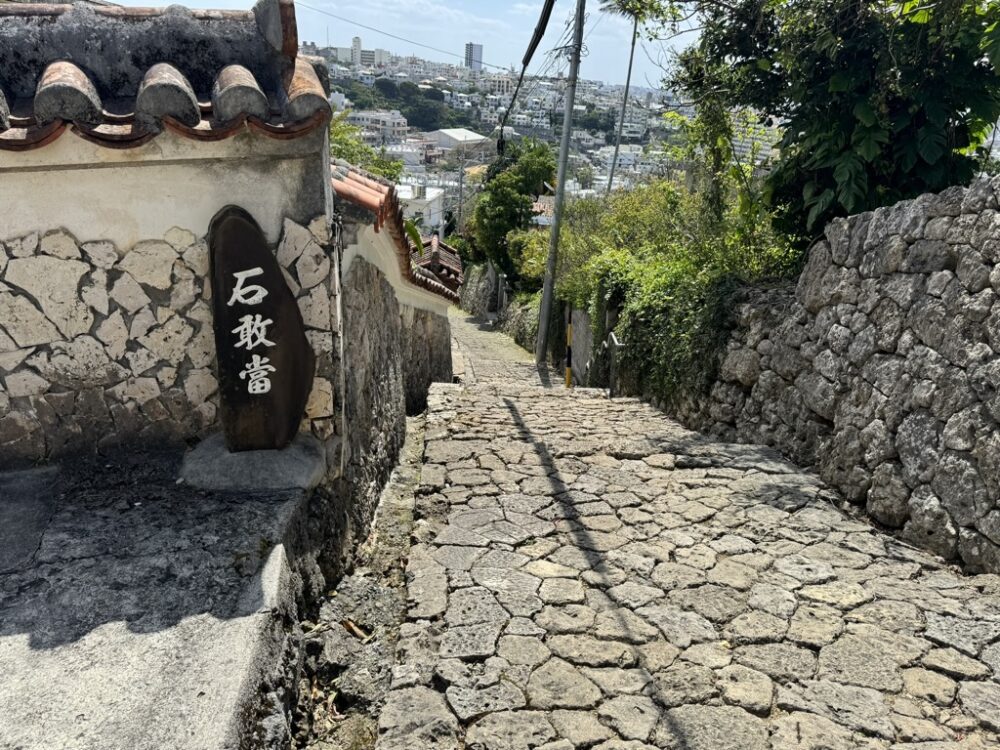
The Kinjocho stone-paved road is a roughly 300-metre stretch of old paved slope running down from Shuri Castle, part of the Madama Road laid in the 16th century.
Paved with Ryukyuan limestone, the walk retains a great deal of the old kingdom and is a designated prefectural cultural property.
It is listed among Japan’s 100 best roads, and the history is close at hand as you walk it.

Shikinaen
Shikinaen is a strolling garden drawing on Chinese, Japanese and Ryukyuan styles, built in 1799 as the largest of the Ryukyuan royal villas.
The garden sits on a plateau about 2 km south of Shuri Castle and is inscribed as part of the Gusuku Sites and Related Properties of the Kingdom of Ryukyu. Walking the path around the pond, the view shifts as you go, which has a quietly settling effect.

Activities in Naha

Naha, in the southern part of Okinawa’s main island, offers plenty of activities including diving and snorkeling.
You can book through GetYourGuide or Viator, so do take a look at what is on offer.
Rihga Royal Gran Okinawa
Rihga Royal Gran Okinawa connects directly to Asahibashi Station on the Yui Rail monorail, and is as little as five minutes by car or about ten by monorail from Naha Airport.
A Japanese-Western-Ryukyuan buffet breakfast at Dining 19 on the top floor, a welcome drink in every room and valet parking all add up to a genuinely comfortable stay.
You can check it on Booking.com, so do take a look.
A rental car is the way to go in Okinawa

A rental car is by far the best way to get around the main island of Okinawa.
The places worth seeing are scattered across the island, from Shuri Castle in Naha to the beautiful beaches of the north and American Village in Chatan, and with a car you can take them at your own pace. Buses are infrequent and do not always run on time, so having a car or not makes a real difference to the trip.
Cars fill up quickly in the peak season, so we recommend booking early once your travel dates are set. One important note for overseas visitors: to drive in Japan you must obtain an International Driving Permit (Geneva Convention) in your home country before you depart, and remember that traffic in Japan drives on the left.
Summary
This article introduced Shuri Castle.
Shuri Castle is a symbol of Okinawa Prefecture and one of its best-known places to visit.
In 2000 it was inscribed as a World Heritage Site as part of the Gusuku Sites and Related Properties of the Kingdom of Ryukyu, which speaks to its historical importance.
Following the fire in 2019 the main hall and the north and south halls burned down and cannot currently be seen, but restoration is due for completion in 2026 — something to look forward to.
Thank you for reading to the end.
Comments