
This guide covers Asumui Utaki (Hedo Utaki) in the north of Okinawa’s main island.
It is one of the sacred places at the foundation of Okinawan culture, shaped by the Ryukyuan creation myth.
Here you will find the breathtaking natural beauty of Asumui Utaki, the history bound up with the myth, and why it is worth visiting.
When you come to Okinawa, do not pass up the chance to experience this remarkable power spot.
*The name is read “Asumui Utaki.”
Ratings for Asumui Utaki (Hedo Utaki)
*Ratings reflect the personal impressions of the Okinawa Bookmark editor compared with other historic sites in Okinawa
Asumui Utaki (Hedo Utaki) at a Glance
| Opening hours | None in particular |
| Closed | None in particular |
| Admission | Free |
| Time needed | About 90 minutes |
| Parking | Available (free, about 4 spaces) |
| Restrooms | No |
| Address | Hedo, Kunigami Village, Kunigami District, Okinawa |
Asumui Utaki (Hedo Utaki) is one of the Seven Utaki of Ryukyuan Creation, and is well known in Okinawa as a sacred place.
What to Know Before Visiting Asumui Utaki
The Ryukyuan Creation Myth
The Ryukyuan creation myth is a central story that accounts for the origins of Okinawa’s rich culture and natural world.
At its heart is a deity named Amamikiyo.
She descended from Nirai Kanai, the realm of the gods, and set about creating the Okinawan islands. Of particular note are the seven utaki she created first.
These are held to be the most sacred places in Ryukyuan belief, and might fairly be called Okinawa’s spiritual landmarks.
Asumui Utaki is one of those seven, and lies in Hedo, Kunigami Village.
Said to be where Amamikiyo came down to earth, this sacred ground stands for the very roots of Okinawan history and culture.
The seven utaki are as follows.
- Asumui Utaki: Hedo, Kunigami Village
- Kubou Utaki: within Nakijin Castle, Nakijin Village
- Sefa Utaki: Chinen, Nanjo City
- Yabusatsu Utaki: Tamagusuku, Nanjo City
- Amatsuzu Tentsugi Utaki: Tamagusuku, Nanjo City, within Tamagusuku Castle
- Kubo Utaki: Chinen, Nanjo City (Kudaka Island)
- Shui Madamui Utaki: within Shuri Castle
These utaki are closely bound to Amamikiyo’s story of creation in the Ryukyuan myth, and stand as symbols of respect and gratitude toward Okinawa’s nature and culture.
Keeping the myth and the significance of these sacred sites in mind as you visit Asumui Utaki will make for a deeper and more moving experience.
What Is an Utaki?
An utaki is a place in Ryukyuan belief where the gods come, or a sacred site where ancestral deities are enshrined.
Asumui Utaki is in Hedo, Kunigami Village, Okinawa, a sacred place that local people have protected since long ago.
Surrounded by nature, it is said to bring peace of mind to those who come, and it has become a power spot that draws a steady stream of visitors.
What to See at Asumui Utaki (Hedo Utaki)
The Kuganeyama Prayer Site
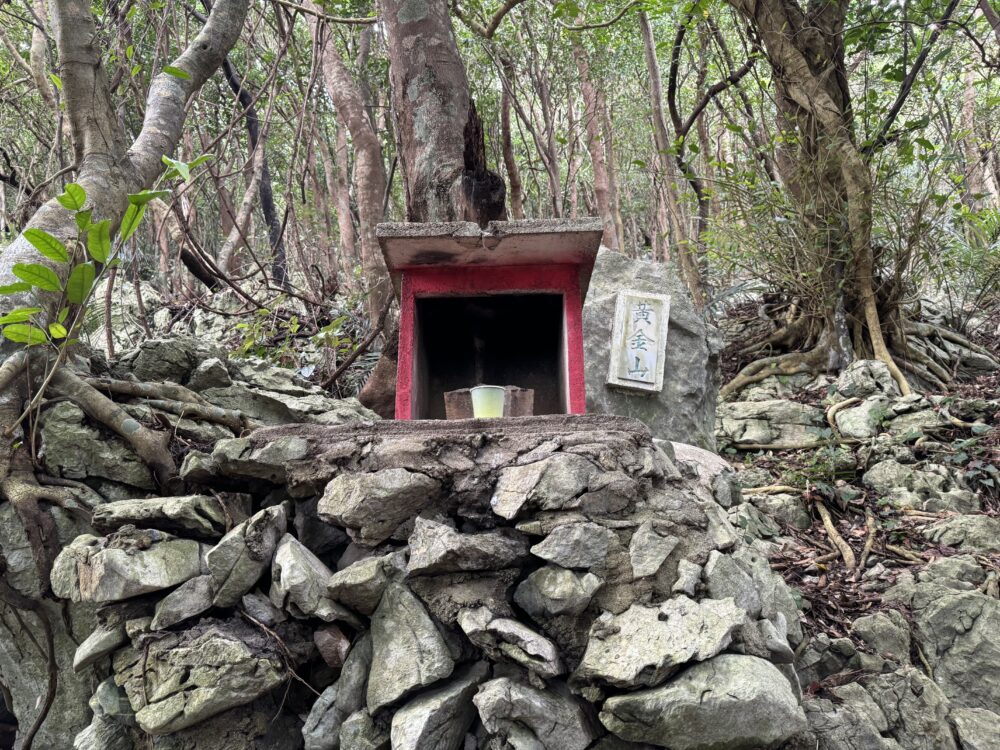
In one corner of Asumui Utaki, in the north of Okinawa’s main island, the Kuganeyama prayer site is said to give visitors a particular kind of energy.
By tradition it is thought to bring good fortune in money matters, and it is an ideal place to offer a quiet prayer surrounded by nature.
The Prayer Site on the Slope
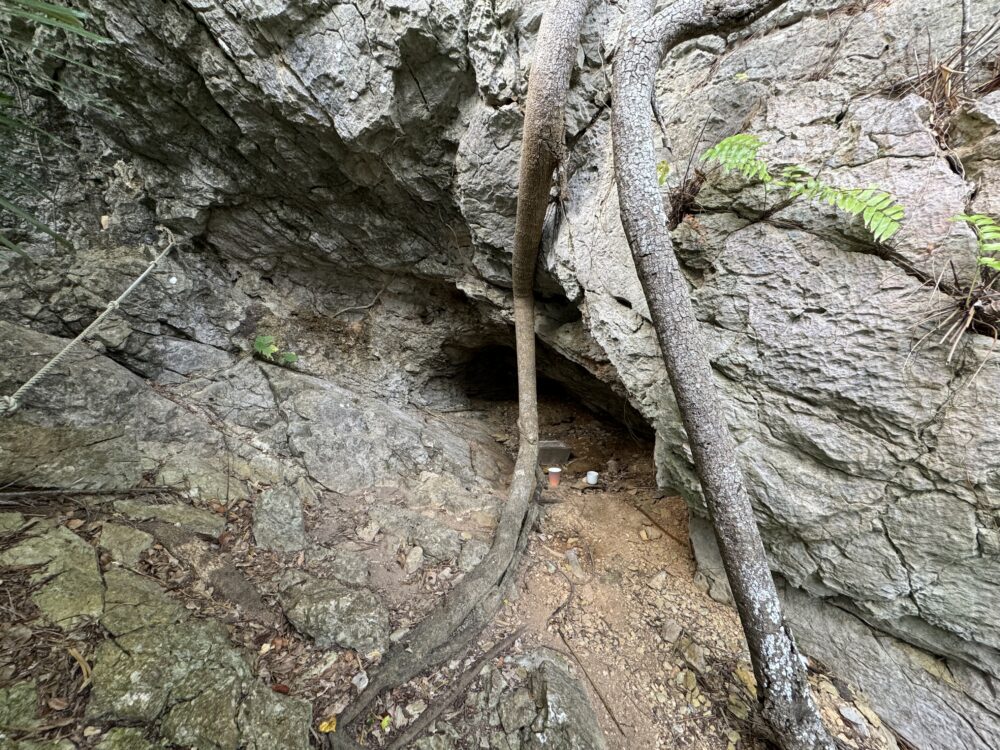
There is a prayer site partway up Asumui Utaki.
Prayer Sites for the Male and Female Deities
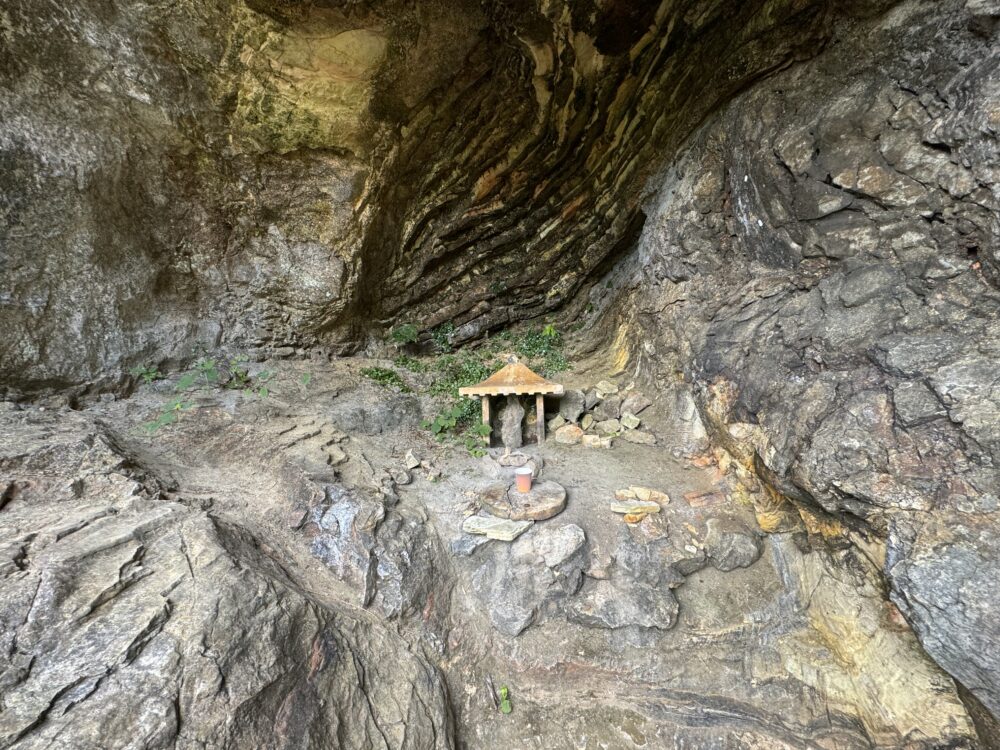
This sacred ground also holds prayer sites dedicated to a male and a female deity.
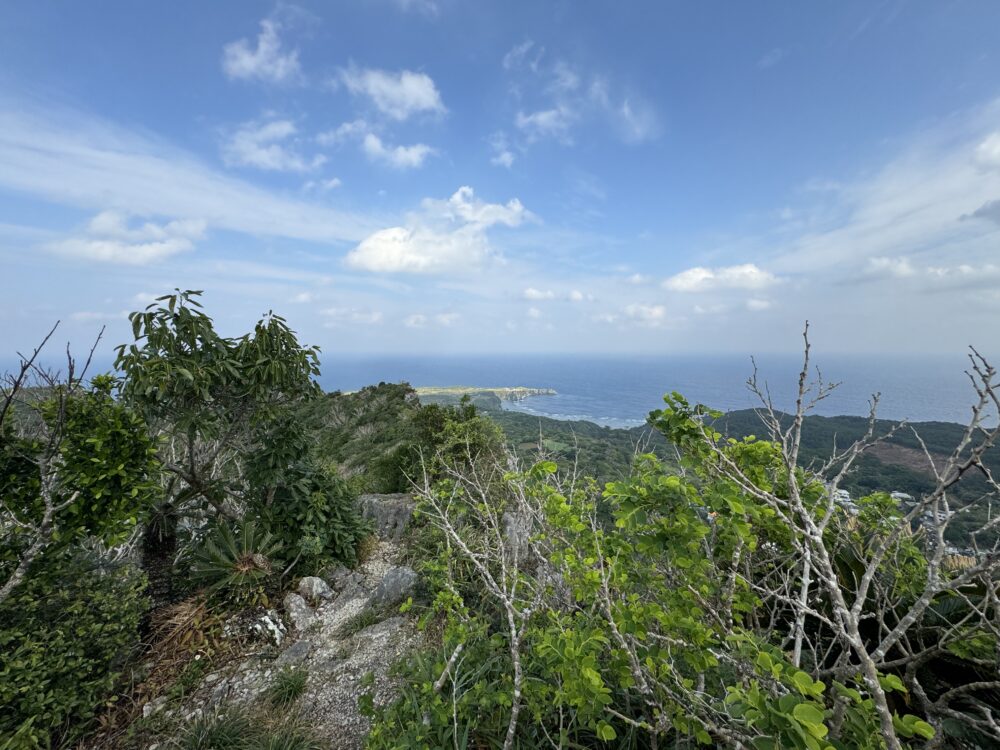
The View from the Summit
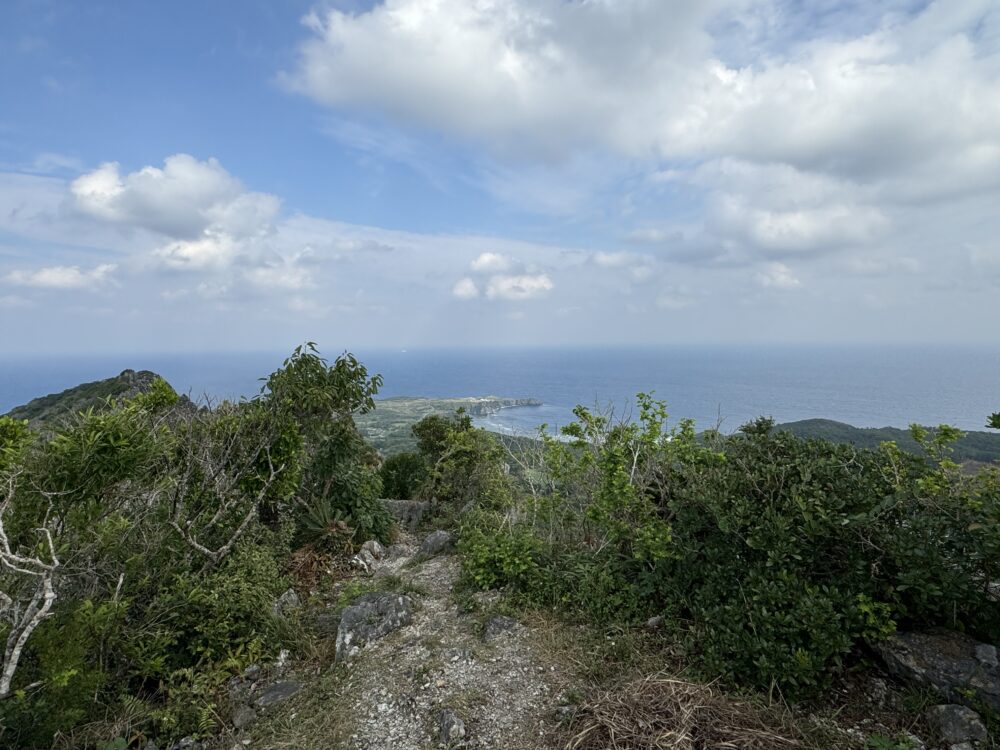
From the summit of Asumui Utaki you can take in the sweeping landscape that Okinawa’s nature has shaped.
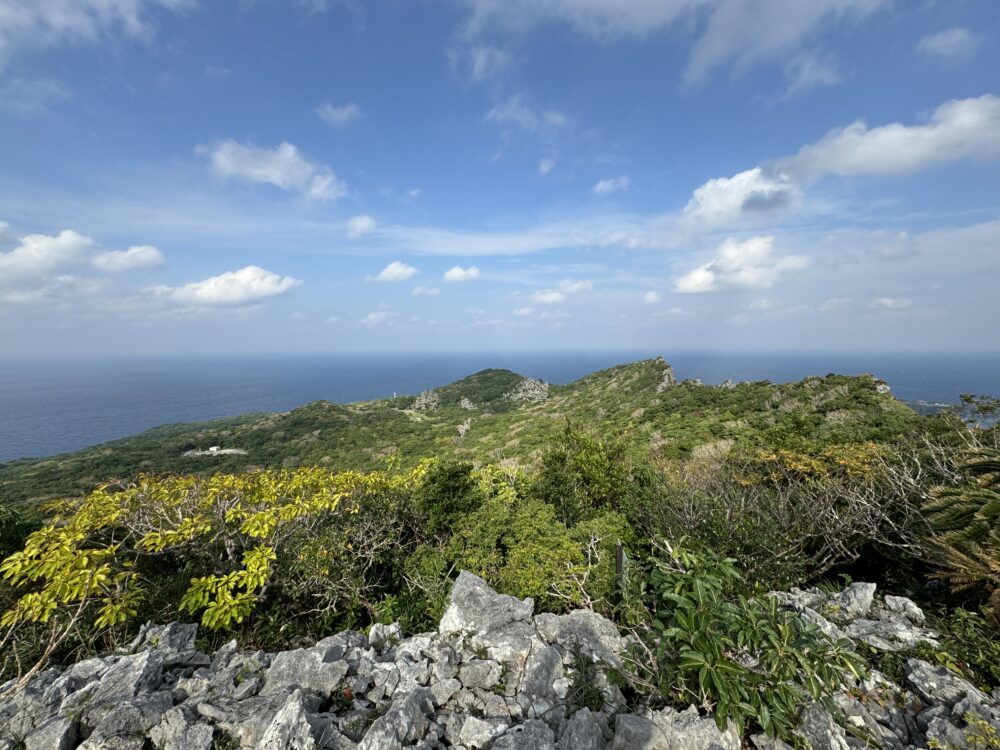
The 360-degree panorama moves and astonishes those who reach it, and conveys just how remarkable Okinawa’s natural world is.
The Prayer Sites at the Summit

There are several prayer sites at the summit, and standing among them felt genuinely otherworldly.
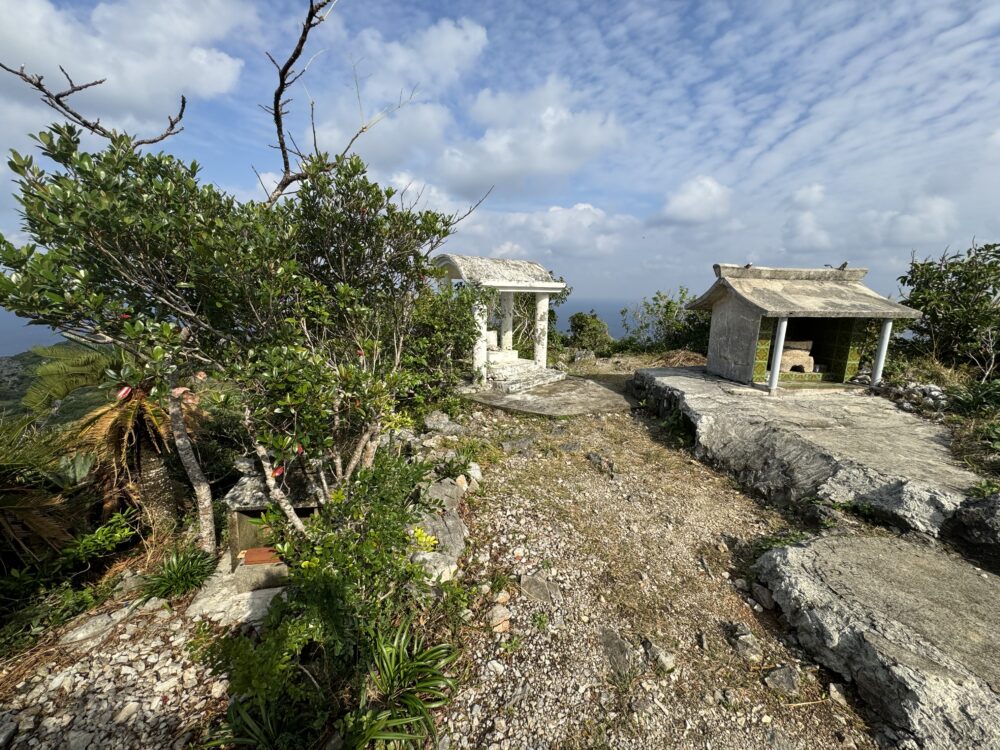
With the beautiful view all around, I offered a prayer at each one in turn.
The History of Asumui Utaki (Hedo Utaki)
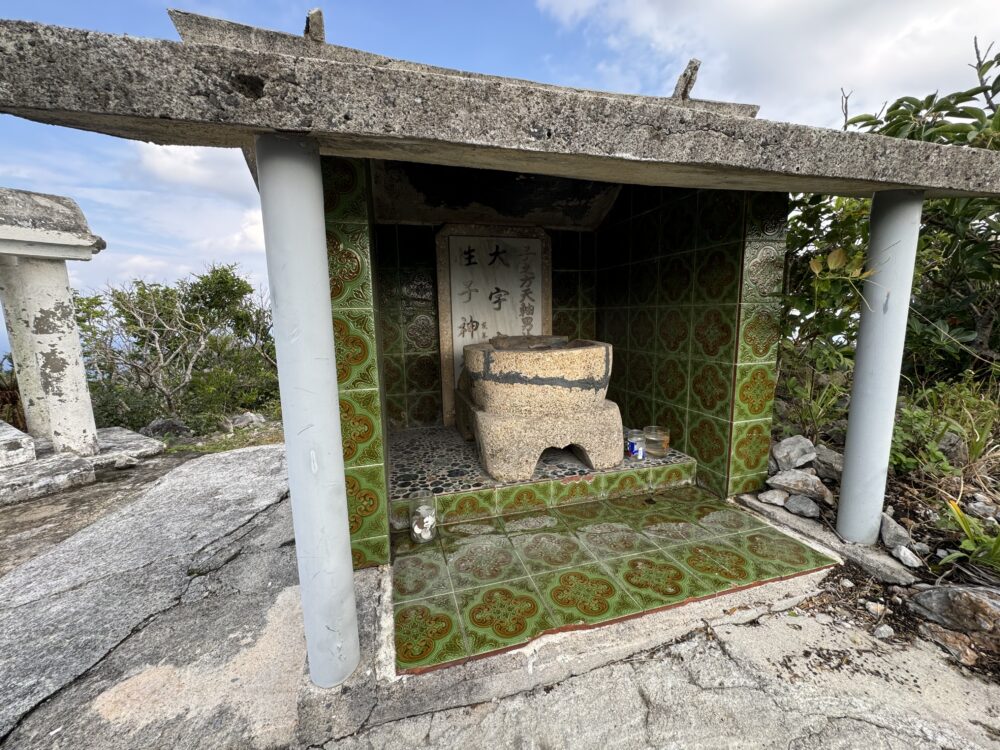
Asumui Utaki (Hedo Utaki) is a place rooted deeply in Okinawa’s spiritual landscape.
It is known as one of the seven utaki created first by the creator deity Amamikiyo in the Ryukyuan creation myth.
Located in Hedo, Kunigami Village, in the north of Okinawa’s main island, this sacred ground has been revered as a center of Ryukyuan culture since ancient times.
Historically, Asumui Utaki also played an important role during the Ryukyu Kingdom.
In a Ryukyuan belief system that values harmony with the natural world, utaki have long been treasured as places to show respect for nature and offer prayers to the gods.
Even after the Battle of Okinawa, Asumui Utaki has continued to be respected as a symbol of protecting Okinawa’s traditional culture and its natural world.
Today it is popular as a power spot worth visiting, both for the many travelers who come to Okinawa and for local people who hold to the faith.
A visit here makes for a rare chance to touch Ryukyuan history and culture as they have carried on since ancient times.
Parking, Getting There, and Access for Asumui Utaki (Hedo Utaki)
| Access | About 3 hours (180 minutes) by car from Naha Airport |
| Address | Hedo, Kunigami Village, Kunigami District, Okinawa |
| Parking | Available (about 4 spaces) |
| Restrooms | Yes |
Asumui Utaki (Hedo Utaki) has no formal parking lot, but there is an open area with room for about 4 cars.
See the Google Map below for details.
Nearby
Cape Hedo
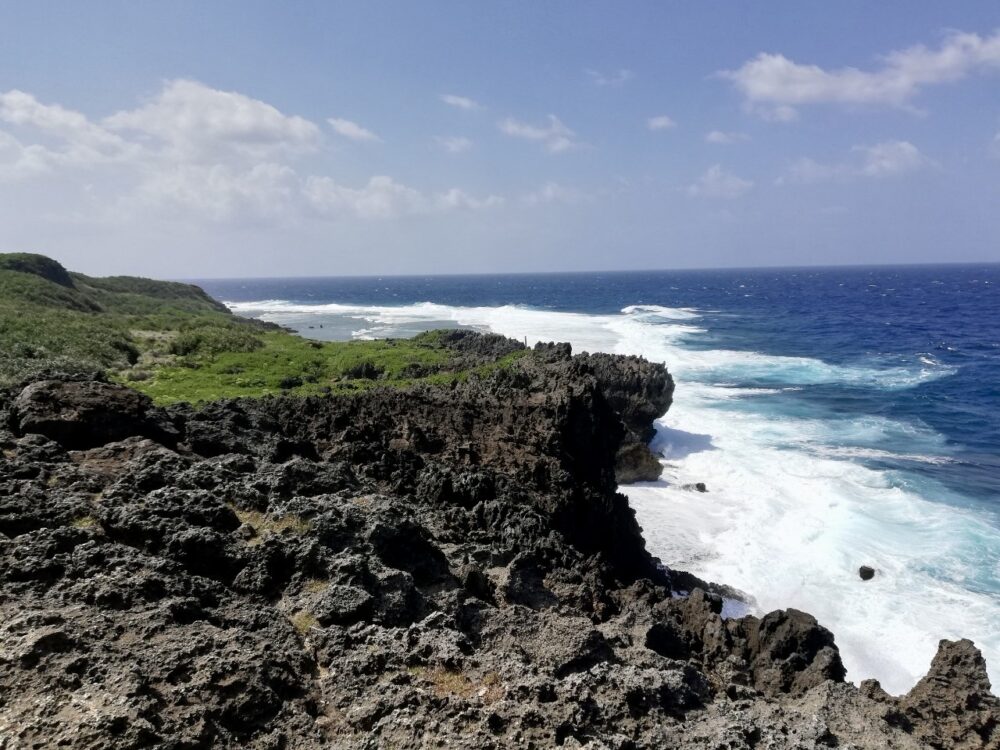
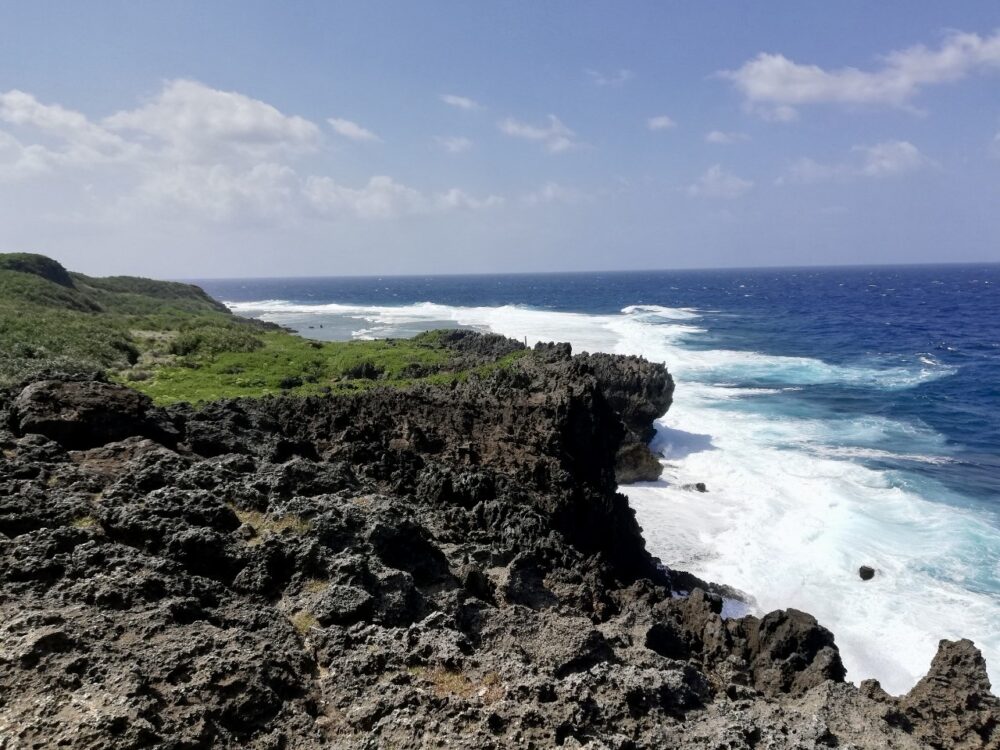
Cape Hedo is well known as the northernmost cape on Okinawa’s main island.
High cliffs and exceptionally clear water define it, and on some days the waves run rough.
The views are genuinely beautiful, and on a clear day you can see Yoron Island and Izena Island.
Large numbers of visitors and locals come here every year, which makes it a good choice if you want to take in Okinawa’s wilder side.
Activities in Kunigami Village
Kunigami Village offers plenty of activities for enjoying the nature of Yanbaru.
Adults and children alike can take in Okinawa’s wilder side, so they are well worth trying.
Okuma Private Beach & Resort
Okuma Private Beach & Resort is likely the northernmost resort hotel in Okinawa.
With a pool and a beautiful beach, it has everything you need to unwind, and the marine activities are excellent too.
A Rental Car Is the Way to Go in Okinawa

A rental car is by far the best way to get around Okinawa’s main island.
Shuri Castle in Naha, the beautiful beaches of the north, American Village in Chatan — the places worth seeing are spread across the island, so having a car lets you explore at your own pace. Buses are infrequent and do not always run to time, so a car makes a real difference to how much you can fit in.
Cars fill up quickly in the peak season, so we recommend booking early once your travel dates are set. One important note for overseas visitors: to drive in Japan you must obtain an International Driving Permit (Geneva Convention) in your home country before you depart, and remember that traffic in Japan drives on the left.
Summary
Asumui Utaki (Hedo Utaki) is a place where Okinawa’s history and its natural world come together.
This sacred ground draws visitors in with a history reaching back to the Ryukyuan creation myth, and with the quiet beauty of prayer sites standing among the trees.
The Kuganeyama prayer site, along with those on the slope and at the summit, are ideal places to feel Okinawa’s culture and spirituality.
The view from the top in particular takes in the sweep of the main island’s natural world, and it is hard to forget.
A visit to Asumui Utaki is a rare chance to touch Okinawa’s rich nature and deep history, and to come away restored.
Make the trip to this remarkable power spot, and take in everything Okinawa has to offer.
Comments