
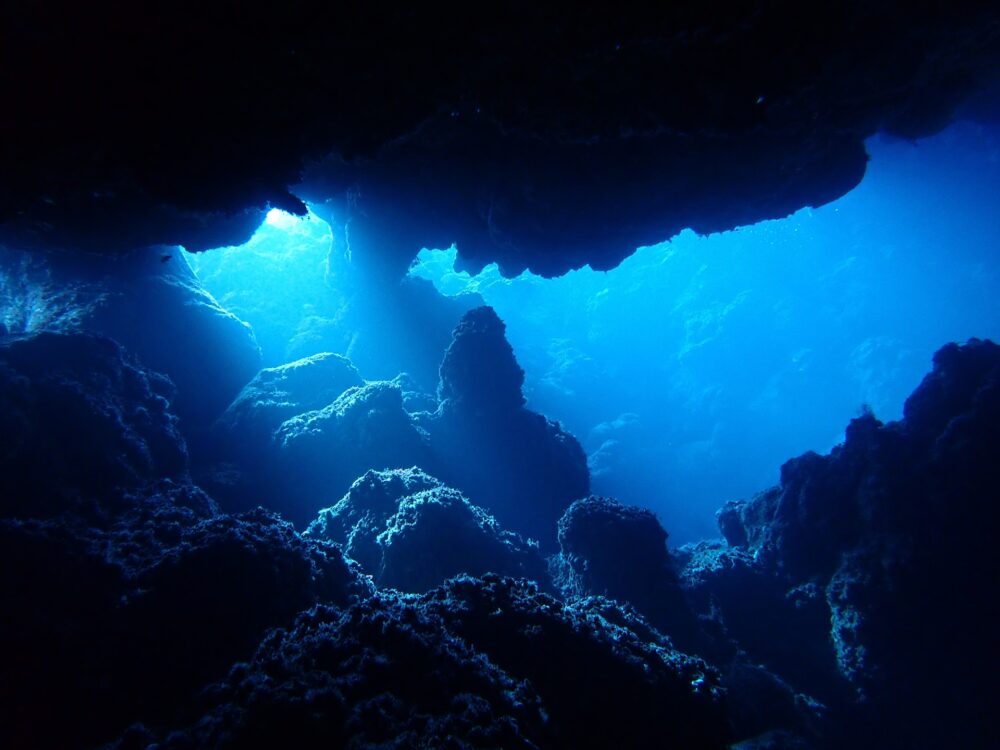
This time we’re covering all 84 dive sites around Miyako Island, grouped into five areas.
Sunlight pouring into a cave, the largest table reef in Japan, a wall of pelagic fish crossing right in front of you. The sea around Miyako Island changes so much from area to area that it’s hard to believe it’s one island.
Which area you get, though, comes down to the wind on the day. Even on the same island, the water you dive changes with the season you visit.
This article lays out which areas to target season by season, and what each of the five areas does best. Use it to plan your trip.
The best area changes with the season
| Season | Prevailing wind | Main area | Fallback when rough |
|---|---|---|---|
| Spring (March–May) | More southerly wind | Irabu Island / Yabiji | Shimoji Island |
| Summer (June–September) | Southerly | Yabiji / Irabu Island | Shimoji Island |
| Autumn (October–November) | More northerly wind | Shimoji Island | Irabu Island |
| Winter (December–February) | Northerly | Shimoji Island | Kurima Island & south coast |
| Year-round (westerly days) | Westerly / southwesterly | Takano (east coast) | — |
On Miyako Island, the sea goes calm on whichever side is downwind. Southerly winds favor Irabu Island and Yabiji to the northwest; northerly winds favor Shimoji Island. As the seasonal wind shifts, so does the area you dive.
Three things to take from the table.
- Yabiji is open water. Cancellations pile up in the northerly winter, so aim for spring or summer if coral is your goal
- Winter centers on Shimoji Island. When even that gets rough, Kurima Island and the south coast take over
- Takano depends on wind, not season. It comes into play when a westerly roughs up the west side of the island
*The final call also depends on the waves and swell on the day. Follow your dive shop’s judgment.
How to book a dive
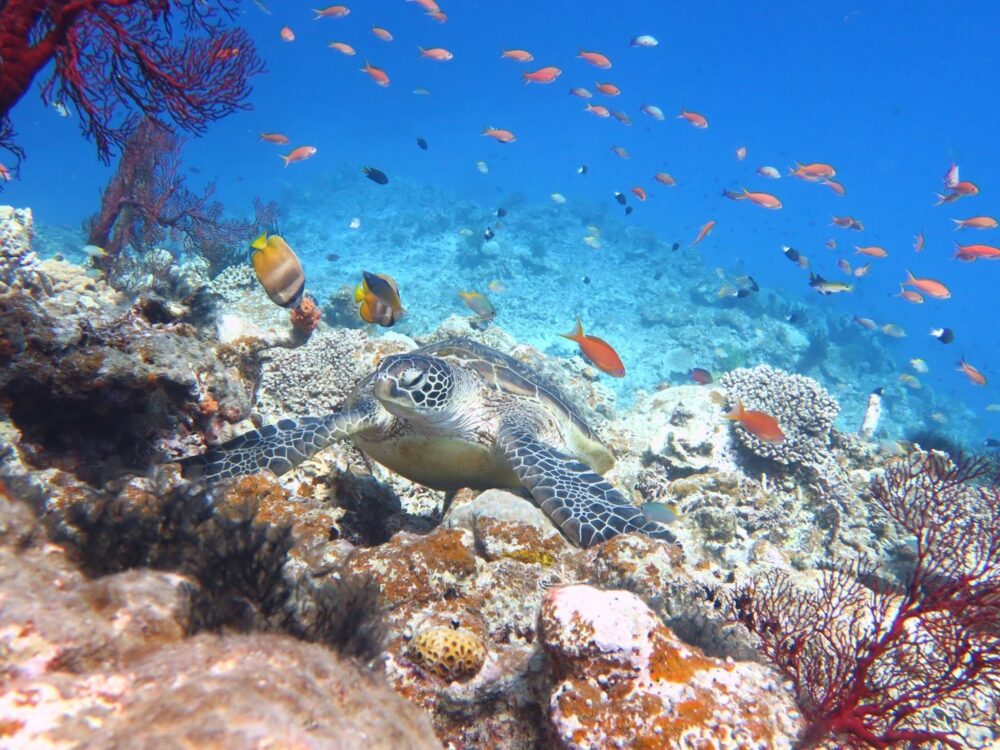
Diving around Miyako Island means joining a dive shop’s tour. If there’s a site you want, mention it when you book (whether it happens depends on the conditions that day).
The easiest way to compare plans and check availability is to search Viator or GetYourGuide. Fun dives and try dives sit side by side.
Popular seasons fill up early. Once your dates are set, lock it in.
Dive sites by area

Here are the five areas, in order of how often they get dived. Each one has its own article with the full site details, so start with whichever area interests you.
Shimoji Island (27 sites)
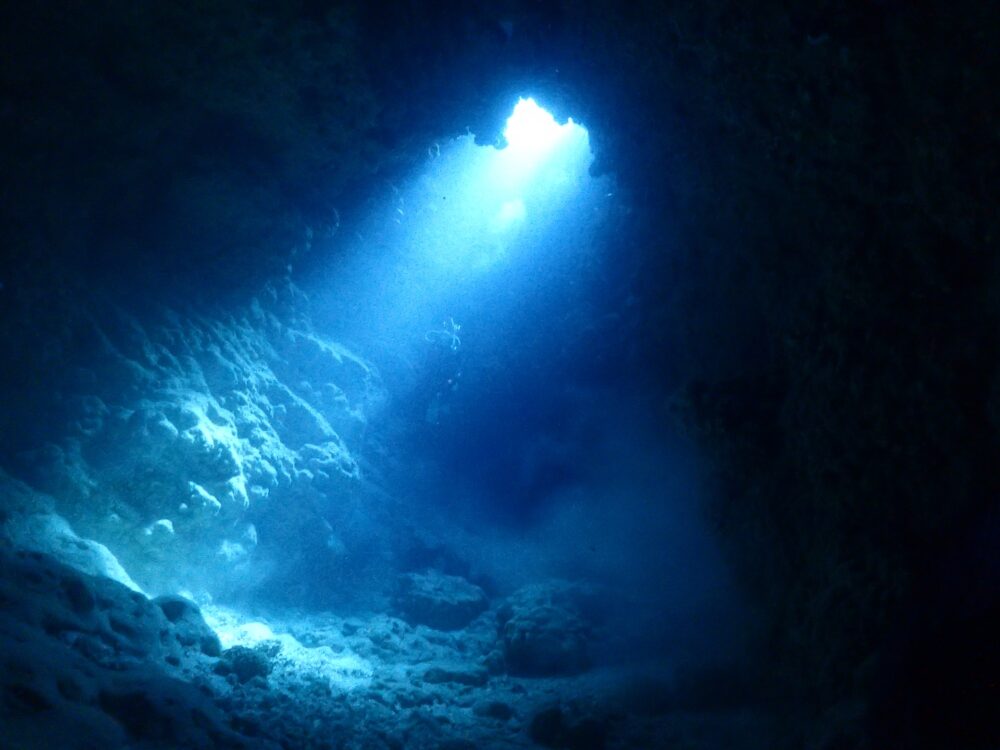
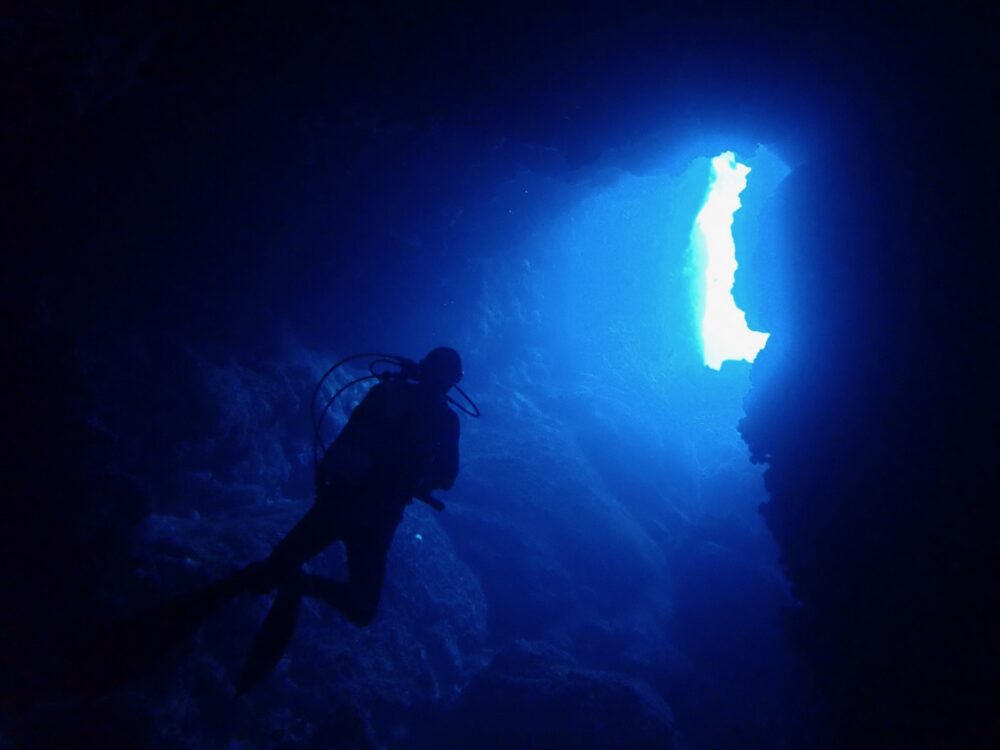
Toriike, Devil’s Palace and Antonio Gaudi — the “Three Great Formations of Miyako Island” — are all on this one island. It’s the best known diving area on Miyako.
Caves, holes, arches, crevices, drop-offs, ponds: the range of terrain here is unmatched. From shallow caves at 3m to drop-offs at 40m, there’s something for every level.
It’s 30 to 40 minutes by boat from Hirara Port. The main season runs from autumn to spring, when northerly winds blow.
The signature sites in this area are as follows.
- Toriike
- Devil’s Palace
- Antonio Gaudi
- Queen’s Room
- Nakanoshima Hole
For the full details on Shimoji Island, see “Shimoji Island Dive Sites, Miyako Island: 27 Spots Including the Three Great Formations“!

Irabu Island (19 sites)
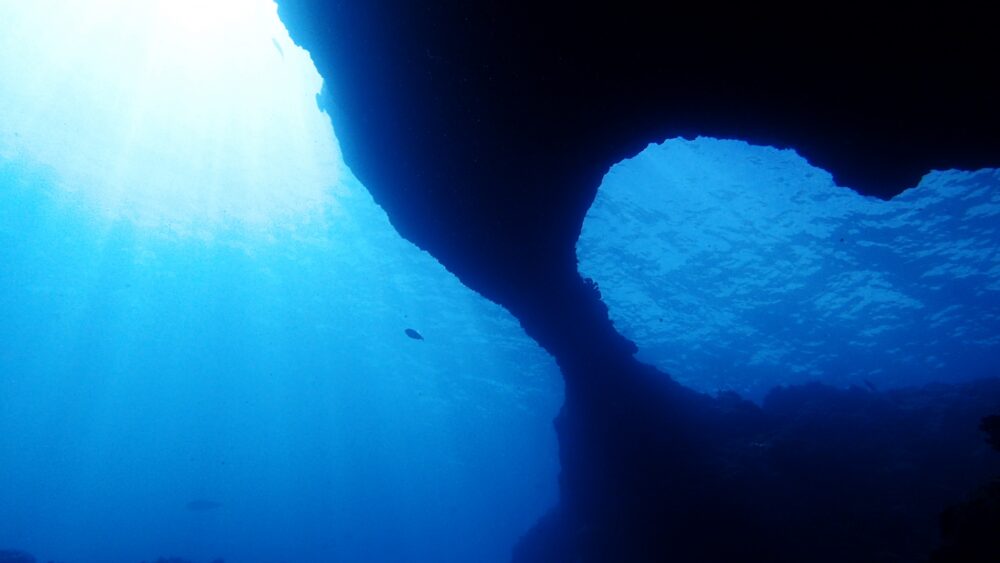
Just across the Irabu Ohashi Bridge, this area and Shimoji Island next door form the heart of diving on Miyako.
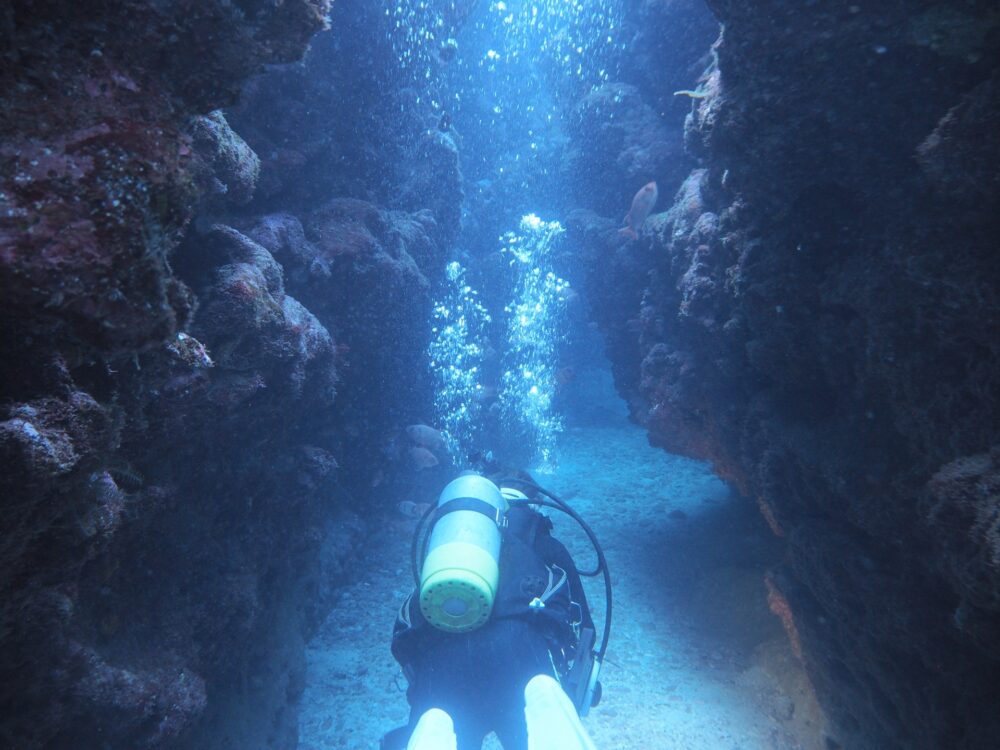
It’s mostly shallow arches and holes between 2m and 18m, which makes it a great fit even if terrain diving is new to you. Shiratori Hole, Twin Hole and Surprise Hole all start from around 2m.
Big animals such as sea turtles and dogtooth tuna are on the cards, along with schools of anthias. The main season runs from spring to summer, when southerly winds blow.
The signature sites in this area are as follows.
- Cross Hole
- L-Shaped Arch
- Snake Hole (Gakeshita)
- Hanadai no Ne
- W Arch
For the full details on Irabu Island, see “Irabu Island Dive Sites, Miyako Island: 19 Sites of Shallow Arches, Holes and Big Animals“!
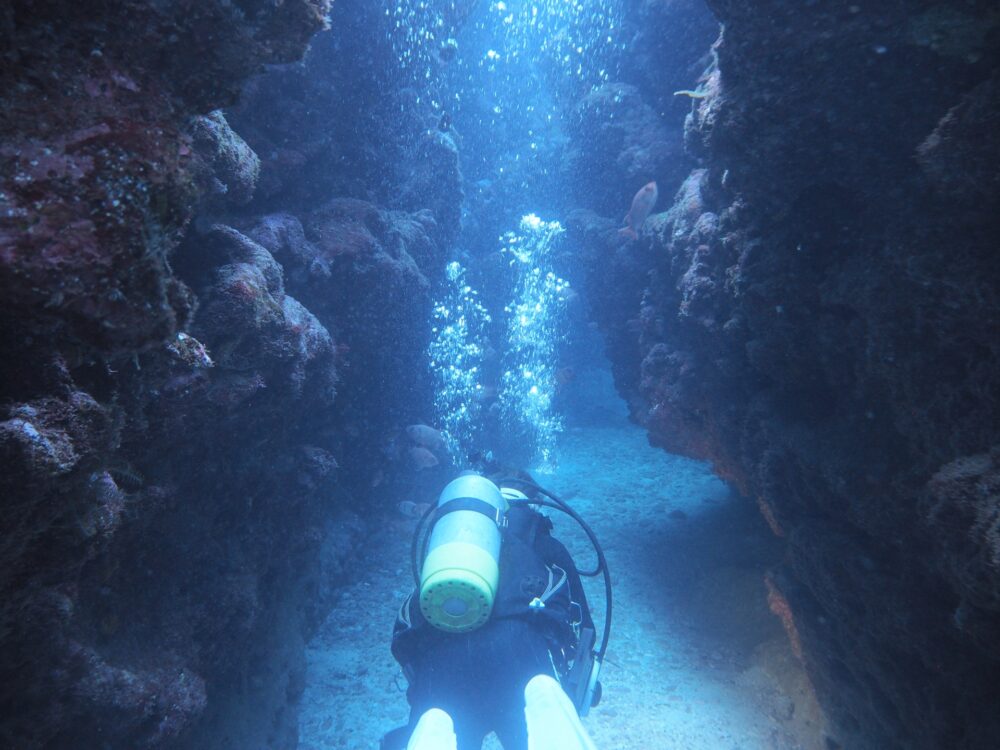
Yabiji (14 sites)
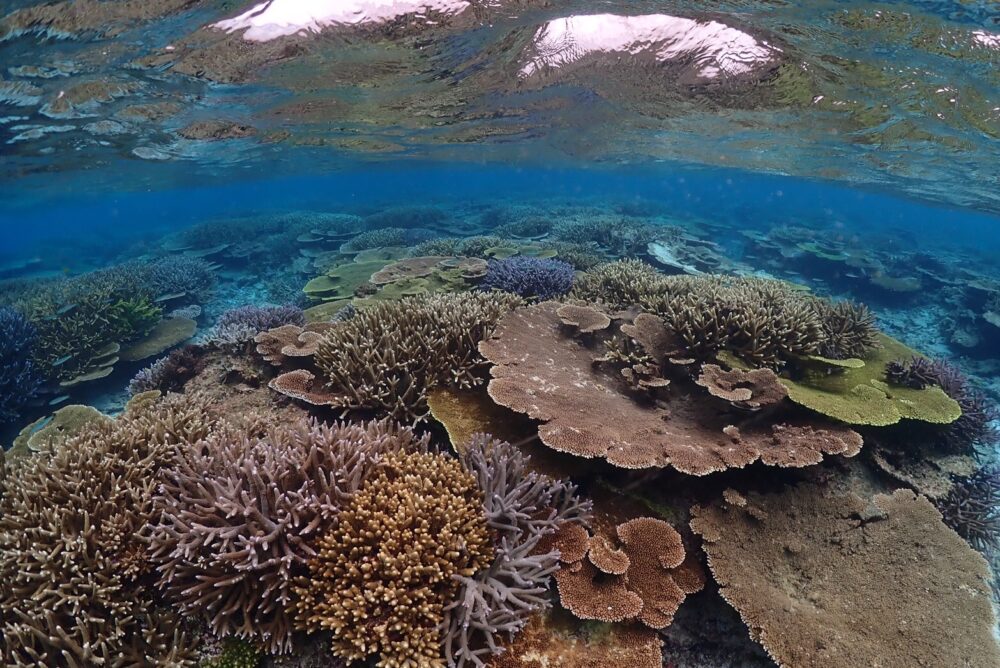
A vast complex of table reefs north of Ikema Island — the largest in Japan. More than 100 reefs are scattered across an area 16.8km east to west and 14.5km north to south, and it’s designated a National Place of Scenic Beauty and Natural Monument.
Coral grows from the surface down to about 15m, and at around 5m the light brings the colors out vividly. It also faces the open sea, so big animals such as barracuda and giant trevally are in play.
Cancellations pile up when northerly winds blow in winter, so spring to summer is the best season.
The signature sites in this area are as follows.
- White City
- Hanadai Arch
- Blue Corner
- Bimaku
- Yurabiji
For the full details on Yabiji, see “Yabiji Dive Sites, Miyako Island: 14 Spots on Japan’s Largest Table Reef“!
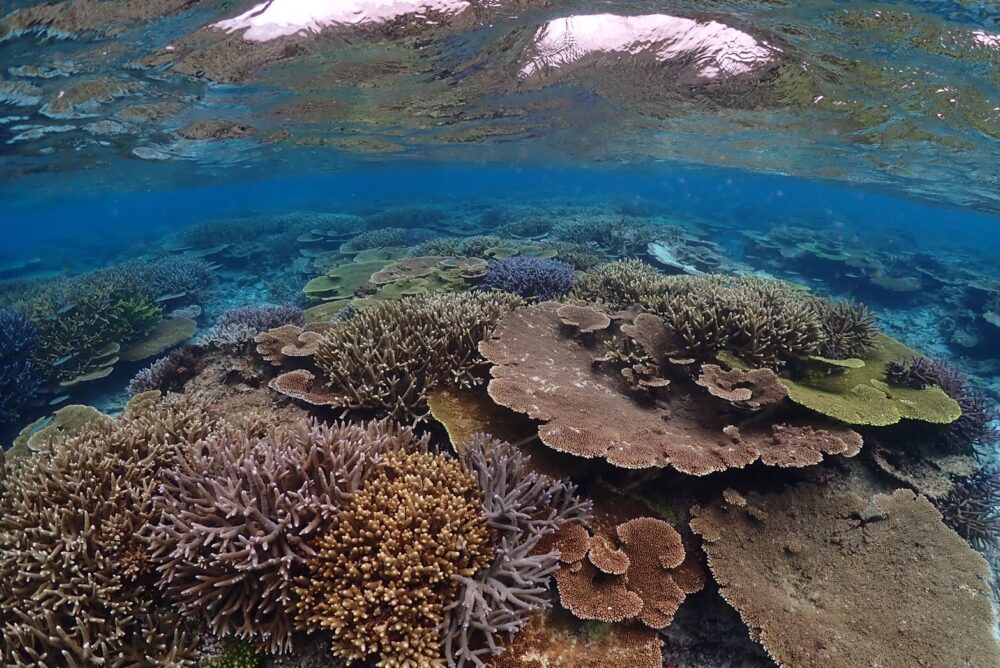
Kurima Island & south coast (20 sites)
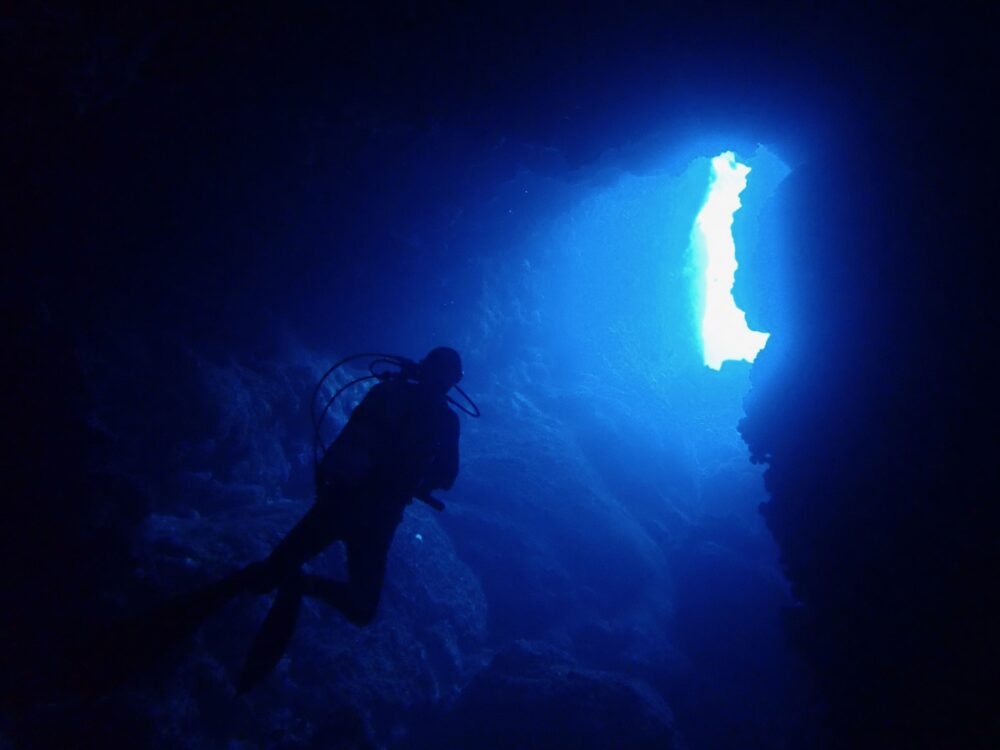
The southern side of the island, running from Kurima Island out to Higashi-Hennazaki Cape. It comes into its own on rough midwinter days when strong northerlies put Irabu Island and Shimoji Island out of reach.
The caves and arches here sit in shallow water, so beginners can enjoy the terrain. Ushisan Kowaiyo, with a cave more than 40m long, is a good example of rock formations that feel quite different from Irabu and Shimoji.
Alongside 16 boat sites, there are four you can enter from shore. Being divable even when boats can’t run is a strength unique to this area.
The signature sites in this area are as follows.
- Muiga
- Ushisan Kowaiyo
- Nanamata Arch
- Angel Cave
- Panari to Panari
For the full details on this area, see “Kurima Island & South Coast Dive Sites, Miyako Island: 20 Spots“!
Takano (4 sites)
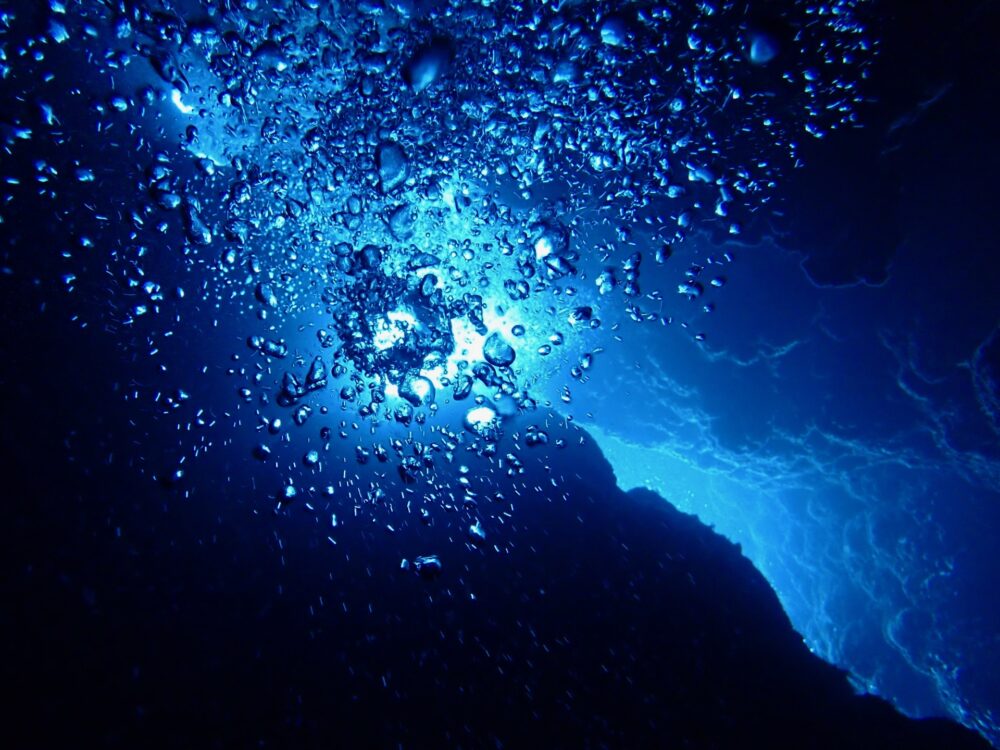
On the east coast of Miyako Island’s main island, dived out of Takano Fishing Port. It becomes an option when westerly or southwesterly winds rough up the west side of the island.
The reefs are well developed and the fish life is dense, and with few boats and few people you get to dive in peace. Some sites are only about five minutes from the harbor, so travel time is short.
More than 20 sites have been named publicly, but few have published depths or levels, and the area is still being opened up. We cover four representative sites.
The signature sites in this area are as follows.
- Tsufutsuwa Reef
- Nidan Reef
- Sakyu Densetsu
- Rock II
For the full details on Takano, see “Takano Area Dive Sites, Miyako Island: A Guide to the East Coast“!
Which area suits beginners?
| What you want | Recommended area | Representative sites |
|---|---|---|
| First time terrain diving | Irabu Island | Shiratori Hole, Twin Hole, Surprise Hole (from 2m) |
| Want to take the coral slowly | Yabiji | White City, Yurabiji, Coral Beauty |
| Want to go on a try dive | Kurima Island & south coast / Shimoji Island | Kurima Beach, Shigira Beach / Nakanoshima Channel, Nakanoshima Beach |
| Diving in winter | Kurima Island & south coast | Coral Garden, Nanamata Arch, Angel Cave |
If terrain diving is new to you, start with Irabu Island. There are plenty of shallow holes you can enter from around 2m, and the bright water lets you watch the light come through at your own pace.
If you’d rather take the coral slowly, the shallows of Yabiji are the pick. It’s a boat ride out into open water, though, so if you’re prone to seasickness a half-day plan or a closer site is the safer option.
For a try dive, the candidates are the shore-entry sites around Kurima Island and the south coast, or Nakanoshima Channel and Nakanoshima Beach on Shimoji Island, both shallow and sheltered. Note that the Three Great Formations are not available on a try dive.
Takano, on the other hand, suits intermediate divers and above. Tsufutsuwa Reef and Rock II both reach 30m and can have current, so it’s safer to leave them off the list at first.
Summary
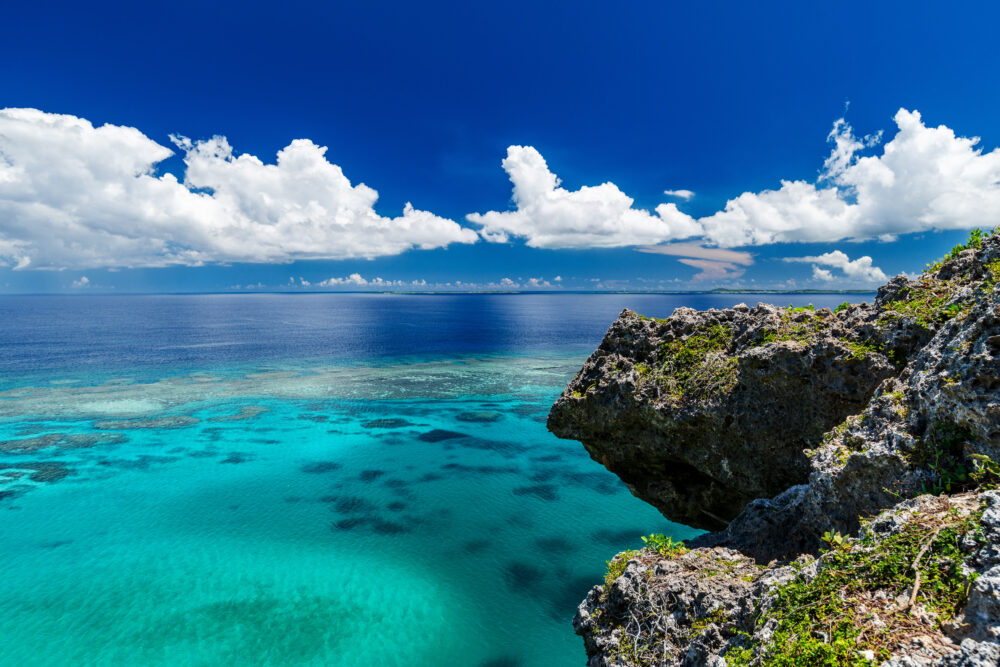
This article covered 84 dive sites around Miyako Island, split into five areas.
Shimoji Island has the big terrain, headlined by the Three Great Formations; Irabu Island has shallow arches and holes; Yabiji has the largest coral reef in Japan. Kurima Island and the south coast catch the winter days, and Takano is the pick when a westerly blows — each has its moment.
Where you end up comes down to the wind that day, but if your travel dates are set, reading the article for that season’s main area first makes it much easier to picture the dive.
When you dive Miyako Island, we hope you find a site of your own.
Thank you for reading to the end.
Comments