
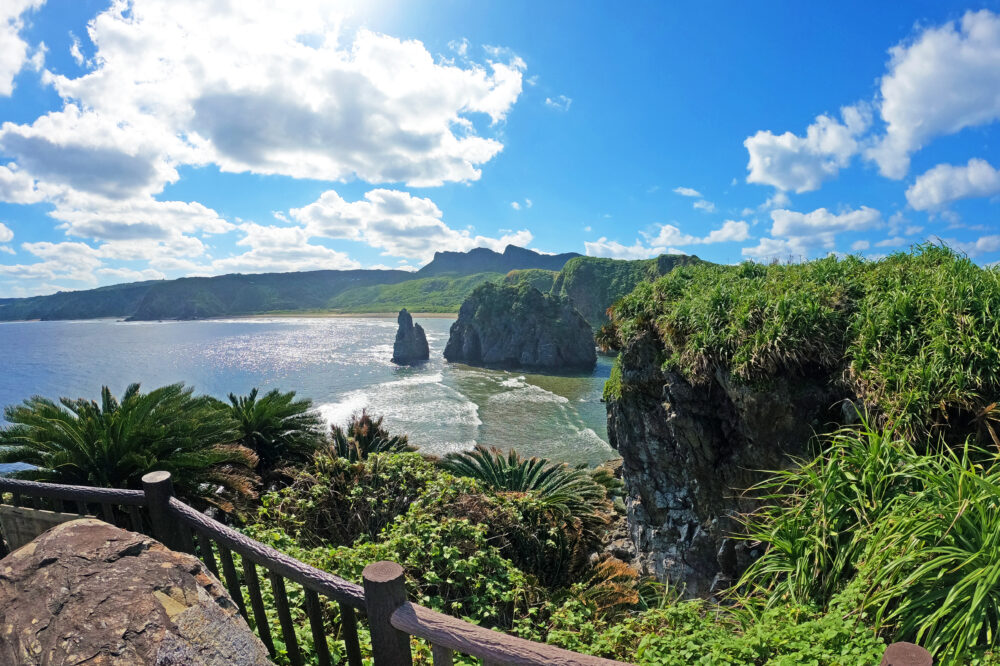
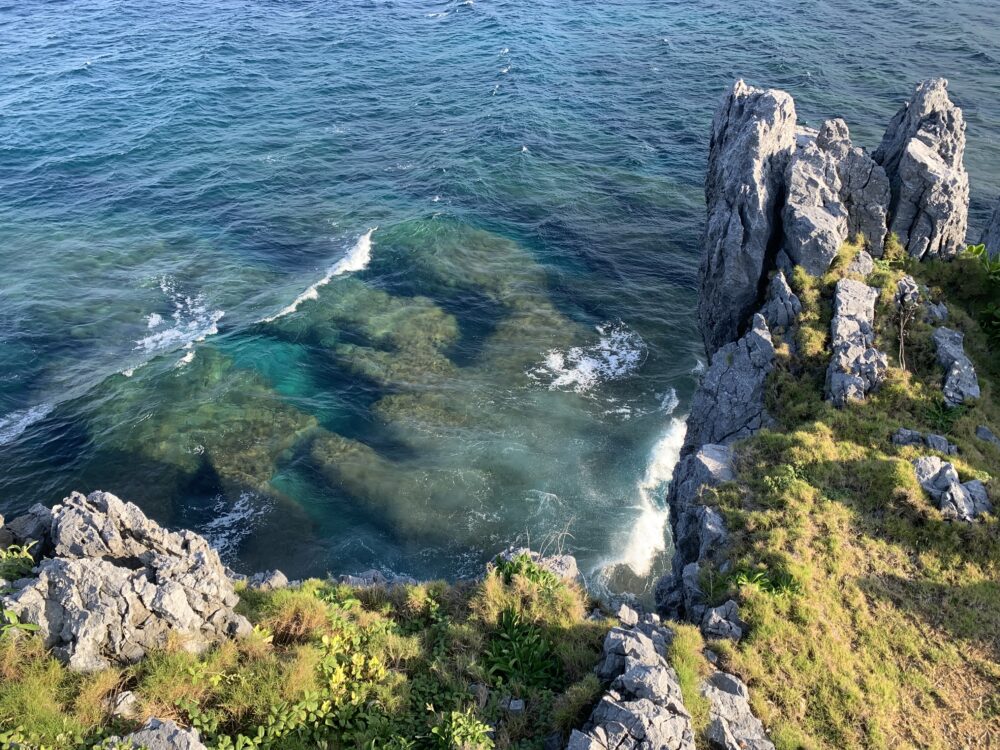
Cape Hedo, at the northern tip of Okinawa’s main island. Look down from the headland and you are looking at some of the clearest water anywhere on the island — and one of its best diving areas.
The waters around Cape Hedo hold several sites well known to divers who come for terrain: Hedo Dome, a vast dome-shaped cavity in the rock; the Futagami Rocks, a pinnacle out in open water where fish gather; and the Hedo Grand Canyon, a run between sheer rock walls.
It faces the open ocean, though, which means conditions matter a great deal, and there are plenty of days when the wind direction keeps the boats in port. Getting a day you can actually dive is the real hurdle here.
This article covers the main dive sites at Cape Hedo, what you need to know before you go in, and whether snorkeling is an option.
Cape Hedo diving area ratings
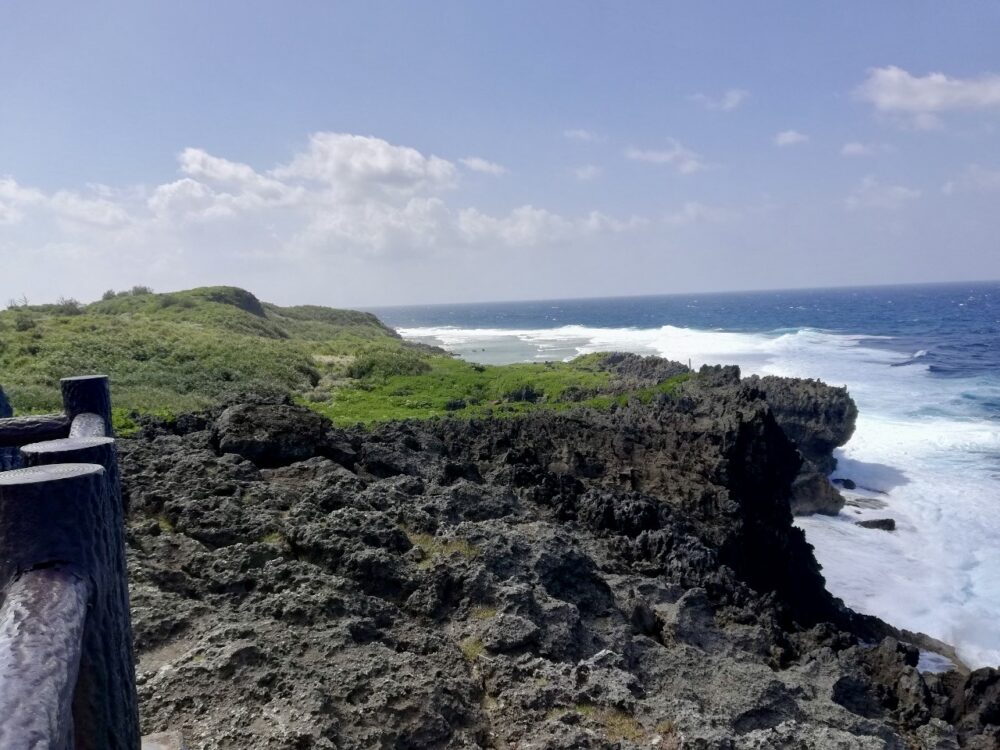
Cape Hedo diving area at a glance
| Area | Hedo, Kunigami, Kunigami District, Okinawa *The waters around Cape Hedo |
| Main sites | ・Hedo Dome (Ginama undersea limestone cave) ・Futagami Rocks ・Hedo Grand Canyon |
| How to dive it | Boat diving |
| Admission | None (tour fees charged separately) |
| Best season | Early summer to autumn (outside typhoon season) |
| Lifeguard | None |
| Restrooms / showers | Restrooms at the Cape Hedo parking lot *For showers, use the dive shop’s facilities |
| Parking | Yes (Cape Hedo parking lot, free) |
| Official website | None |
None of the dive sites at Cape Hedo are close to shore, so you go out by dive shop boat.
The cape itself is free to visit and has parking, restrooms and a tourist information centre, which makes it an easy place to stop before or after a dive.
The main dive sites at Cape Hedo
Hedo Dome (Ginama undersea limestone cave)
The site that defines the area is Hedo Dome.
The rock is hollowed out into a dome-shaped space, and once you are inside, light comes down through the gaps in the ceiling. On a clear day you can watch those shafts run straight down through the water.
Inside the dome it is dim, and schools of light-shy fish such as sweepers and soldierfish sometimes gather along the walls. The same spot looks completely different depending on the angle of the sun, so the time of day changes the dive.
The Futagami Rocks
Two rocks stand side by side above the water off Cape Hedo. These are the Futagami Rocks.
As an isolated pinnacle out in open water, the current runs well past it, and it is known as a spot where pelagic fish gather. Time it while the tide is moving and you may see schools circling the rock.
That also means the current can run hard here. Whether you can go in depends on the tide and the swell on the day, so follow your guide’s call.
The Hedo Grand Canyon
Sheer rock walls face one another, and you swim the valley between them. That is the Hedo Grand Canyon.
Narrow channels hemmed in on both sides give way to tunnel-like stretches with rock overhead, and then the view opens right up as you come out the far end. It is easy to see why terrain divers rate it.
The layout is complex, so diving it with a guide who knows the route is a given.
What to know before diving Cape Hedo
Boat diving is the norm
The sites at Cape Hedo are not within swimming distance of the shore, so this is not a place you can shore-dive.
You book with a local dive shop and go out by boat.
Conditions rule here, and trips do get cancelled
Cape Hedo faces the open ocean at the northern tip of the island, so it takes the full force of wind and swell.
In winter especially, north winds roughen the water and boats can stay in port for days at a stretch. If this is what you are coming for, build a spare day into your schedule.
It is also worth asking at the time of booking whether they will move you to another area if the day is called off.
Early summer to autumn is the window
Once the north winds ease and the water settles, from early summer through autumn, Cape Hedo becomes much easier to dive.
Summer and autumn are also typhoon season, however. A typhoon brings swell as it approaches, and the water can stay unsettled for a while after it passes, so check conditions with the shop shortly before you go.
Check the logged-dive requirement
Because the current can run and the terrain is complex, most shops set a minimum number of logged dives for the sites at Cape Hedo.
If you have only just certified, or it has been a while, ask in advance whether you can join. After a long break, a refresher dive first is the safer option.
Cape Hedo diving FAQ
Can beginners dive here?
It depends on the site, but the water is rough and the area leans towards experienced divers.
Most shops set a minimum number of logged dives for the Futagami Rocks, where the current runs, and for the Grand Canyon with its complex terrain. Check when you book whether you can join.
Can you enter from the beach?
No.
Every site at Cape Hedo is well off shore and reached by boat. The cape is ringed by cliffs, and there is almost nowhere to get down to the water in the first place.
Do tours get cancelled?
Yes.
Facing open water as it does, there are days when wind and swell keep the boats in. Cancellations are most likely in winter, when the north wind blows.
Keep a spare day, or pick a shop that will move you to another area if the trip is called off.
Can you do it as a day trip from Naha?
You can, but it is about two and a half hours each way.
To make an early meeting time, staying the night before in Nago or Kunigami gives you a lot more room.
Access & Parking
| Access | About 2 hours 30 minutes by car from Naha Airport |
| Address | Hedo, Kunigami Village, Kunigami District, Okinawa |
| Parking | Yes (free) |
| Restroom | Yes |
Cape Hedo has free parking and restrooms.
The meeting point for a dive varies by shop, though — sometimes it is not the cape but a nearby fishing harbour or the shop itself. Always confirm it when you book.
Please check the Google Map below for the parking.
Around Cape Hedo
Cape Hedo
If you are here to dive, take the time to see Cape Hedo from the land side too.
There is a walking path along the top of the cliffs, and on a clear day you can see as far as Yoron Island. It is a good way to fill the time before or after a dive.
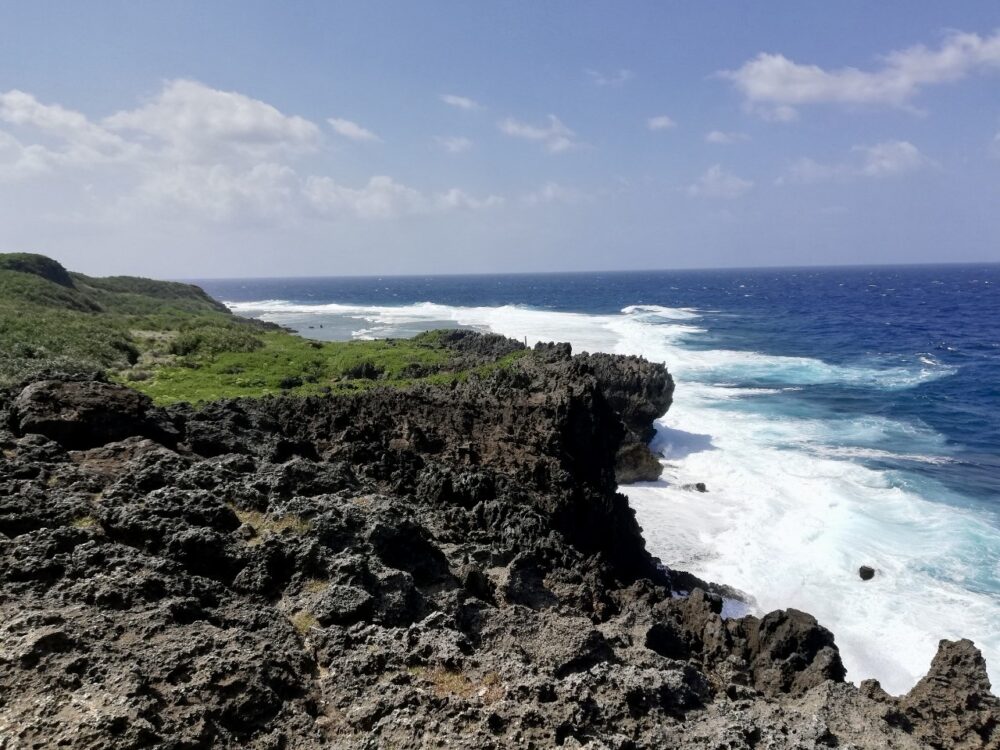
Activities in Kunigami Village
Kunigami Village offers plenty of activities for enjoying the nature of Yanbaru.
Diving and snorkeling tours can be booked here too, so take a look if you are interested.
Okuma Private Beach & Resort
Okuma Private Beach & Resort is likely the northernmost resort hotel in Okinawa.
With a pool and a beautiful beach, it has everything you need to unwind, and the marine activities are excellent too.
Cape Hedo is about 40 minutes by car, which makes this a practical place to stay the night before an early boat.
A rental car is the way to go in Okinawa
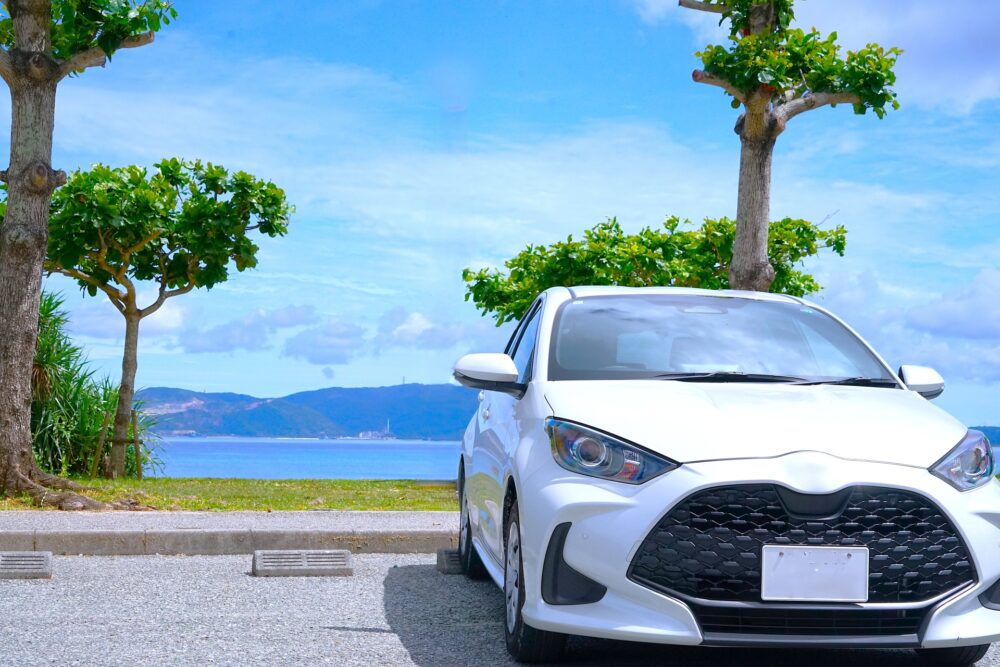
A rental car is by far the best way to get around the main island of Okinawa.
The places worth seeing are scattered across the island, from Shuri Castle in Naha to the beautiful beaches of the north and American Village in Chatan, and with a car you can take them at your own pace. Buses are infrequent and do not always run on time, so having a car or not makes a real difference to the trip.
Cars fill up quickly in the peak season, so we recommend booking early once your travel dates are set. One important note for overseas visitors: to drive in Japan you must obtain an International Driving Permit (Geneva Convention) in your home country before you depart, and remember that traffic in Japan drives on the left.
In summary
This article covered diving and snorkeling at Cape Hedo.
Hedo Dome with its shafts of light, the Futagami Rocks where the fish gather, the Grand Canyon between its rock walls — terrain like this is rare on Okinawa’s main island.
The flip side is that conditions rule, and the days you can dive are limited. Give yourself room in the schedule and plan it with the shop.
If you are heading to northern Okinawa, do get in the water at Cape Hedo.
Thank you for reading to the end.
Comments